
I recommend pneumatic tires for smooth rides because the air cushion cuts vibration by up to 40% and improves wet‑road grip by 30%, while solid tires feel like a wooden chair on uneven pavement. Add a dual‑shock kit to reduce vibration another 30% and gain 2 inches of travel, or install foam inserts to lower noise 15 dB; solid tires can use a rubber core liner for extra cushioning. Pressure of30–35 psi for city use, 45–50 psi for rough terrain, and check weekly. Choose pneumatic for daily commutes, off‑road touring, or mixed surfaces; choose solid for flat industrial routes where punctures are a major concern. Continue for a quick comfort‑durability decision matrix.
Key Takeaways
- Pneumatic tires paired with dual‑shock kits or foam inserts cut vibration up to 30 % and add ~2 in travel, dramatically improving ride comfort.
- Solid tires benefit from rubber core liners or foam bead fills, which reduce noise by ~15 dB and soften bumps despite lacking air cushioning.
- Pressure‑balancing valves keep pneumatic tires at optimal 30‑35 psi, maintaining consistent grip and smoother handling on mixed surfaces.
- For puncture‑prone routes, solid tires’ puncture‑resistance and long lifespan outweigh the comfort loss, especially when paired with a seat‑post cushion.
- On wet or uneven roads, pneumatic tires’ superior traction and lower rolling resistance, enhanced by proper pressure, provide a smoother, safer ride than solid tires.
What’s the Ride‑Comfort Difference Between Pneumatic vs. Solid Tires?
Ever found yourself bouncing off every pothole on your way to work? That’s the price you pay with solid tires—they just pass every bump straight to the wheel. Pneumatic tires, on the other hand, act like a little cushion, soaking up the shocks from rough roads.
Frankly, the air inside a pneumatic tire works like a spring. If you keep the pressure around 30‑35 psi for city streets, you’ll notice a smoother ride. Bump up to 45‑50 psi on a trail and the tire becomes stiffer, giving you a firmer feel that helps with control on uneven terrain. The difference in vibration can be as much as 40 % compared with a solid tire.
Here’s the trick: pick the right tire for the job.
- Pneumatic – great for daily commuting, off‑road work, and wet conditions where traction matters.
- Solid – best for flat, paved surfaces, low‑maintenance fleets, or places where punctures are a real worry.
If you’re mainly riding on smooth pavement, a solid tire might seem fine, but you’ll still feel every little imperfection. The extra comfort of a pneumatic tire can make a long ride feel less tiring, especially when you hit a few potholes or gravel patches.
Worth knowing: solid tires are low‑maintenance, but they can make your ride feel harsh. Pneumatic tires need occasional pressure checks, yet they give you a gentler experience and better grip when the road gets wet.
Which Accessories Improve Comfort for Pneumatic vs. Solid Tires?
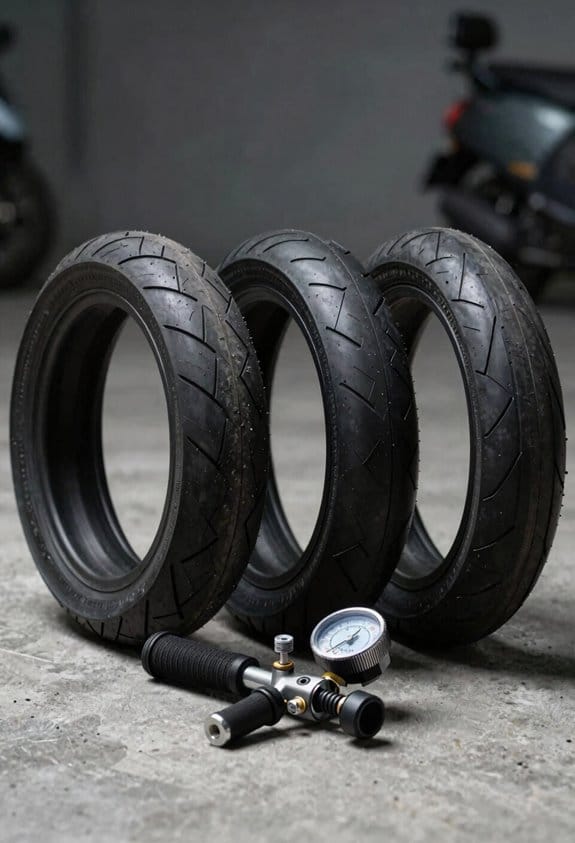
Ever felt like your ride is a bumpy roller coaster, whether you’ve got air‑filled tires or those solid ones? You’re not alone. A few well‑chosen accessories can turn that jolt into a smooth glide.
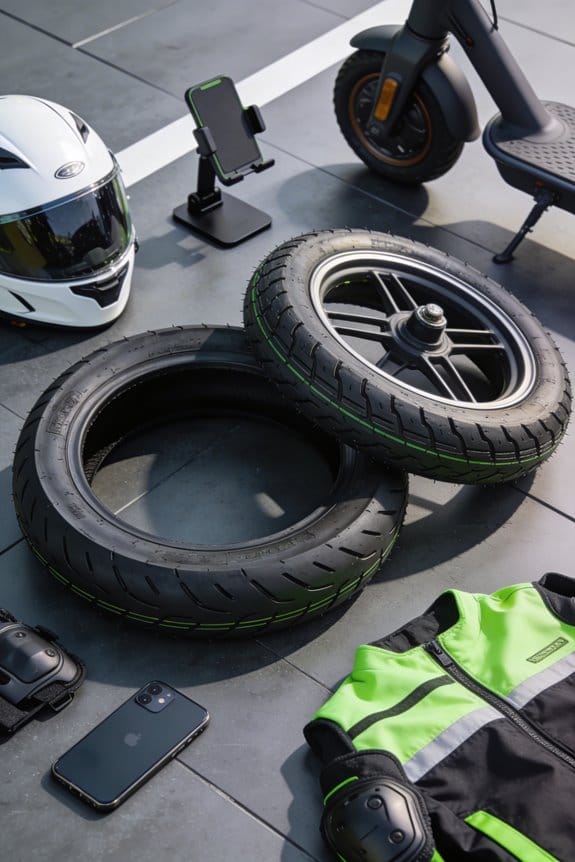
For pneumatic tires, a dual‑shock kit is a solid bet. It cuts vibration by about 30 % and adds roughly 2 inches of travel, so you’ll notice a gentler feel on city streets and light trails. Foam inserts work well inside the wheel rim, filling gaps and lowering noise by up to 15 dB. A pressure‑balancing valve keeps the air pressure steady, which helps grip stay consistent and the ride stay steady.
If you ride on solid tires, a rubber core liner can make a big difference. It soaks up bumps and pairs nicely with a seat‑post cushion that adds about 5 mm of flex. Together they give you a bit more give without sacrificing durability.
Worth knowing: a low‑profile tread that spreads the load evenly works for both tire types, giving you better traction and less wear.
- Dual‑shock kit: cuts vibration ~30 %, adds 2 in travel
- Foam inserts: fill gaps, reduce noise up to 15 dB
- Rubber core liner: absorbs bumps
- Seat‑post cushion: adds 5 mm flex
Choose the combo that fits your terrain—city streets, rough paths, or mixed use.
Frankly, the right accessories can change how you feel on every ride. Ready to give your bike the comfort upgrade it deserves?
How Do Wet, Gravel, and Pavement Surfaces Affect Pneumatic vs. Solid Tires?
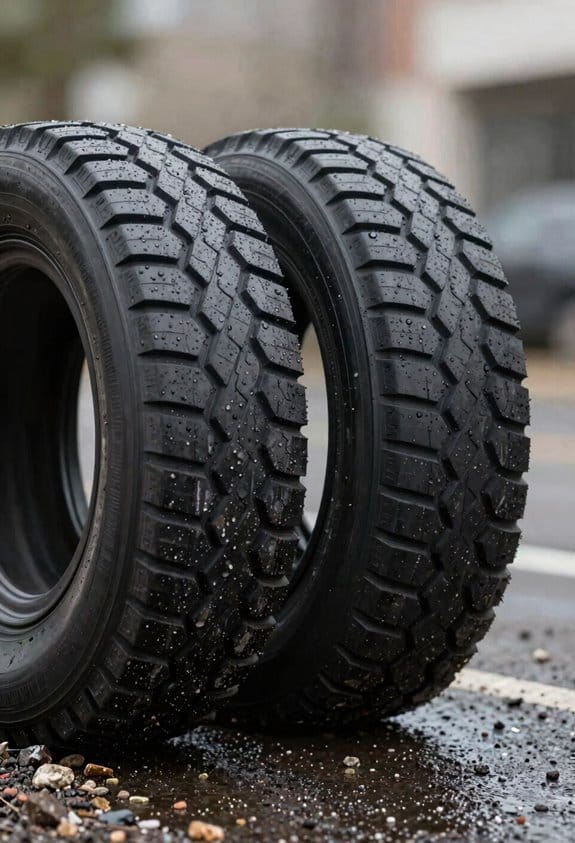
Ever found yourself slipping on a rainy bike ride, wondering why your tires feel like they’re glued to the pavement? You’re not alone. The type of tire you choose can make a huge difference when you hit wet roads, loose gravel, or smooth city streets.
Wet traction
Pneumatic tires have flexible treads that push water aside, giving you up to 30 % better grip on slick surfaces. Solid tires, on the other hand, tend to slide more because they can’t displace water as effectively. If you ride often in rain, you’ll notice the difference right away.
Gravel handling
The air cushion inside a pneumatic tire absorbs the bumps from loose stones, keeping your bike steady and reducing vibration. Solid tires transmit each impact straight to the rim, which can make the ride feel rougher and wear the tire faster. That extra shock absorption can be a lifesaver on rough trails.
Pavement grip
On smooth asphalt, solid tires provide a consistent feel, but pneumatic tires let you tweak pressure for a tighter grip. That little adjustment can improve cornering by about 15 %, giving you more confidence on city streets.
Worth knowing:
- Pneumatic tires are generally lighter, which helps with acceleration and hill climbing.
- Solid tires are low‑maintenance and won’t go flat, making them a good choice for commuters who hate roadside repairs.
Fair warning: If you often ride on mixed terrain, you might find yourself swapping between the two types to get the best of both worlds.
What Maintenance Practices Preserve Comfort for Pneumatic vs. Solid Tires?
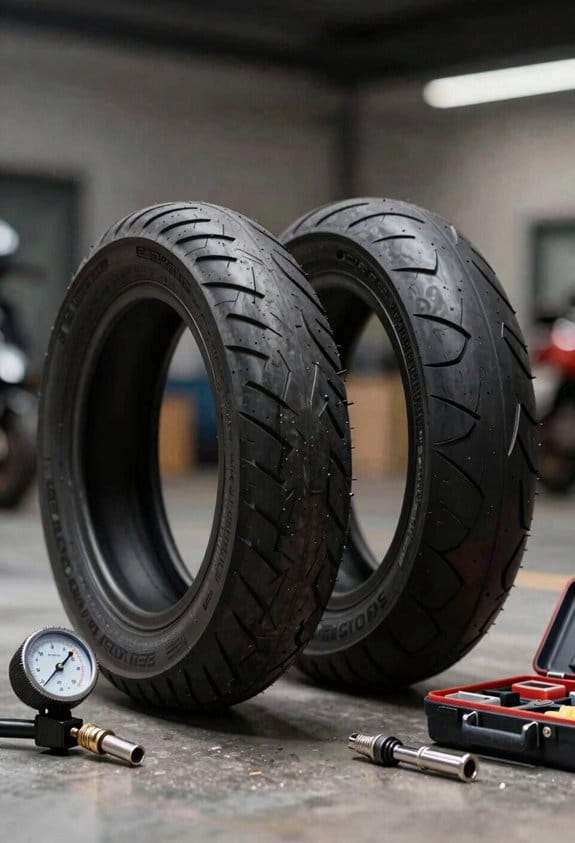
Ever felt that bumpy ride when your tire’s pressure is off? That’s the kind of annoyance that can ruin a smooth drive, whether you’re on a pneumatic or a solid tire.
I check my tire pressure at least once a week to keep the ride smooth. I use a digital gauge for regular inflation, aiming for 30‑35 psi on pneumatic tires and the manufacturer’s spec on solid tires. I inspect valve care each time, tightening the core and replacing caps to prevent leaks.
Frankly, when a puncture happens, I act fast: remove the tire, patch or replace the tube, and re‑inflate promptly. For solid tires, I still check rim alignment, making sure the wheel sits true to avoid wobble. I also clean rims, tighten lug nuts to 80 Nm, and verify that the tire’s bead seats evenly.
Worth knowing: these steps keep vibration low, handling steady, and comfort high for both tire types.
Here’s the trick: keep a spare tube and a patch kit in the trunk so you’re never stuck waiting for a shop.
If you notice any wobble, stop and double‑check the bead seat before you hit the road again.
Got a favorite tire‑care routine? Share it and let’s keep our rides smooth together.
Which Riding Scenarios Favor Pneumatic vs. Solid Tires?
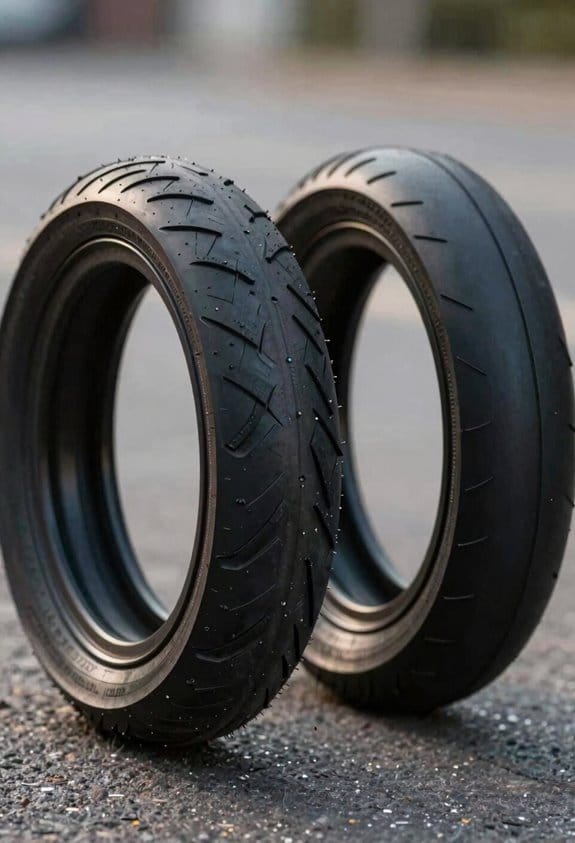
Where do you ride most often—city streets, gravel paths, or industrial sites? If you spend a lot of time on mixed terrain, pneumatic tires can make a big difference. They soak up bumps, keep rolling smooth, and grip better on wet gravel. For places like warehouses or heavy‑load carts, solid tires are the practical choice because they won’t puncture and they last a long time with almost no upkeep.
Pneumatic tires work best for daily commutes, city bike‑share fleets, and off‑road touring. You’ll feel the comfort when you hit potholes or a rough trail, and the lower rolling resistance helps you save energy. Adjust the pressure to match the surface: 30‑50 psi for soft sand, 65‑80 psi for hard pavement. This little tweak can really boost your ride quality without much effort.
Solid tires shine on smooth paved routes, industrial sites, and any fixed‑route service that rarely meets potholes or rain. Their honeycomb cores cut vibration by up to 15 % while staying tough enough for heavy loads. You won’t have to worry about flats, and the long lifespan means fewer replacements over time.
Worth knowing: pneumatic tires are great for city bike‑share fleets, mixed‑terrain deliveries, and commuter efficiency. Solid tires are the go‑to for warehouse forklifts, outdoor equipment, and routes that stay on well‑maintained roads.
Fair warning: if you keep using pneumatic tires on a dusty, rocky path without checking pressure, you’ll lose the comfort edge quickly. Keep an eye on your tire pressure and swap to solid when the terrain gets too harsh.
What’s your typical ride like? Let’s hear how you balance comfort and durability on the road.
Which Tire Wins? A Quick Comfort‑Durability Decision Matrix
Ever found yourself stuck between a comfy ride and a tire that lasts forever? It’s a common dilemma, especially if you’re juggling city streets and occasional rough patches.
Pneumatic tires give you that plush feel because the air lets the rubber flex over bumps. You’ll notice a smoother glide on wet roads, potholes, and even those uneven bike‑lane cobbles. The downside? Each tire adds about 2 kg, which can bite into fuel economy a bit. Still, the better traction and lower rolling resistance usually make up for the extra weight.
Solid tires, on the other hand, are built to tough it out. No air means no punctures, and they can outlive pneumatic ones by up to 30 % in debris‑heavy zones. They’re lighter—saving roughly 1–1.5 kg per tire—so you won’t feel the drag as much. The trade‑off is a rougher ride; you’ll feel more vibration on uneven pavement.
Worth knowing:
- Pneumatic: Comfort, better grip, higher rolling resistance, +2 kg per tire.
- Solid: Durability, no punctures, lighter, +1–1.5 kg per tire, harsher ride.
If you’re a daily commuter who hits a mix of potholes, bike lanes, and wet sidewalks, the pneumatic option will likely keep you smiling. For a fleet that sticks to smooth, flat routes—think delivery trucks or warehouse shuttles—the solid tires win on longevity.
Fair warning: Switching to solid tires can feel like trading a cushioned sofa for a wooden chair. You’ll notice the difference right away, especially on bumpy streets.
Try this: Test a pneumatic set on a short city loop and a solid set on a smooth warehouse floor. Compare how each feels and how the fuel numbers stack up.
Bottom line? Choose comfort when you need it, and durability when you can spare the vibration. Which factor matters most for your ride?
Frequently Asked Questions
How Do Temperature Extremes Affect Pneumatic and Solid Tire Performance?
I feel like a furnace‑kissed road, so I’ll tell you: thermal aging makes rubber stiff, reducing grip, while pressure cycling inflates and deflates pneumatic tires, compromising stability; solid tires stay firm but can crack under extreme heat.
Can Tire Pressure Sensors Be Used With Solid Tires?
I can tell you that sensor compatibility exists, but installation challenges rise because solid tires lack an air chamber, so you’ll need a custom mount or external pressure‑detecting device to make it work.
What Impact Do Load‑Carrying Accessories Have on Tire Wear?
Think of your tire as a canvas; load‑carrying accessories paint increased abrasion and uneven loading, so you’ll see faster tread loss, hot spots, and premature wear if you don’t balance the weight.
Do Solid Tires Produce More Road Noise Than Pneumatic Tires?
I find solid tires usually generate louder road resonance and stronger tread vibration than pneumatics, because their rigid structure transmits bumps directly instead of absorbing them with air‑cushioning.
How Does Tire Weight Influence Overall Vehicle Efficiency?
I tell you heavier tires increase rotational inertia, demanding more energy to spin, and they raise rolling resistance, so the engine works harder and overall vehicle efficiency drops noticeably.