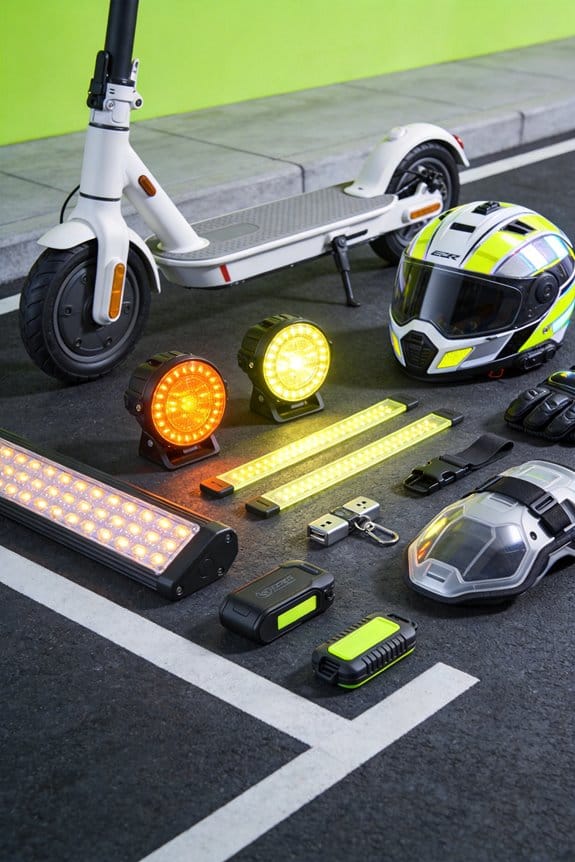

I recommend amber LEDs around 3,000 K–3,500 K for fog and rain because their longer wavelengths scatter less, cut glare, and boost contrast. A 12 V, 30 W unit typically outputs 1,200 lumens with a 30° flood pattern, fits standard brackets, and runs on low power. Warm‑white light reduces eye strain on long trips and works well on low‑speed, wet roads. If you need a brighter, longer‑range view on clear highways, a cool‑white 5,000 K–6,000 K option can be switched in seconds. The next sections will show how to aim, mount, and choose the right dual‑color system.
Key Takeaways
- Warm amber LEDs (~3,000‑3,500 K) cut through fog by reducing back‑scatter and enhancing contrast.
- Amber glow improves road‑edge perception and reduces driver fatigue during prolonged low‑visibility driving.
- Cool‑white LEDs (~5,000‑6,000 K) are better for clear rain on highways, offering longer range and daylight‑matching illumination.
- Dual‑color units let you switch instantly between amber for fog and cool‑white for cleared conditions, providing flexibility.
- Aim a tight ~30° flood with a small spot, mounting low on the bumper, to maximize visibility while minimizing glare.
What Headlight Color Works Best in Fog and Rain?
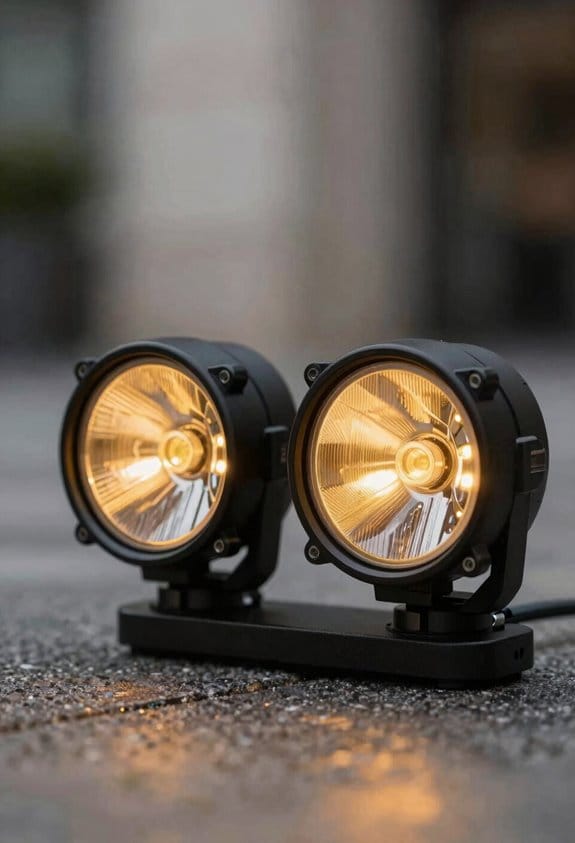
Ever found yourself squinting at a fog‑filled road, wondering why the lights just don’t cut through? That milky glow can turn a simple drive into a guessing game, especially when rain adds its own veil. The trick is to pick a color that fights the moisture instead of blending with it.
A warm yellow hue does the job. A 3,500 K LED fog lamp gives you that amber glow that slices through fog and rain, making edges and hazards easier to see. It puts out about 2,500 lumens, focuses the beam within a 30‑degree spread, and lasts roughly 1,200 hours—perfect for the regular maintenance cycles of off‑road rigs. The solid‑state build handles vibration, and the low heat keeps wiring safe on long trips.
Worth knowing: a dual‑mode unit can switch to a cooler 5,500 K white for clear nights, so you’re covered no matter the sky. Install it with the supplied aim‑adjuster to keep glare down, and give the mounting bolts a quick check every 5,000 miles to stay on schedule.
- 3,500 K amber LED: cuts through moisture, boosts perception of road edges.
- 5,500 K white mode: bright and crisp for clear conditions.
Try this: set the amber side for foggy mornings, then flip to white when the sky clears. You’ll notice a steadier view and less eye strain.
If you’re curious about how long the lamp will last, the 1,200‑hour rating usually lines up with typical off‑road service intervals. That means fewer replacements and more time on the road.
Give the amber a shot and see how much easier those misty drives become. Ready to upgrade your headlights?
How Color Temperature Changes Light Scattering and Visibility in Moisture
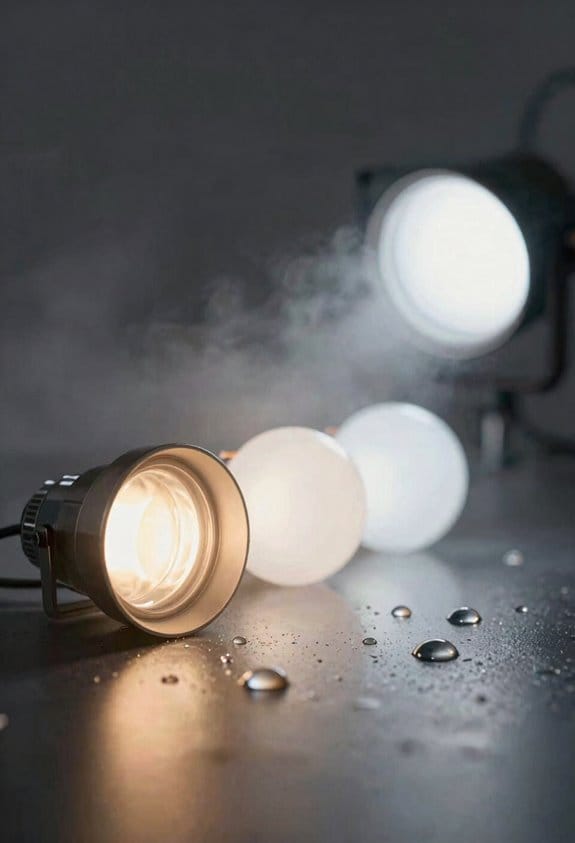
Ever notice how your headlights seem to disappear in a thick fog, but a soft amber glow cuts through just fine? That’s not magic—it’s all about the color temperature of the light and how it interacts with tiny water droplets in the air.
Lower‑temperature LEDs, around 3,000 K to 4,300 K, put out longer wavelengths. Those longer waves bounce off the droplets less, so the beam stays tighter and reaches the road. In contrast, the whiter lights at 5,000 K to 6,500 K are packed with blue and green photons. Those shorter waves scatter a lot, creating a bright veil that washes out contrast and makes it harder to see the road ahead.
Your eyes do a lot of work to pull useful light out of the glare. When the beam is clear, the brain can focus on the road and any obstacles. When the light is scattered, the brain gets a wash of light and can’t pick out details as easily. That’s why many drivers prefer an amber LED for foggy mornings and a cooler white LED for rainy nights.
Frankly, the best setup is a dual‑mode unit that lets you switch between a 3,200 K amber setting and a 5,500 K cool white setting. Pair it with a lens that has an anti‑glare coating, a 10,000‑lumens output, and a 120‑degree flood pattern, and you’ll get the most reliable illumination in mixed conditions.
Worth knowing:
- Choose a lamp with a 3,200 K amber LED for foggy mornings.
- Pick a 5,500 K cool white LED for rainy nights.
- Look for lenses with anti‑glare coating and a 120‑degree flood pattern.
Try this: when you’re about to head out in fog, swap your regular headlights for the amber setting and notice how the road stays visible farther ahead. When the rain eases, switch to the cool white to keep your view bright without the glare.
You’ll find that a simple change in color temperature can make a big difference in safety and comfort on the road. Ready to give your headlights a quick upgrade?
The Science Behind 3,000 K–4,300 K Yellow LED Fog Lights
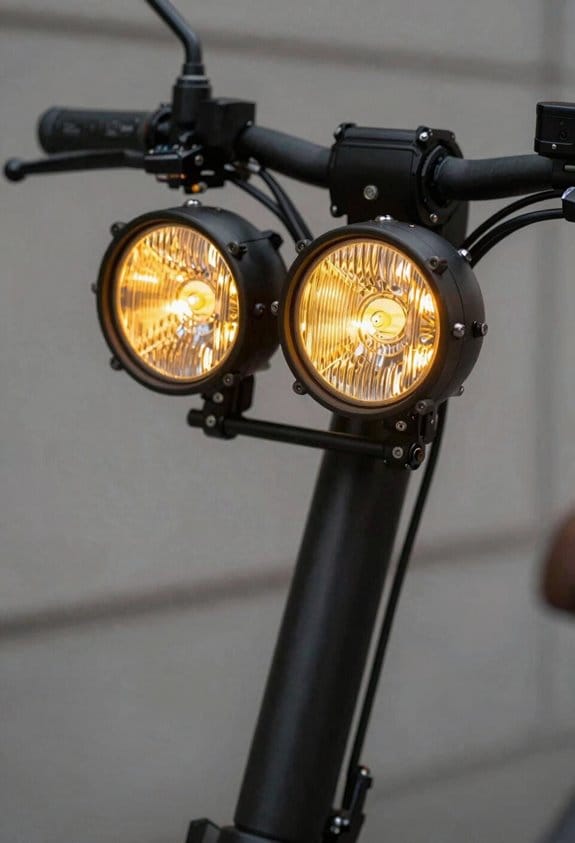
When the fog rolls in, you know the road can feel like a cloud of cotton. A yellow LED fog light in the 3,000 K–4,300 K range actually cuts through that moisture better than a white or blue lamp. The trick is that yellow wavelengths sit near the red edge of the spectrum, so the droplets don’t absorb as much. Light scatters less because fog droplets grab short‑wave blue more than the longer‑wave yellow.
Frankly, the 3,000 K–4,300 K band reduces glare and gives you clearer road‑edge contrast. That means you can spot hazards early, even on off‑road trucks, rally cars, or work trucks that haul through misty valleys. A 12 V, 30 W unit with about 1,200 lumens and a 5,000‑hour life is a solid choice. Look for a sealed housing and a built‑in diffuser that spreads the beam over a 120‑degree flood pattern for short‑range visibility.
Worth knowing: a good yellow fog light doesn’t draw extra power, so you won’t drain your battery while you’re hunting for the next turn. The lower color temperature also means your eyes stay less strained, letting you stay focused longer. If you’re after a reliable setup, stick with a model that’s rated for the harsh conditions you’ll face.
Here’s the trick: mount the light low on the front bumper, angled just enough to shine on the road without blinding oncoming drivers. Make sure the wiring is protected from the elements, and check the connections regularly for corrosion. A tight, waterproof seal will keep the unit humming through rain, snow, or dust.
Try this: before you head out, give the fog light a quick test in a misty parking lot. Notice how the yellow glow seems to “cut” through the fog compared to a standard white beam. If the visibility feels better, you’ve got the right gear for those low‑visibility days.
Do you think a simple color change can make such a big difference on the road? Give it a try and see how much safer your night drives become.
Beam Pattern and Aiming Essentials for Fog‑Penetrating LEDs
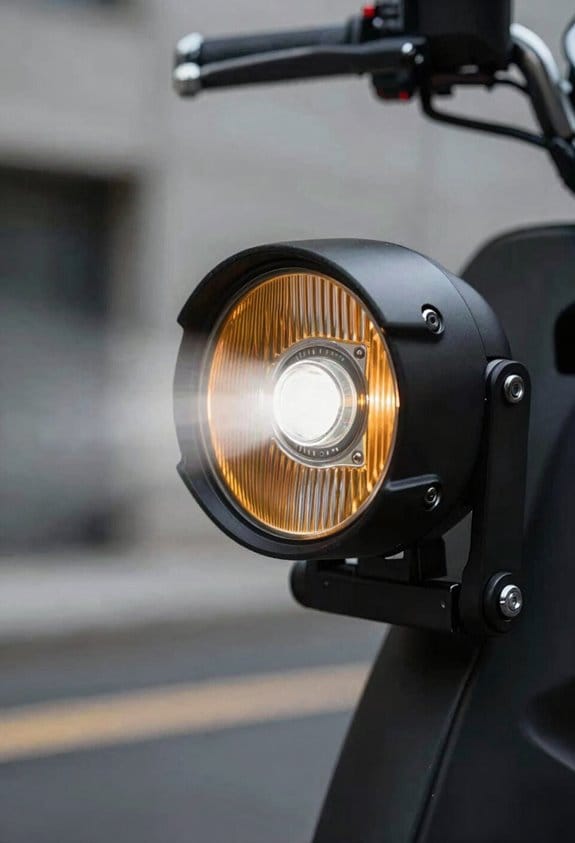
Ever tried driving through dense fog and felt like you were guessing the road ahead? That’s the nightmare most of us face when the headlights don’t cut through the mist.
If you mount a fog‑penetrating LED low and aim it right, you’ll get clear road illumination without glare. I check aim alignment during installation, using a level and a target board 10 ft ahead. The beam pattern should be a tight 30‑degree flood with a 5‑degree spot for lane marking. I choose units with adjustable reflector tuning; a simple knob changes the spread from 25 to 35 degrees.
Try this:
- For heavy rain set the spot to 5 degrees.
- For fog widen the flood to 30 degrees.
The housing includes a built‑in lens that reduces scatter, keeping light on the pavement. I verify that the light does not bounce back into the driver’s eyes, and I lock the mount after testing. This setup gives consistent visibility at 60 mph and 30 mph speeds.
Frankly, you’ll notice the difference the first time you hit the road in low‑visibility weather.
Do you want a simple fix that works every time? Give it a try and see how much safer your night drives become.
When Cool‑White (5,000 K–6,000 K) LED Fog Lights Are the Better Choice
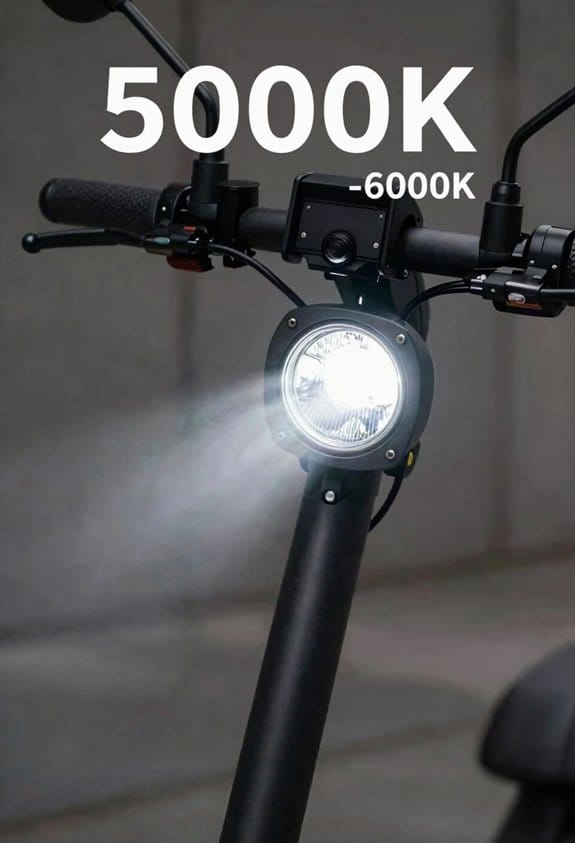
Ever found yourself squinting at the road on a clear night, wishing your fog lights could do more than just cut through rain?
When you’re cruising fast on an open highway, a tight 30‑degree flood plus a 5‑degree spot can be a lifesaver. Cool‑white LEDs (5,000 K–6,000 K) give you that extra edge on clear stretches, matching daylight so your eyes adjust instantly.
Why you’ll love them
- They hit about 3,000 lumens, so the beam stays bright without washing out the road.
- Turn‑on time is instant, and they keep that brightness for up to 50,000 hours.
The beam stays tight, which cuts down on glare and stops back‑scatter from other cars’ headlights. On highways, rural routes, or even during night rain, you’ll notice the difference right away.
Frankly, the color temperature slices through mist better than warmer amber, yet it still lets your eyes adapt fast. That means you stay sharp and react quicker when something unexpected shows up.
Worth knowing: the LEDs stay at full brightness for a long time, so you won’t have to worry about dimming after a few years.
If you’re looking for a light that works well in both rain and clear night conditions, these cool‑white LEDs are a solid pick. They’re especially handy when you need distance vision on long, straight roads.
Give them a try and see how much easier night driving can be. Ready to upgrade your fog lights?
Dual‑Color LED Fog Light Systems for On‑the‑Fly Switching
Ever been stuck in a thick fog bank and found your headlights barely cut through? I’ve been there, and the difference a dual‑color LED fog light can make is huge. You get a warm 3,000 K yellow glow for dense fog and a crisp 6,000 K white beam for rainy nights, all with a single push‑button switch. The latency is under 0.2 seconds, so you won’t lose sight when conditions shift.
The switch sits right where your thumb can reach it on the dash, letting you toggle without taking your hands off the wheel. Each mode pumps out 1,200 lumens, which is plenty to light up the road ahead. The whole unit draws just 12 watts and plugs into a standard 24‑volt system, so you won’t have to rewire anything.
Worth knowing:
- The housing is sealed to IP68, so moisture and dust are no problem.
- Mount it about 15 inches above the bumper; that height cuts glare and spreads light evenly.
Frankly, the low power draw keeps your battery happy even on long trips. The bulb’s design fits most stock setups, and the bright white mode works great on highway rainstorms. When the fog lifts, you can switch to yellow for a softer, more penetrating beam that cuts through low‑visibility haze.
Try this: install the light on the front of your vehicle and test both colors in safe conditions before you hit the road. You’ll notice the yellow mode fills the fog with a gentle glow that doesn’t reflect off the droplets as much as white does. The white mode, on the other hand, gives you a sharp, far‑reaching beam that’s perfect for night driving on wet pavement.
If you’re wondering about durability, the IP68 rating means the unit can handle splashes, rain, and even a wash‑down without trouble. The sealed housing also protects the electronics from road salt and grime, which is a big plus for anyone who lives in a coastal area.
What’s the best part? You don’t need a fancy controller or a separate power source. One button, two colors, and a quick switch that feels natural under your thumb. It’s a simple upgrade that can boost safety without a big hassle.
Give it a try and see how much easier it is to drive through fog and rain. Have you already tried a dual‑color fog light, or are you thinking about adding one to your ride?
Common Color Temperatures to Avoid in Poor‑Visibility Conditions
Ever stuck in fog or rain and found your headlights just aren’t cutting it? You’re not alone. When the light’s too blue, it bounces off the mist and makes everything look washed out. That glare not only hurts your eyes but can also mess with your depth perception, making driving feel unsafe.
Most drivers these swear by amber or warm‑white bulbs because they keep the road visible without blinding you. A good rule of thumb is to stay clear of ultra‑blue LEDs over 6,500 K and super cool whites above 6,000 K. Those shades tend to cause eye strain and can even push you past legal luminance limits. If you’ve ever felt your eyes burning after a night drive, that’s why.
Frankly, the sweet spot lands between 3,000 K and 5,500 K. Amber bulbs in the 3,000 K–4,300 K range give you strong contrast and low glare, while a cooler white around 5,000 K–5,500 K still feels bright without being harsh. Look for a product that lists the exact kelvin rating, beam spread, and compliance marks—those details matter for safety and legality.
Worth knowing: a 4,500 K ceiling with a 150‑lumens‑per‑watt rating is a solid middle ground. It meets SAE J578 standards, keeps visual stress down, and works well in dual‑mode fog lights. When you check the specs, you’ll see that this range respects legal limits and helps you stay focused on the road.
- Choose a model that clearly states its kelvin value and beam pattern.
- Verify it’s certified to SAE J578 for reliable performance.
If you’ve already tried a few different bulbs, you’ve probably noticed the difference in glare. The right temperature not only improves visibility but also reduces driver fatigue on long trips. Remember, the goal is to see the road clearly, not to blind yourself with overly bright, blue‑tinted light.
Give a warm‑white or amber bulb a try on your next foggy commute and see how much easier it is to stay safe. Have you found a specific brand that hits the sweet spot for you?
LED Fog Light Advantages Over Halogen and HID in Wet‑Night Driving
Ever found yourself squinting at a rainy road, wondering why your lights seem to melt into the mist? That’s a common hassle for anyone who drives at night when the weather turns wet. Switching to LED fog lights can really change how you see the road, and it doesn’t have to be a complicated upgrade.
LEDs last a lot longer than the old halogen bulbs you’re used to—think 15,000 to 50,000 hours versus just 2,000 hours for a typical halogen. That means you won’t be swapping out bulbs as often, and you’ll save a few bucks on replacements. They also draw only about 10‑15 % of the power a halogen needs, which eas the load on your fuel pump and can trim your fuel bill a little. The solid‑state design is tough on vibration, moisture, and temperature shifts, so the light stays bright even when it’s pouring.
Worth knowing:
- Most LED kits use the same plug‑in connectors as your stock halogen, so you can usually swap them without any drilling.
- The brackets are built to fit standard housings, which keeps the installation quick and clean.
When you pick a color temperature, think about the conditions you face most often. A 6,000‑K cool‑white LED works great for rain because it cuts through the water droplets and gives you a clear view. If you drive through dense fog a lot, a 3,000‑K yellow LED can help reduce glare and improve contrast. Some drivers like a dual‑color unit that lets them switch between the two, which is handy when the weather changes mid‑trip.
Frankly, the biggest win is the steady brightness you get in wet conditions. The LEDs don’t flicker or dim when the temperature drops, so you stay confident behind the wheel. And because they run cooler, there’s less risk of overheating the housing or damaging nearby wiring.
Try this: install the LEDs, test them on a wet night, and notice how the light spreads evenly across the road without the harsh glare that can blind other drivers. You’ll likely find that you feel more secure and can react faster to any obstacles.
These simple upgrades give you reliable, glare‑free illumination on wet roads, and they keep your vehicle looking modern without a big hassle. Ready to make the switch and see the difference for yourself?
Choosing the Best LED Fog Light for Your Vehicle
Ever tried driving through a thick fog bank and felt like you were staring into a wall? I’ve been there, and the right LED fog light can make all the difference.
First, think about the lamp’s color temperature. A 3,000 K yellow hue cuts through dense fog, while a 5,000‑6,000 K cool white works best for rain. If you want both, a dual‑color unit that switches between them gives you flexibility without swapping bulbs.
Frankly, a solid choice packs around 10,000 lumens, offers a 120‑degree beam, and comes in a sealed IP68 housing. Those specs keep the light bright and protected from moisture and road debris.
Here’s the trick: pick a model with a plug‑and‑play connector. That way you avoid rewiring and can snap it into the factory mounting brackets in minutes.
- Use the existing brackets instead of drilling new holes.
- Run a 12 V power wire through the firewall, then seal the entry point with silicone.
Worth knowing: a good warranty can save you headaches later. Look for at least three years of coverage, a clear return policy, and a lifetime LED warranty that guarantees brightness retention.
If you’re into DIY, a simple switch lets you toggle between yellow and white on the fly—perfect for fog, rain, or night driving.
When you’re ready to install, double‑check that all connections are sealed with silicone to keep water out. A tight seal means the light stays bright and reliable for years.
What’s the biggest factor for you when choosing a fog light—brightness, durability, or ease of install?
Give it a try and see how much safer your drives become.
Frequently Asked Questions
Do Yellow LED Fog Lights Affect Night‑Time Color Perception for Other Drivers?
I’ve found that yellow LED fog lights slightly shift peripheral color, but drivers quickly adapt visually, so night‑time perception isn’t notably impaired for other motorists.
Can a Dual‑Color System Be Legally Installed on All Vehicle Classes?
I can install a dual‑color system on most vehicles, but you’ll need to check wiring compatibility and legal restrictions for each class, since some states limit aftermarket LED colors or require specific approvals.
How Does Rain Intensity Alter the Optimal Beam Pattern for Yellow LEDS?
I’ve seen tests showing rain‑intensity can cut yellow LED range by 40 %. When rain intensifies, I use tighter variable intensity and precise beam shaping to keep the road illuminated without scattering.
Are There Battery‑Drain Concerns When Switching Between Yellow and White Modes?
I’ve found battery longevity isn’t dramatically affected by mode switching; the LEDs draw similar current in yellow or white, so you won’t notice a noticeable drain when toggling between the two.
Do Fog‑Penetrating LEDS Interfere With Driver‑Assistance Camera Systems?
I’m kidding—your fog‑penetrating LEDs won’t sabotage the camera; they just add a subtle camera falsecolor tint and a whisper of infrared leakage, which the system filters out without drama.