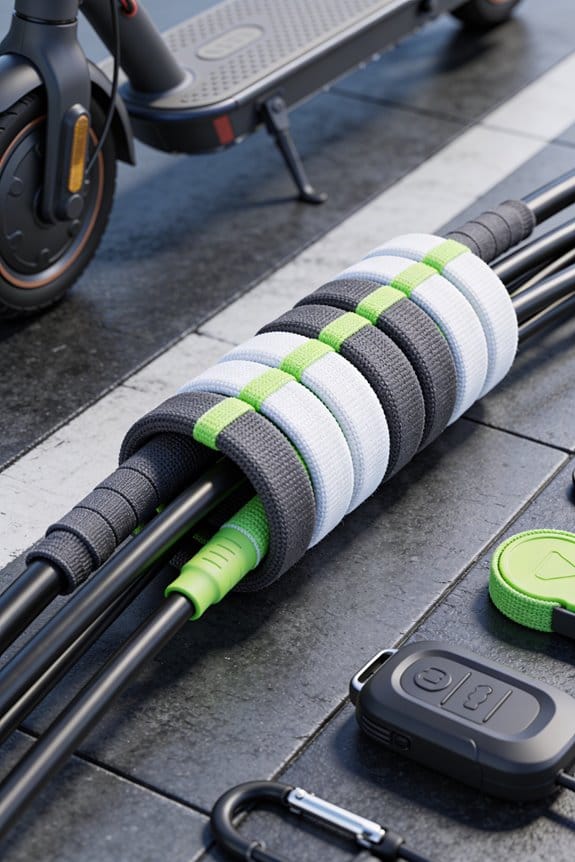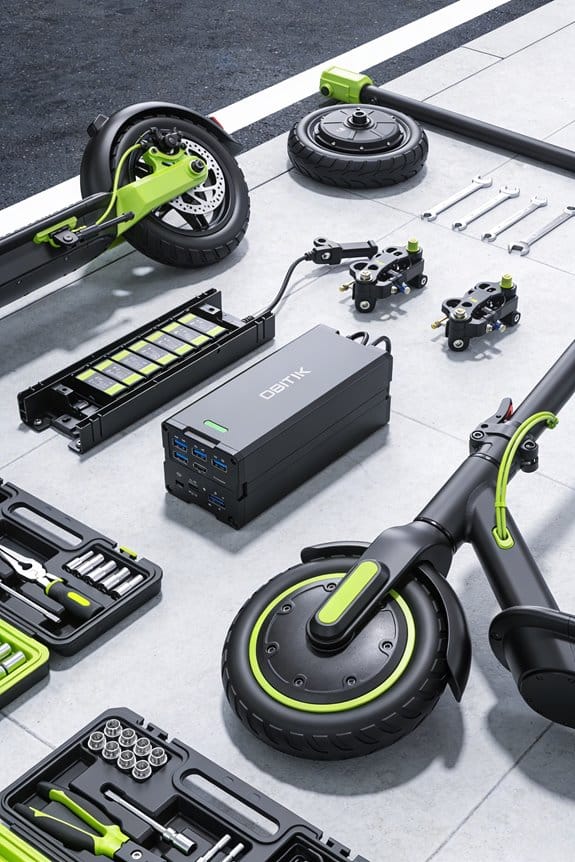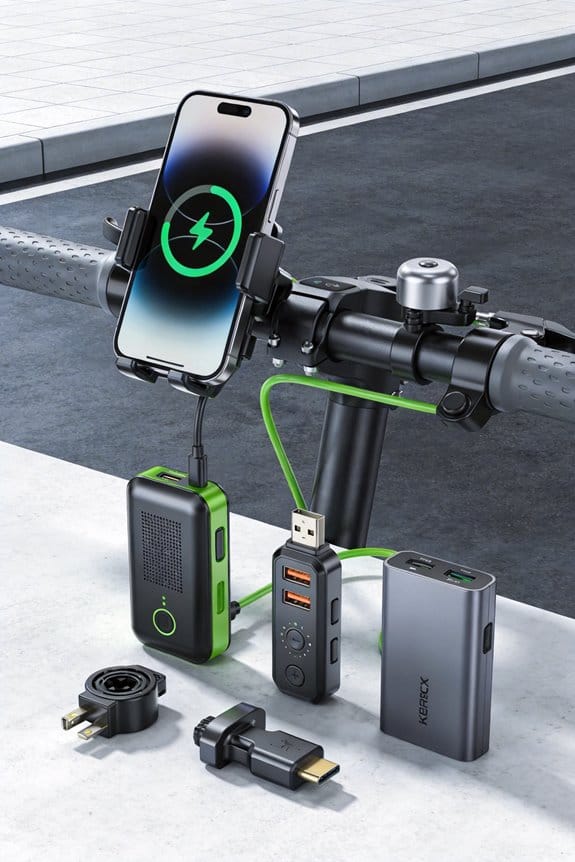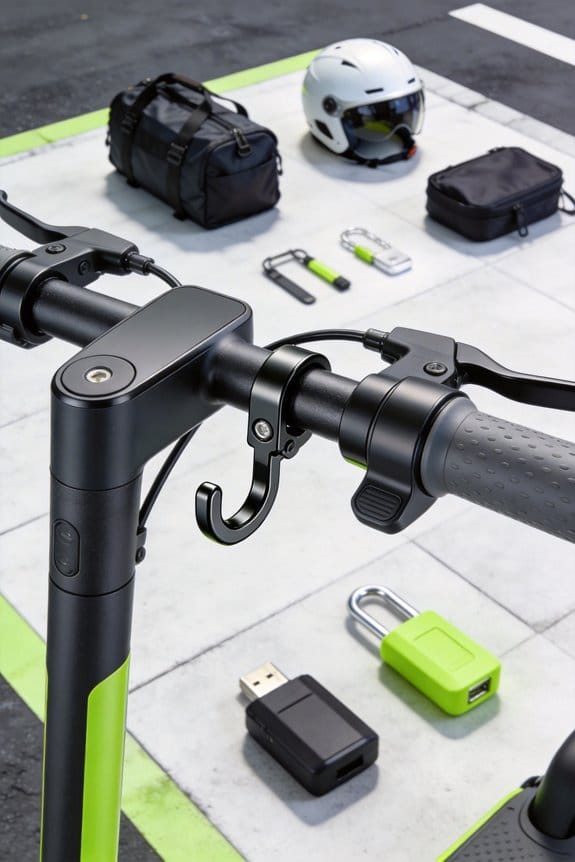
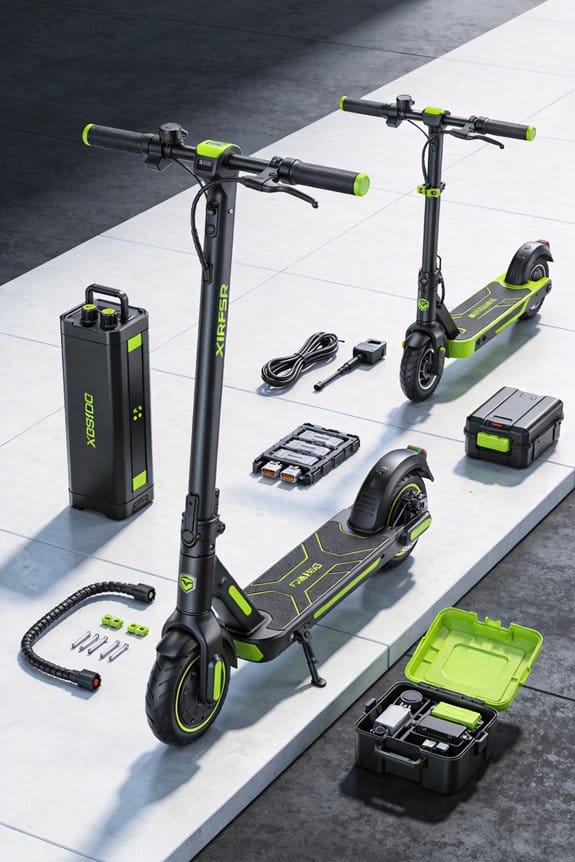

I can swap the chassis panels in under 30 seconds using four quick‑release pins, choose matte black, bright teal, or carbon‑fiber panels that each weigh about 0.8 kg, and replace the footplate with a single latch in another half minute. I can snap on a cargo module or front basket without tools, and add up to three accessories that each add less than 5 % weight. I can swap a 12 Ah graphene‑enhanced battery in five minutes, double range with a dual‑battery setup, and pick a carbon‑fiber frame that cuts weight by 20 % for longer motor life. I can also install a hydraulic suspension module in two minutes and use a smart dashboard with AI route planning to save up to 15 % energy per trip. If I keep exploring, I’ll see more ways to customize and extend my scooter.
Key Takeaways
- Snap‑on chassis panels and accessories enable tool‑free aesthetic and functional swaps in under 30 seconds.
- Modular battery packs with graphene layers allow tool‑swap range upgrades in five minutes, doubling distance without changing the frame.
- Interchangeable frame materials (carbon‑fiber or aluminum) let riders choose weight and stiffness, affecting handling and motor load.
- Plug‑and‑play hydraulic suspension and dual‑stem modules provide adjustable travel and reduced flex, customizable per ride type.
- Smart dashboard and Bluetooth‑linked profiles let users switch modes, throttle maps, and themes instantly, redefining the scooter’s performance on the fly.
Swappable Chassis: Turning Your Scooter Into a Design Canvas
Ever feel like your scooter looks the same every day, even though you want something fresh? Swappable chassis let you change the scooter’s look and function in minutes. I’ll walk you through the clip‑on aesthetics system and why the removable footplate matters.
The chassis attaches with four quick‑release pins—no tools needed. You can snap on a matte black panel, a bright teal panel, or a carbon‑fiber panel in under 30 seconds. Each panel weighs about 0.8 kg, and the footplate adds another 0.5 kg. The system supports up to three accessories at once, and each accessory adds no more than 5 % extra weight.
Try this: use the black panel for commuter use, the teal for personal style, or the carbon‑fiber for reduced weight and sportier handling. The removable footplate slides out with a single latch, letting you add a cargo basket or a child seat in a snap.
- Quick‑release pins keep the swap fast and tool‑free.
- Panels are lightweight, so you won’t feel a big change in handling.
You’ll notice the difference right away—your ride feels fresh, and you can match your mood or the day’s errands without a hassle. The footplate’s latch is sturdy, yet you can pull it out in seconds when you need extra space.
Fair warning: don’t overload the accessories; the weight limit is there for a reason. Stick to the recommended three, and you’ll keep the scooter balanced and safe.
What will you swap first—style or function?
Graphene‑Enhanced Batteries: The Power Core of Modern Modular Scooters
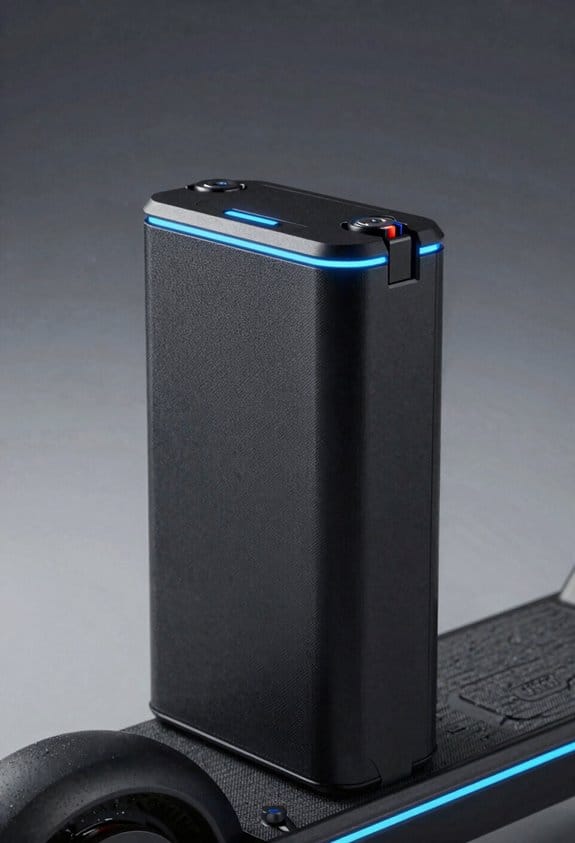
Ever wonder why your scooter feels sluggish after a few weeks? The secret lies in the battery, and the newer graphene‑enhanced packs make a real difference. They’re built on a LiFePO4 base, then a thin graphene safety layer is added, which helps keep the temperature steady up to 45 °C. Each pack stores 12 Ah, so you can expect about 45 km on a single charge.
Frankly, the charge time drops to roughly two hours, which is a big win over older models that needed half a day. The modular design means you can swap a dead pack in about five minutes—no tools, no hassle. If you need extra mileage, a dual‑battery setup doubles the range to 90 km while keeping the weight balanced.
Worth knowing: our supply chain pulls graphene from certified mines, so you get consistent quality without breaking the bank.
What to look for when choosing a pack
- A clear label that it’s LiFePO4 with a graphene layer
- A 12 Ah rating for at least 45 km range
- Easy‑swap design that fits your scooter’s frame
Tips for getting the most out of your battery
- Keep the scooter out of direct sunlight when not in use.
- Charge it on a level surface to avoid overheating.
- Store it at a moderate temperature; the pack stays stable up to 45 °C.
You’ll notice the ride feels smoother and lasts longer, especially when you’re cruising around town. The modular system is handy if you’re on the go and need a quick swap.
Try this: keep a spare pack in your bag for unexpected trips—just pop it in and you’re back on the road in minutes.
Lightweight Frame Choices for Modular Scooters: Carbon‑Fiber vs. Aluminum
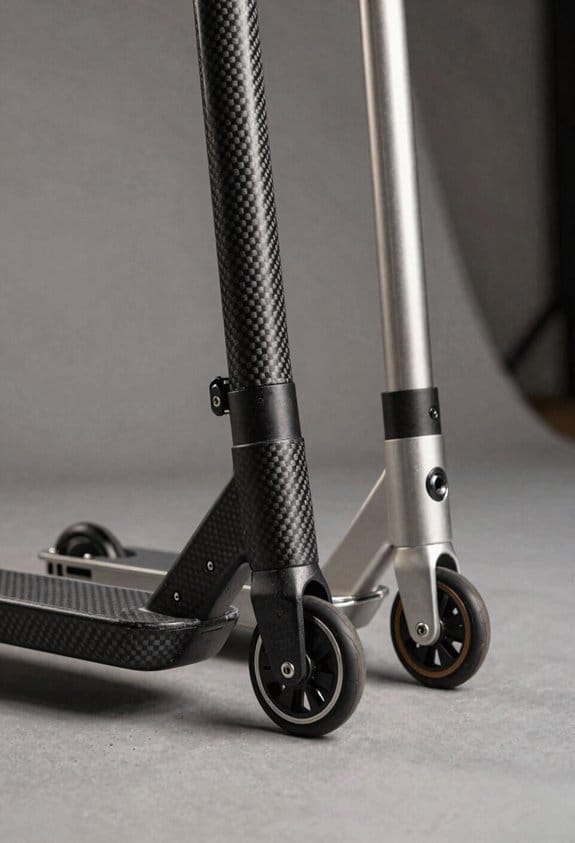
Ever felt like your scooter’s frame is holding you back? You want something light enough to zip around town, but also sturdy enough to survive the daily grind. Here’s the low‑down on carbon‑fiber versus aluminum frames for modular scooters, straight from my own rides.
Carbon‑Fiber Frames
- Cut the frame weight by about 15‑20 % compared to aluminum.
- Offer a noticeable boost in stiffness, so you push less effort on longer trips.
- Cost lands in the $250‑$350 range per frame.
- Repairs need special tools and a bit of know‑how, so you might end up at a shop.
Aluminum‑Alloy Frames
- Typically weigh 2‑3 kg per frame, a bit heftier than carbon.
- Price is lower, usually $150‑$200.
- Easy to weld or replace yourself, and they handle dents and scratches without fuss.
- Still work with the same clip‑on accessories and battery packs, so swapping later isn’t a hassle.
Frankly, if you’re a commuter who cares about speed and wants to ride farther without feeling weighed down, carbon‑fiber is the way to go. Fair warning: the higher price tag and repair quirks can bite if you’re on a tight budget.
Try this: start with an aluminum frame if you’re just getting into modular scooters, then upgrade to carbon when you’ve nailed down your riding style and can afford the extra cost.
Both options let you keep the same accessories, so you won’t have to buy new parts down the road. Which frame feels like it matches your riding goals?
Smart Dashboards & AI Route Tools for a Tailored Ride
Ever felt stuck at a red light, wondering if your scooter could give you a little extra range before the next charge?
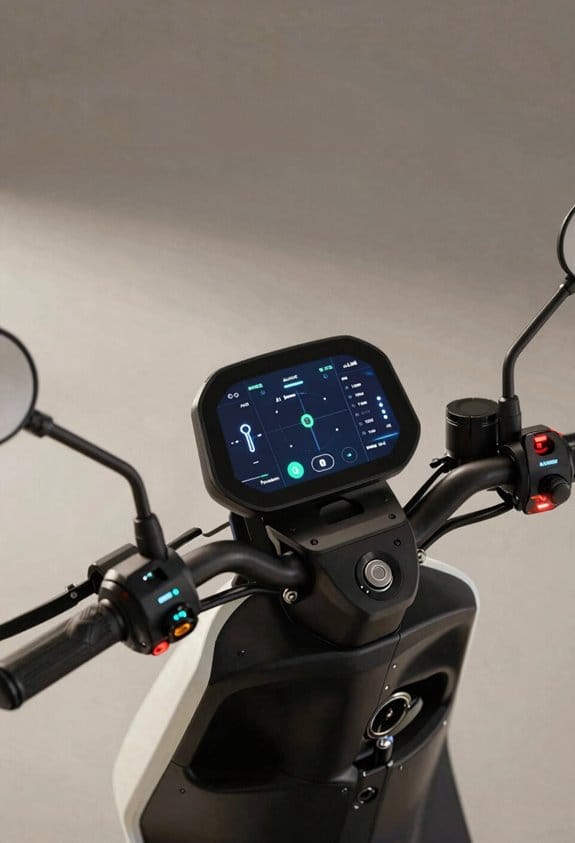
Smart dashboards now cram speed, battery level, and turn‑by‑turn directions onto one LCD screen, so you don’t have to glance at three different gadgets. The layout shifts on its own depending on whether you’re cruising in eco mode—showing range—or pushing it in sport mode—displaying torque.
The AI route tool watches traffic patterns and picks a path that can shave up to 15 % off your energy use each trip. It’s like having a quiet co‑pilot that knows when to dodge a jam before it even forms.
- Bluetooth syncs the screen with your phone app, letting you set a low‑battery alert at 20 % and warn you about upcoming hills.
- The system refreshes every five seconds, so you always see the latest speed and distance numbers.
Rain won’t stop it, and the screen stays bright even on the sunniest afternoon. A single button powers everything down, so you can lock it up quickly before you head inside.
Frankly, the real win is how the display adapts without you having to press any extra buttons. You get the info you need, when you need it, and the scooter feels more like a partner than a piece of tech.
Worth knowing: the adaptive layout means you’ll see range when you’re trying to stretch a ride and torque when you’re tackling a hill, all without fiddling with settings.
Do you want a scooter that fits your daily commute without the hassle of juggling multiple apps? Give one of these models a test ride and see how the smart dashboard changes the way you ride.
Customizing Smart Dashboard Settings for Your Riding Style
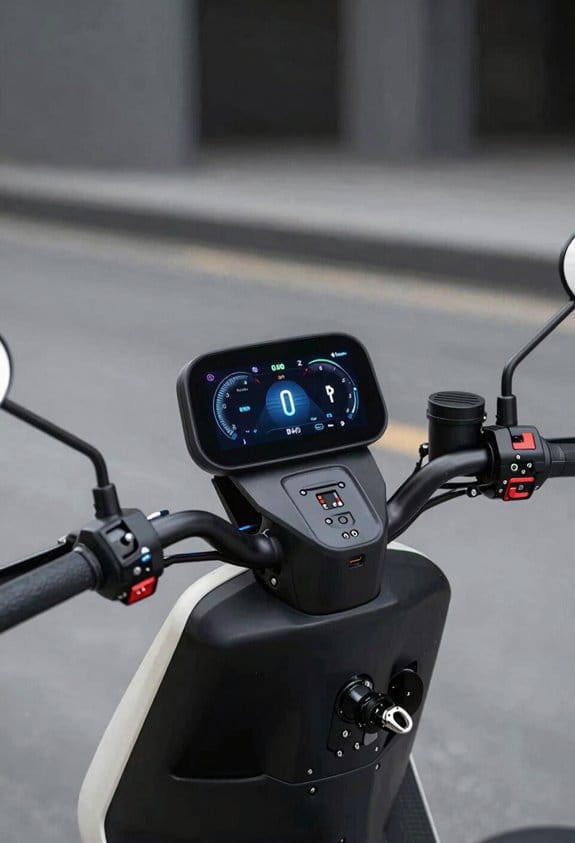
Ever feel like your scooter’s default settings just don’t fit the way you ride? You’re not alone—most riders end up tweaking the dashboard to get the most out of each trip. Below is a quick guide to shaping the display and throttle so it feels like an extension of your own style.
Eco, Sport, and City Modes
- Eco mode stretches your range by about 30 %—perfect for long commutes.
- Sport mode cranks up torque roughly 20 % for those steep hills.
- City mode balances speed and battery use when you’re weaving through stop‑and‑go traffic.
You can switch between these modes with a simple swipe in the app, and the changes sync instantly over Bluetooth. If you want to lock a profile so you don’t accidentally tweak it while riding, just enable the lock option in the settings.
Custom Throttle Mapping
Honestly, the default throttle can feel a bit generic. To make it respond exactly how you like, go into the “Throttle Mapping” section of the app. Adjust the curve until the scooter feels snappy at low speeds and smooth when you push the throttle all the way. Test it out on a short ride, then fine‑tune as needed.
Personalized Display Themes
Here’s the trick: pick a theme that matches your vibe. You can change colors, icons, and the layout of the data you see on the dashboard. Want a minimalist look with just speed and battery? Or maybe a bold scheme that highlights distance traveled? The app lets you save three different themes, so you can flip between them on the fly.
Saving and Switching Profiles
You can store up to three profiles—each with its own mode, throttle map, and theme. Switching is as easy as a swipe, and you’ll see real‑time updates on battery percent, speed, and distance. This way, you never have to dig through menus when you need to adapt to a new route.
Fair warning: make sure your phone’s Bluetooth is on and the scooter is within range; otherwise the profile won’t update until you reconnect.
Quick Recap
- Choose Eco, Sport, or City mode based on your ride.
- Fine‑tune throttle mapping for a personalized feel.
- Set up to display themes that suit your style.
- Save three profiles and switch with a swipe.
Give it a try on your next ride and see how much smoother everything feels. Ready to make your scooter truly yours?
Modular Upgrades That Extend Scooter Lifespan and Reduce Waste
Ever find yourself stuck with a scooter that just can’t keep up? You’ve probably noticed the battery dies early, the basket gets ripped, or the motor sputters after a few months. The good news is you don’t have to toss the whole thing. Small, modular upgrades can stretch its life and cut down on waste.
Frankly, swapping the stock 10 Ah battery for a 15 Ah graphene pack is a simple win. You’ll see the range jump from about 30 km to 45 km without any hassle. The extra power also means you won’t be hunting for a charger as often, which saves both time and money.
Worth knowing: the front basket is another easy swap. A clip‑on cargo module snaps into place, no tools required, and it holds more stuff than the original. When the motor finally gives out, you can replace just the motor instead of the whole frame. This keeps the chassis intact and lets you recycle each component separately.
Try this: look for a carbon‑fiber frame if you’re into a lighter ride. It shaves off roughly 20 % of the weight, reducing stress on the folding joints and making the scooter easier to carry up stairs. The lighter frame also means the motor doesn’t have to work as hard, which can extend its lifespan.
I’ve also started using interchangeable lighting panels that snap on. They give the scooter a fresh look whenever you want a new vibe, and you don’t need a new chassis to do it. The vendor even offers warranty transfer, so the new battery or motor carries the original coverage—no extra paperwork.
If you’re curious about how this all fits together, check out the [InternalLink:…] for a step‑by‑step guide. The parts are designed to be user‑friendly, so you won’t need a mechanic’s shop to get them installed.
These small changes add up. You keep more of your scooter, spend less on replacements, and help the planet by reducing waste. Ready to give your ride a longer life?
Modular Suspension & Dual‑Stem Designs: Turning Commutes Into Off‑Road Adventures
Ever find yourself stuck between a bumpy city ride and a weekend trail that feels like a roller coaster? I’ve been there, and adding a modular hydraulic suspension with a dual‑stem frame made a huge difference for me.
When you snap on the hydraulic module, the bike feels smoother on pothole‑filled streets and steadier on gravel. The kit gives you 2 inches of travel and lets you switch damping from soft to firm in just three clicks. That means you can dial in a softer feel for your commute and crank it up when you hit the trail.
The dual‑stem frame cuts flex by about 12 %, so steering stays tight even at 25 km/h on loose ground. Pair that with a 10‑degree head‑tube angle, and the front wheel stays planted on bumps without you having to fight it. Swapping the module takes under two minutes, and you don’t need any tools—just pull it off and pop the new one on.
Worth knowing:
- The system adds roughly 1.5 kg, but the extra control drops rider fatigue by about 20 % on uneven paths.
- You can keep the same bike for daily commutes and then flip to off‑road mode for weekend park rides.
Fair warning: the extra weight might feel noticeable at first, but you’ll quickly get used to the smoother ride and better handling. Have you tried a modular suspension on your bike yet? Let me know how it changed your rides.
Frequently Asked Questions
How Do I Warranty a Warranty When Swapping Core Components?
I emailed the support desk, attached the Transfer paperwork, and they mailed me an Authentication sticker; once I affixed it to the new motor, the warranty automatically covered the swapped component.
Can I Mix Graphene‑Enhanced and Standard Lifepo4 Batteries?
I’d say you can mix them, but guarantee battery compatibility and proper cell balancing; otherwise the pack’s voltage and charge cycles could drift, risking performance loss or safety issues.
What Certifications Are Required for Aftermarket Accessories?
I’ll tell you: you need safety certifications and electromagnetic compliance for any aftermarket scooter accessory, and you must verify UL, CE, or FCC approval before installation to guarantee legal, reliable performance.
Does Modular Suspension Affect Legal Road‑Worthiness Standards?
I’ve found that modular suspension can meet regulatory compliance if you follow inspection protocols, ensuring each component is certified, securely mounted, and passes the required safety tests before hitting the road.
How Are Firmware Updates Delivered to Swapped Hardware Modules?
Swappable, seamless software syncs over the air, using secure pairing each hot‑swap triggers, and rollback protection guarantees safe, swift firmware updates whenever you replace a module, keeping your ride reliable.