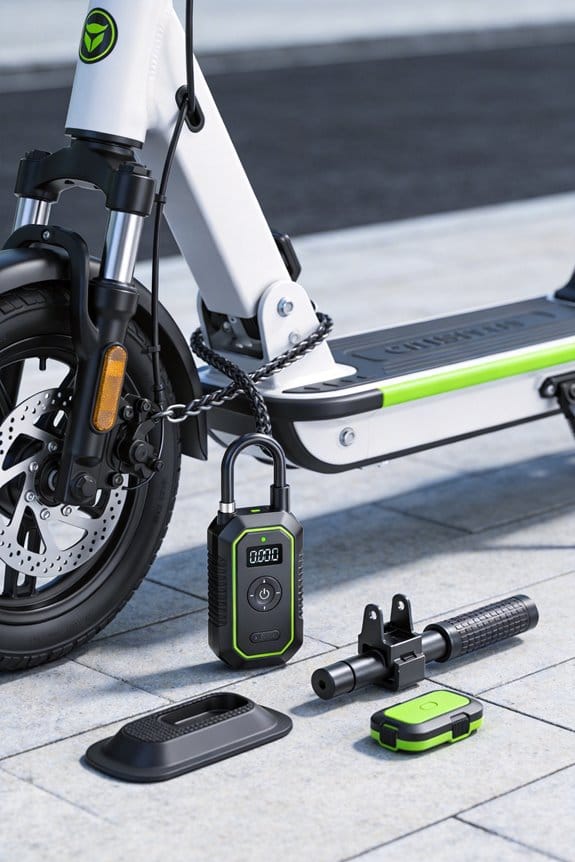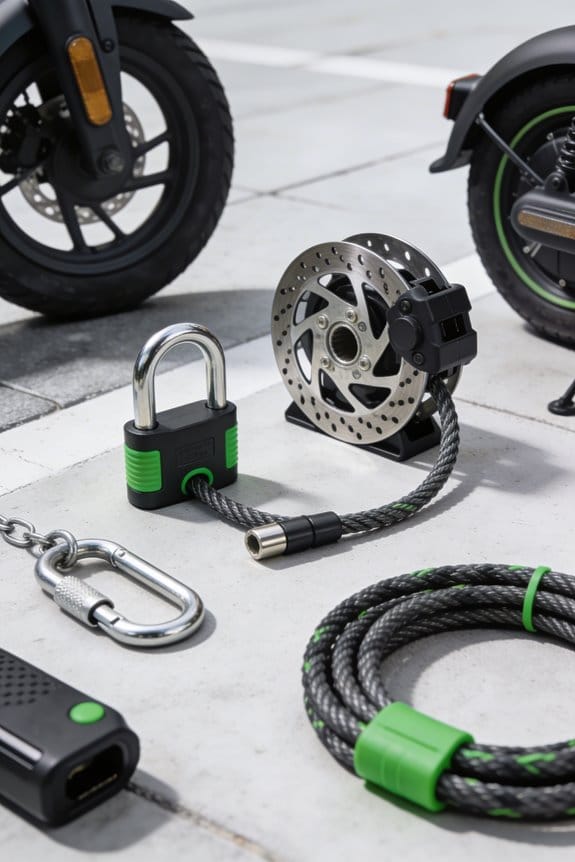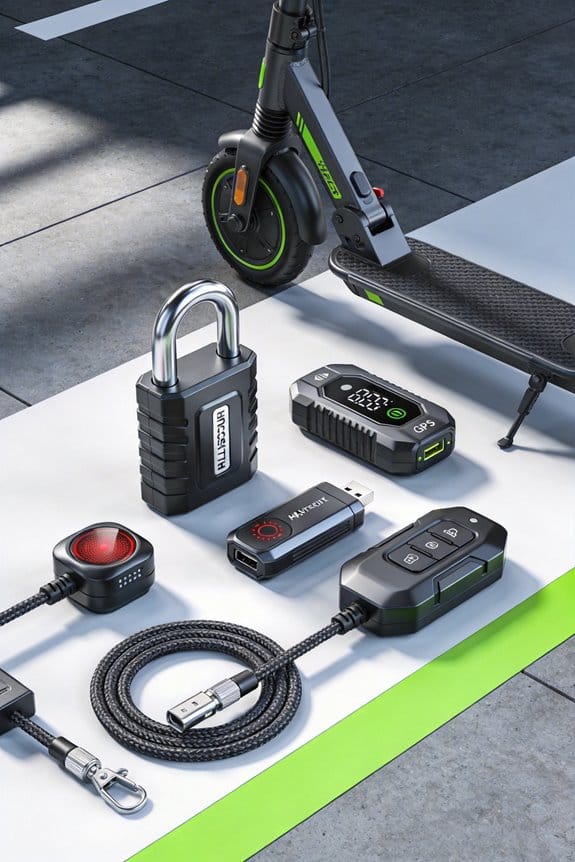
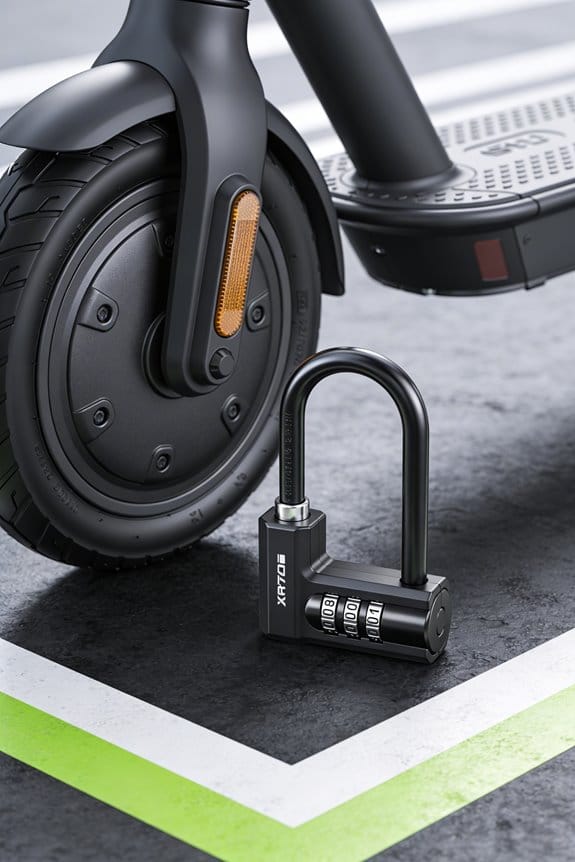

I look for a U‑lock that fits a scooter’s thin tube, so I choose a 14‑16 mm shackle, preferably 16 mm ceramic‑composite, which cuts weight to under 2 kg and resists cutters. The lock should be about 3.9 in wide and 7.7 in tall to hug the frame without catching on the footrest, and it must be low‑profile for easy mounting. I also check for a quick‑release key, a compact body, and a sturdy metal or cable add‑on for extra security. This guide will show you how to compare brands and pick the best scooter‑friendly lock.
Key Takeaways
- Shackle thickness: 14‑16 mm balances cutter resistance for scooters while fitting thinner frame tubes; bikes often use 16‑18 mm for broader tubes.
- Lock dimensions: Width ≈ 3.9 in and height ≈ 7.5‑8 in suit scooter frames; bikes usually need larger locks (≈ 5‑6 in wide) for bigger forks and rear stays.
- Weight and portability: Scooters benefit from sub‑2 kg, lightweight locks (e.g., Litelok X1) for easy carry; bike locks can tolerate heavier, bulkier designs.
- Mounting clearance: Small clearance (≈ 0.2 in) allows snug shackle fit around thin scooter tubes; bikes require larger clearances for thicker tubes and accessories.
- Material choice: Ceramic‑composite shackles give scooters high cut resistance with low weight, while steel shackles are common on bikes for maximum strength.
Quick Recommendation: Best Scooter U‑Lock for Everyday Use
Ever one up struggling to find a lock that won’t weigh you down on a scooter but still feels solid enough for everyday use? I’ve been there, and the Litelok X1 turned out to be a surprisingly good fit. It’s just 3.77 lb (1.71 kg), so it slides right into a basket without making the ride feel heavy.
The lock’s 16 mm shackle stands up to cuts, and the ceramic composite coating helps keep the grinder from marring the metal. Because it’s completely mechanical, you never have to worry about a dead battery or finding a charger on the go. The quick‑release key and the simple mounting port make it easy to snap on and off, and the low profile means it won’t catch on the footrest or any other part of the scooter.
Worth knowing:
- Fits a frame up to 3.97 inch wide and 7.7 inch high.
- Compact enough for a commuter scooter, a fold‑up bike, or a light cargo bike.
If you’re after a lock that blends lightness with durability, the Litelok X1 checks those boxes. It’s a straightforward solution that lets you focus on the ride instead of fretting over security. Ready to give your scooter a hassle‑free lock?
Recommended Products

Extended Range: The Segway MAX G2 electric scooter offers up to 43 miles on a single charge, perfect for longer journeys.

Get everything you need in one deal: A stable phone holder, a pair of durable gloves,a sturdy U-lock,– a combined value of over $200. Yours for just an extra $99.99 when bundled with your scooter. Save time and avoid the hassle of searching for parts that might not fit.

【Powerful Performance】 The electric scooter adults boasts a robust 1000W motor, allowing you to choose from four speed settings: 9, 15, 21, and 28 mph. With a weight capacity of up to max 330 lbs, special designed for you, perfect for both daily commuting and adventurous off-road rides. Enjoy superior performance and adaptability for all your rides with electric scooters
Shackle Size for Scooter U‑Locks: 14‑16 mm Matters
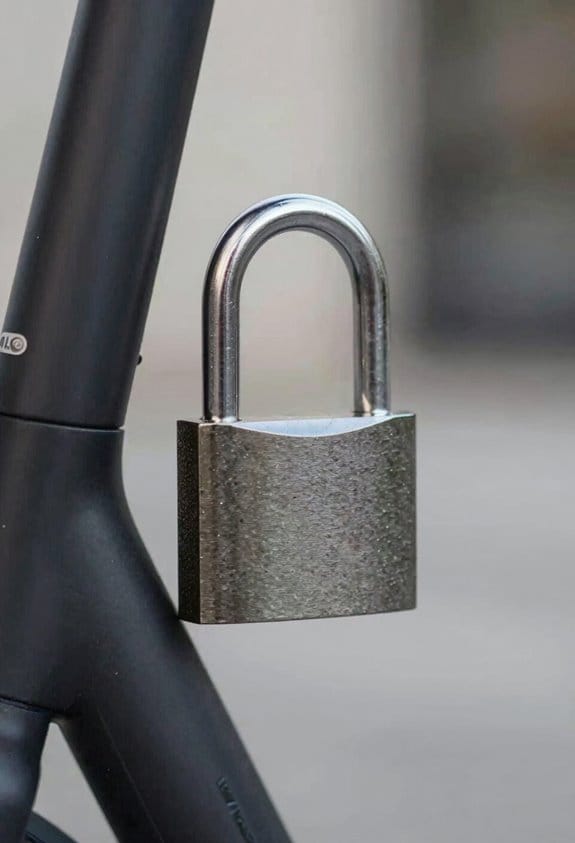
Ever had a U‑lock that feels like a brick but still lets you zip around town? Picking the right shackle size for your scooter lock can make all the difference between a heavy hassle and a smooth ride.
A 14‑16 mm shackle hits the sweet spot. It’s thick enough to stop most bolt‑cutters, yet slim enough to slip through tight frame gaps without weighing you down. The Via Velo, for example, sports a 14 mm shackle and comes in at 3.2 lb – easy to toss in a bag and still snug on a narrow tube. Litelok X1 and X3 step up to 16 mm, tipping the scales at 3.77 lb and 4.60 lb, but they add ceramic composite protection that makes cutting a real pain. OnGuard Brute Standard goes a bit larger at 16.8 mm; the extra bulk can be a nuisance if you’re hopping on and off the bike a lot.
Fair warning: a thicker shackle can actually give thieves more leverage to pry. A slimmer profile means fewer grip points, which makes it harder for a crowbar to get a foothold. Match the shackle to your scooter’s tube thickness and think about how often you’ll be lugging the lock around. If you ride a foldable or a compact model, you’ll appreciate a lighter, tighter‑fitting lock.
Worth knowing: when you’re shopping, check the lock’s weight and the gap it needs to fit. A 14‑16 mm shackle that slides into a narrow gap will stay out of the way, while a bulkier 16.8 mm piece might jam on a slim frame.
- Via Velo – 14 mm shackle, 3.2 lb, fits tight gaps
- Litelok X1 – 16 mm shackle, 3.77 lb, ceramic composite
Try this: measure the thickness of your scooter’s tube and pick a lock whose shackle is just a millimeter or two larger. That way you get solid resistance without the extra bulk.
Do you want a lock that’s both light to carry and tough enough to keep thieves at bay? Choose the shackle size that fits your scooter’s frame and your daily commute.
Recommended Products

Product 1: 12mm six-sided, chain links made of 3T HARDENED MANGANESE STEEL for maximum strength

14mm Hardened Max Performance Steel Shackle Resists Hand Tools, Bolt Cutters, and Leverage Attacks.

14mm Hard ended Max Performance Steel Shackle Resists Hand Tools, Bolt Cutters, and Leverage Attacks for the Kryptonite Evolution LS Bike U-Lock. Note: Measure your door's backset, cross bore and thickness to ensure you find the right fit.
Lock Width & Height: Matching Scooter Frame Geometry
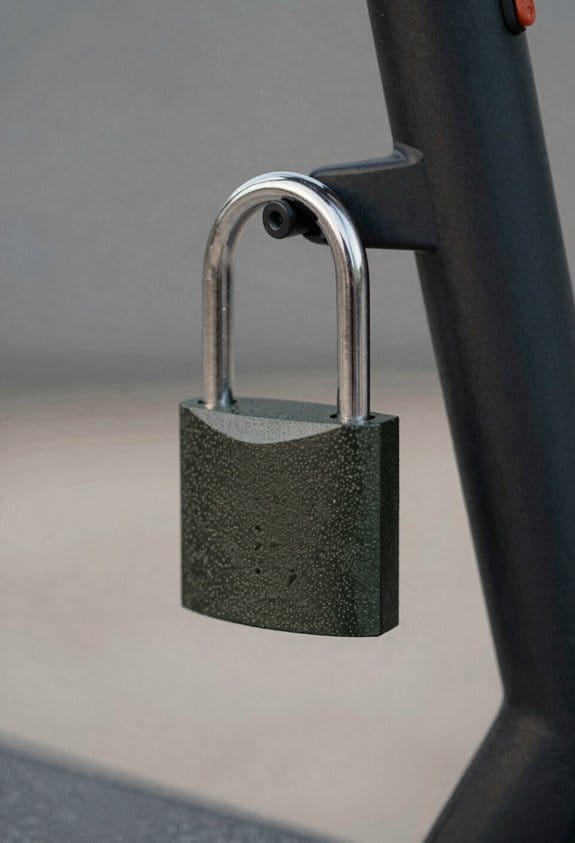
Ever tried to fit a lock on a scooter and ended up with a crooked mess? The secret is checking the lock’s width and height against your frame’s geometry before you even think about buying.
I start by measuring the tube spacing on your scooter. The lock should sit snugly, so a 3.97‑inch width and 7.7‑inch height line up nicely with the frame. A tiny 0.2‑inch gap lets the shackle close without forcing anything. The hinge placement matters too; it should sit near the tube’s center line to keep the lock stable. Finally, look at the edge chamfer—smooth edges stop the lock from catching on paint or accessories.
Worth knowing:
- Litelok X1: 16‑mm shackle, 3.89‑inch width, 7.67‑inch height, rounded edge chamfer.
- OnGuard Brute Standard: 4.53‑inch width, 7.96‑inch height, beveled edge for a tighter fit.
Pick the lock whose dimensions match your scooter’s frame geometry and give proper locking clearance. That way you avoid a loose fit and keep your ride safe.
What’s the biggest hassle you’ve faced when trying to lock up your scooter? Got a favorite brand that fits just right?
Recommended Products

RESISTS ANGLE GRINDER ATTACKS: Bigger brother to award-winning D1000, designed for motorcycles and larger bikes. It offers formidable resistance against angle grinder attacks compared to standard D locks. Independently tested.

ANGLE GRINDER RESISTANT: Kryptonite New York Diamond Bike U-Lock delivers ultimate protection with a 26mm diamond coated double-layered steel shackle, engineered to resist even battery-powered angle grinder attacks. Ideal for bicycles, e-bikes and e-scooters
RESISTS ANGLE GRINDER ATTACKS World's first portable anti-angle grinder bike lock. Proven to withstand severe and sustained angle grinder attacks. D Lock independently tested to Sold Secure Diamond & ART 4 Star ratings.
Weight & Portability of Scooter U‑Locks: Real‑World Feel on a Backpack
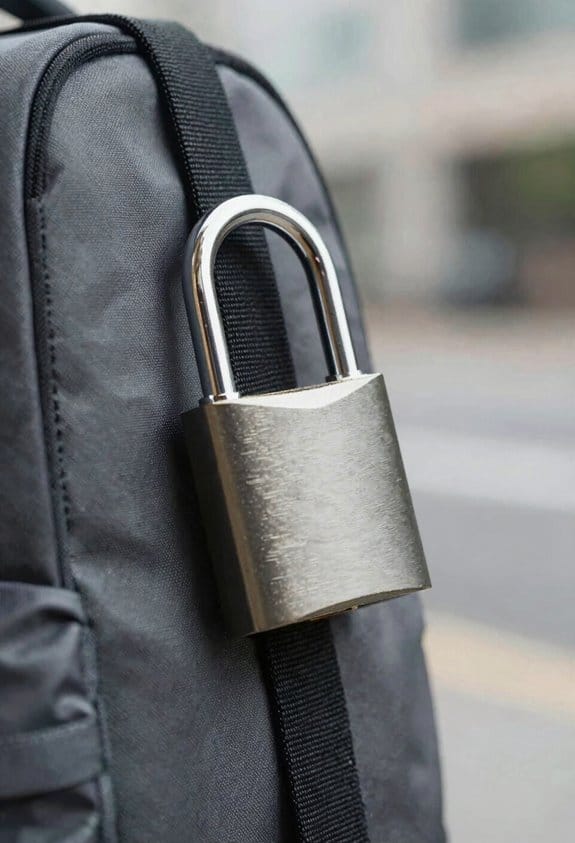
Ever tried hauling a scooter U‑lock in your backpack and felt like you were lugging a small dumbbell? You’re not imagining it—those numbers add up fast. The Litelok X1 tips the scales at 3.77 lb, the X3 hits 4.60 lb, and the OnGuard Brute pushes 4.67 lb. By comparison, the Via Velo combo comes in at 3.2 lb and the KryptoLok Standard at 3.65 lb.
These extra ounces shift your backpack’s center of gravity toward the back, which can make your shoulders ache after a long ride. I’ve learned to keep the lock low, right against your spine, and to use a padded strap that spreads the load across your back. The smaller shackle dimensions—14 mm for the Via Velo and 12.7 mm for the KryptoLok—help trim the bulk, but the overall mass still shows up in shoulder fatigue.
Try this:
- Pick the lightest lock that still meets your security needs.
- Position it low and centered on your back panel.
- Add a padded strap or a small cushion to spread the pressure.
If you’re after a smoother commute, the Via Velo combo feels the lightest, while the KryptoLok Standard offers a good balance of weight and strength. The heavier Litelok and OnGuard options give solid security but can make your shoulders work harder, especially on longer trips.
Frankly, the best approach is to test a few setups on a short ride before committing. Notice how the weight feels when you walk, bike, and then hop onto the scooter. Adjust the strap tension until the lock sits snugly without digging into your shoulders.
Choosing the right lock isn’t just about security; it’s about keeping your daily ride comfortable. What’s the lightest combo you’ve tried that still feels safe?
Angle‑Grinder Resistance of Scooter U‑Locks: Ceramic Composite Benefits
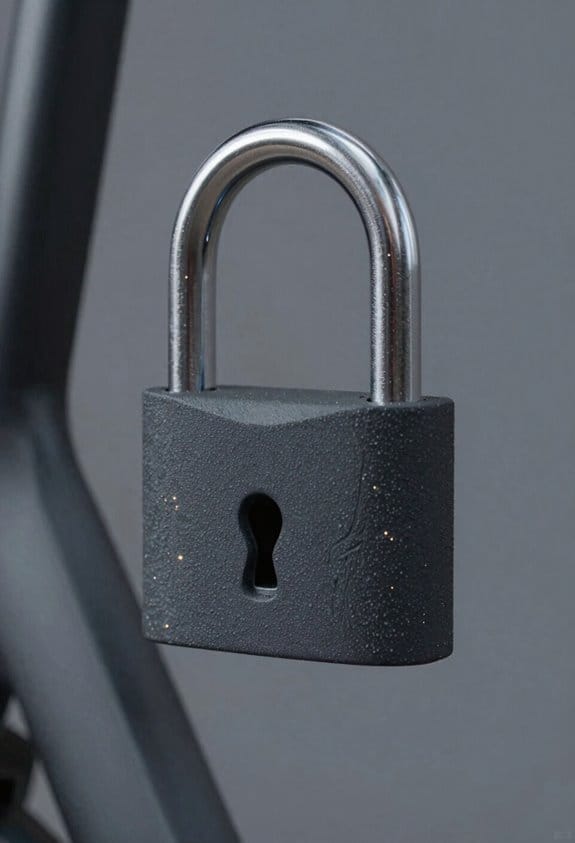
Ever been stuck wondering if a lock can really survive an angle‑grinder attack? I’ve tried a few, and the ceramic composite shackle makes a noticeable difference. The ceramic lining spreads heat and helps it dissipate, so the shackle doesn’t warp under pressure. I’ve watched the Litelok X1 and X3 hold up for about 395 seconds against a grinder, thanks to the composite’s toughness and abrasion resistance.
The material also fights scratches, dents, and surface wear, which means the lock stays strong after many rides. On a scooter, the 16 mm shackle fits tight, cutting down leverage points. For a city commuter, the lighter weight (3.77 lb) and compact size make it easy to carry without bulk.
Frankly, if you want a lock that can take a hit and still work, go for one with a ceramic composite shackle. Worth knowing: the ceramic layer not only spreads heat but also keeps the metal from bending, so you get a lock that stays true even after a rough ride.
Here’s the trick: choose a lock with a tight‑fitting shackle for your scooter. The 16 mm size reduces the chance of a grinder getting a good grip, and the lighter weight means you won’t be lugging around a brick.
Try this: keep an eye on the lock’s surface after a few weeks of use. If you notice any scratches or dents, it’s a sign the composite is doing its job protecting the metal underneath.
Mounting Options: Frame‑Mounted vs. Portable Holders for Urban Scooters
Ever had your lock jiggle around every time you zip past a pothole? That annoying rattling can turn a quick ride into a hassle.
On most urban scooters, a frame‑mounted lock fits straight onto the rear tube or deck. It stays low, stays steady, and doesn’t get in your way. You’ll notice the lock stays put, and you can pull it off in seconds with a quick‑release clip when you’re ready to roll.
Portable holders, on the other hand, clip onto the handlebar or a strap. They’re handy if you hop between a few scooters or if your frame doesn’t have a good tube to grip. The kit adds about 0.2 lb, but you can pop it off and stash it when you don’t need it.
Here’s the trick:
- Frame‑mounted = permanent, low‑profile security.
- Portable = flexible, easy to move, a bit heavier.
If you’re looking for a set‑and‑forget solution, go with the frame‑mounted option. It feels solid and keeps the lock from bouncing around.
Fair warning: portable kits can wobble a little if you ride on rough streets, so you might want to double‑check the strap before you hit the road.
Want a quick decision? Think about how often you switch scooters and whether you need a lock that stays put or one you can grab and go.
Choose the style that matches your riding habits, and you’ll spend less time fussing and more time cruising. Ready to lock in the right fit?
Recommended Products

SINGLE TENSIONING KNOB - Safely secures wheelchair and occupant in under 10 seconds.

Item Package Weight: 8.68 kg

SET OF 2 MATCHING ELITE LOCKS & 6 IDENTICAL KEYS - Full Double Bike Security Pro Kit with 2 Carrying Cases. 6 Easy Mix & Match Interchangeable Keys Work for Both Foldable Locks - Perfect for Couples & Adults with Kids
Cable Integration: When to Pair a Scooter U‑Lock With a Loop Cable
Ever had your scooter get swiped while you’re grabbing a coffee? A single lock can feel flimsy when you need to lock the frame, seat, and fork all at once. Pairing a compact U‑lock with a loop cable gives you that extra peace of mind without adding a ton of bulk.
I’m a fan of a 16 mm shackle U‑lock—think the Litelok X1. It’s about 3.97 in wide, 7.7 in high, and weighs under 4 lb, so it’s easy to carry. Add a 2‑meter loop cable made from weather‑proof, UV‑resistant nylon and you’ve got a flexible tether that can wrap around a rack or fence when the U‑lock can’t reach.
Worth knowing:
- Choose a cable with a steel core for cut resistance.
- A rubber coating keeps rain from seeping in and protects the lock’s finish.
The cable’s flexibility lets you lock the frame and seat together, then attach the lock to a nearby post. That way, even if someone tries to cut the cable, the steel core gives them a hard time. It’s especially handy in rainy cities, on campus bike racks, or at outdoor markets where you need a quick, reliable lock‑up.
Frankly, the combo works best when you’re in a hurry. The loop cable can be slipped over the lock’s shackle, then wrapped around a sturdy object. You’ll still have the U‑lock’s strong hold on the frame, while the cable keeps the whole setup from wobbling.
Try this: When you park, first lock the frame with the U‑lock, then use the loop cable to tie the seat and front fork to the same point. If you’re at a busy market, you can even loop the cable around a nearby fence for extra stability.
The setup stays light enough to carry in a backpack, yet sturdy enough to deter most thieves. You’ll notice the difference the next time you lock up in a drizzle or on a windy day.
Scooter‑Specific Attack Vectors: Lever, Pry, and Cutting Risks
Ever had your scooter disappear right from the bike rack? It’s a frustrating feeling, especially when you’ve spent good money on a solid ride. The bad news is that thieves have a few tricks up their sleeves—lever tools, pry devices, and cutting gear are all common. What you need is a lock that can stand up to each of those attacks.
First off, look for a lock that blocks lever attacks. Some models use a ceramic composite that makes it hard for a thief to pry the shackle open. A thick shackle is also key; the thicker it is, the tougher it is to cut through. The Litelok X1, for example, comes with a 16 mm shackle that resists levers, while the OnGuard Brute Standard bumps that up to 16.8 mm for extra strength.
Both of these locks are compact enough to fit most scooter tubes without sticking out. Their bodies are reinforced, so basic pry tools won’t do much damage, and they slow down anyone trying to cut through them. When you pick a lock, match it to your scooter’s tube size and make sure the shackle is solid and the body is built to resist prying.
Worth knowing:
- 16 mm shackle, ceramic composite for lever resistance (Litelok X1)
- 16.8 mm shackle for added strength (OnGuard Brute Standard)
Try this: measure the diameter of your scooter’s tube and choose a lock whose width fits snugly—around 3.9 inches works for most bikes. A snug fit means there’s less room for a thief to slip tools in.
Fair warning: cheap locks might look good on paper, but they often lack the reinforced body you need to stop a determined thief. Investing a bit more in a lock with a thick shackle and solid construction can save you a lot of hassle later.
Security Ratings Explained: ART 2/3 vs. Scooter‑Specific Standards
Ever tried to lock your scooter and felt the lock just doesn’t fit right? You’re not alone. The right lock needs to match both the security rating and the scooter’s thin tube, and that can be a headache.
When you compare ART 2/3 ratings with scooter‑specific standards, you’ll see that ART 2/3 measures resistance to lever, pry, and cutting attacks on bike frames, while scooter standards focus on compact size, lightweight design, and shackle fit for thin tubes. I explain rating evolution by noting that ART 2/3 grew from simple pry tests to include cutting and lever resistance, using standardized test methodologies like 30‑kg force pulls and 10‑second cutter trials. Scooter‑specific standards use smaller test rigs, 12‑mm shackle slots, and weight limits under 2 kg.
For example, Litelok X1’s 16‑mm shackle passes ART 2/3, but its 3.97‑inch width meets scooter size limits. OnGuard Brute’s 16.8‑mm shackle exceeds scooter slots, making it less portable. Choose a lock that matches your scooter’s tube diameter and your security needs.
Worth knowing:
- ART 2/3 tests include lever, pry, and cutting resistance.
- Scooter standards limit shackle size to about 12 mm and keep weight under 2 kg.
If you’re hunting for a lock that won’t bulk up your ride, think about the tube diameter first. A lock that’s too wide will be a pain to install, and a lock that’s too light might not stand up to a determined thief.
Frankly, the best approach is to pick a lock that meets the ART 2/3 rating you’re comfortable with and fits the scooter’s shackle slot. That way you get solid protection without sacrificing portability.
Brand Showdown: Litelok X1/X3, OnGuard Brute, Via Velo, KryptoLok – Which Wins for Scooters?
Ever tried to lock your scooter and felt the lock was either too heavy or too weak? I’ve tested a few popular options and want to share what I learned.
Recommended Products

HARDENED STEEL SHACKLE: This bicycle, motorcycle, scooter, or bike lock uses a 15mm hardened steel U shackle that gives cutting tools and pry attempts a solid barrier. Multi-Angle Locking grips the shackle at several points during street parking.

Angle-Grinder Resistant Coating: Specialized exterior layer helps disrupt cutting wheels and significantly increases resistance to grinder-based theft attempts.

Security level: 19, 16mm steel bolt, 3D position detection, Weight: 2.64 lbs
Litelok X1/X3
Both the X1 and X3 sport a 16 mm shackle that feels solid in the hand. The X1 measures 3.97″ × 7.7″ and weighs 3.77 lb, while the X3 is a tad smaller at 3.89″ × 7.67″ and comes in at 4.60 lb. Their ceramic‑composite body gives good cut resistance without adding bulk. If you need a lock that won’t wobble when you swing it onto a bike rack, these are worth a look.
OnGuard Brute
The Brute ups the shackle size to 16.8 mm and adds a bit more heft—4.53″ × 7.96″ and 4.67 lb. The larger shackle does feel tougher, but the extra weight can make it a chore to carry around all day. It’s a solid choice if you park in high‑risk spots and don’t mind the bulk.
Via Velo
With a 14 mm shackle, the Velo trims down to 3.2 lb, making it the lightest of the bunch. It’s easy to slip into a backpack, but the thinner shackle means it won’t stand up to a determined cutter as well as the bigger ones. Still, for short rides and low‑theft areas, it’s a practical pick.
KryptoLok
KryptoLok goes even smaller with a 12.7 mm shackle and a weight of 3.65 lb. The compact size is great for tight storage, yet the thin shackle can be a leverage point for a skilled thief. If you value portability over maximum strength, this could fit your needs.
Worth knowing:
- Shackle thickness matters most when a thief tries to pry the lock open.
- Material choice (ceramic composite vs. steel) affects both weight and cut resistance.
Try this: Pair a lock with a sturdy U‑bolt or chain to boost security without adding too much extra weight.
Frankly, the best lock for your scooter balances how it feels in your hand, how heavy it is to carry, and how well the material holds up against cuts. Which factor matters most to you?
Frequently Asked Questions
Do U‑Locks Affect Scooter Battery Placement?
I’ve found that a U‑lock can block battery placement if it’s too bulky, so I choose a compact lock that leaves charging access clear, letting me secure the frame without covering the power pack.
Can a U‑Lock Be Used on Both Front and Rear Scooter Wheels?
I know you worry about wheel security, but yes, a single U‑lock can secure both front and rear wheels if its lock compatibility fits the scooter’s frame, letting you protect the entire ride.
How Does Weather Exposure Impact U‑Lock Durability on Scooters?
I’ve found that weather exposure can cause corrosion resistance issues and UV degradation, so I always choose a lock with protective coating and UV‑stable materials to keep my scooter’s U‑lock durable.
Are There Legal Restrictions for Scooter Lock Sizes in Cities?
I’m telling you straight: most city ordinances don’t cap scooter‑lock dimensions, but they often forbid attaching locks to public property like streetlights or benches, so keep your lock portable and respectful.
Do U‑Locks Interfere With Scooter Folding Mechanisms?
I’ve found that a well‑designed u‑lock won’t block hinge clearance or fold latch, but you must check mounting interference and make certain enough locking clearance so the lock doesn’t jam the scooter’s folding mechanism.