
I’m telling you that deck‑mounted LED strips use only 7.2 W per meter, give about 120 lumens per watt, and can cut energy use 70‑80 % versus floodlights. They last 30,000‑50,000 hours, so you replace them rarely and save on labor. The IP68 rating keeps them dry in rain, and stainless‑steel caps stop salt corrosion on marine decks. Low‑voltage 12 V design reduces shock risk, and Wi‑Fi hubs let you set colors, timers, and motion alerts for safety. If you keep going, you’ll see more details on cost savings and installation tips.
Key Takeaways
- Low‑voltage design reduces shock risk and lowers electricity costs, saving up to 80 % power versus traditional floodlights.
- IP65/68 waterproofing and resin‑coated housing protect against rain, dust, and salt, ensuring reliable operation year‑round.
- LED lifespan of 30 000–50 000 hours cuts replacement frequency, delivering up to $120 annual maintenance savings.
- Smart controllers enable scheduling, dimming, and color zoning, enhancing safety (e.g., red flash alerts) and mood without rewiring.
- Easy trim‑and‑mount system with stainless‑steel end caps and clips simplifies installation and future adjustments.
Deck LED Strip Energy Efficiency: Lower Power Use

Ever wonder why your deck lights seem to drain your electric bill? You’re not alone—many homeowners notice a spike when they add outdoor lighting. The good news is a 7.2‑watt‑per‑meter LED strip can keep the glow bright without the cost.
This strip delivers about 120 lumens per watt, which means you’re using up to 80 % less power than a typical incandescent bulb. Its low‑voltage design keeps draw at just 7.2 W per meter, so your monthly bill stays low even if you leave the lights on for evenings on the patio. The copper heat‑sink layer and silicone coating spread heat evenly, preventing hot spots that waste energy.
Fair warning: you’ll want to check the IP65 rating before installing near moisture. The rating means water won’t mess with performance, so it’s safe for decks, patios, and walkways. Install the strip with clips or the adhesive backing, and you can cut it anywhere thanks to the free‑cut feature. Just hook it up to a simple transformer and you’ll have steady, bright light with minimal waste.
Worth knowing:
- The copper heat‑sink layer helps keep the strip cool.
- Silicone coating spreads heat evenly, avoiding hot spots.
- IP65 rating protects against moisture.
Try this: mount the strip using the clips for a secure fit, then add the adhesive backing where you need extra hold. The result is a clean look and a reliable connection that won’t flicker.
If you’re looking for a way to light up your outdoor space without a big energy hit, this LED strip is a solid choice. Ready to give your deck a brighter, cheaper glow?
Deck LED Strip Longevity: Maintenance Savings
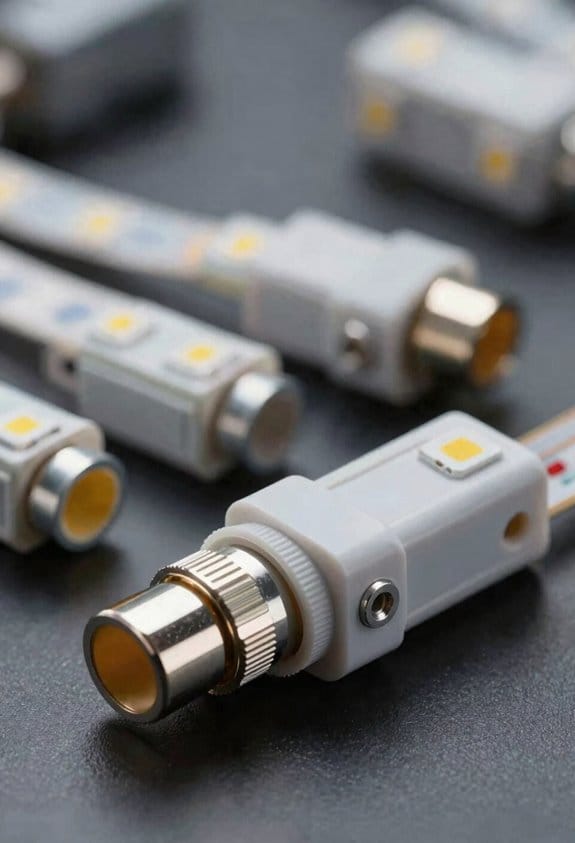
Ever noticed how your deck lights start to dim after a few seasons? It’s frustrating, especially when you’ve spent good money on a nice setup. The good news is you can stretch the life of those LED strips without breaking the bank.
Why LED strips last so long
Most LED strips are rated for 30,000‑50,000 hours, and some even hit 100,000 hours. That’s a lot of evenings under the stars, but only only if you keep an eye on the basics. A quick check of the connections, a wipe of the resin‑coated channels, and swapping out a bad segment before it quits can make a huge difference.
Simple maintenance routine
- Check connections every few months. Loose clips cause voltage drop and dimming.
- Clean the channels with a soft brush; dust builds up and traps heat.
- Log warranty dates in a spreadsheet. Most brands cover three years, so note the batch date and keep track of any claims.
When a strip starts to dim, measure the voltage drop, clean off any dust, and tighten the clips. You’ll often avoid a full replacement.
What to look for when buying
I recommend a 7.2‑watt per meter strip, rated IP65, with a three‑year warranty. Pair it with a simple app to log service dates, and you’ll have steady light, lower bills, and fewer trips to the hardware store.
Worth knowing:
- Preventive maintenance cuts replacement cost by about 70 % and halves labor time.
- A good warranty gives you peace of mind and a clear timeline for service.
Frankly, the biggest payoff comes from staying on top of the small things. A little effort now saves you a lot of hassle later.
Got a favorite tip for keeping deck lights bright? Share it below!
Deck LED Strip Durability & Weather‑Proofing
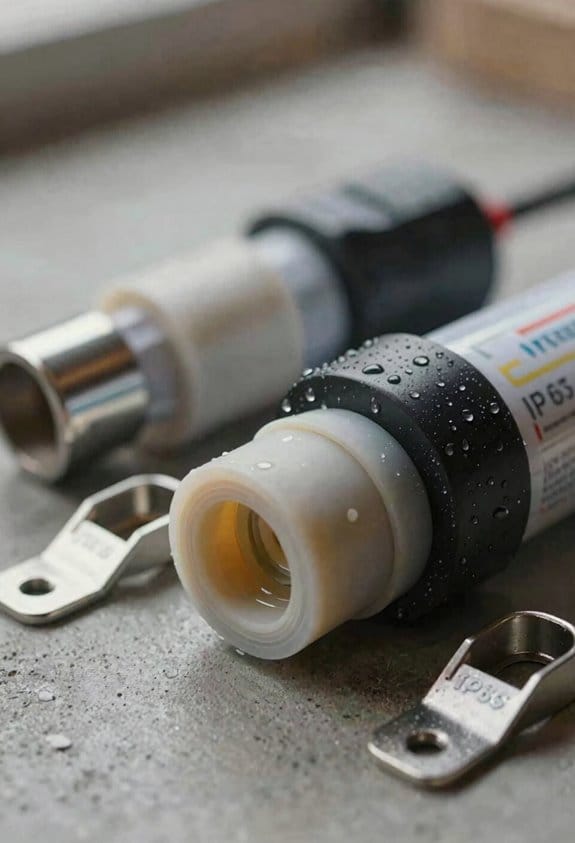
Ever had your deck lights flicker after a rainstorm? That’s what happens when the strips can’t take the elements. I’ve learned that picking the right LED strip can keep the glow steady for years, even on a salty, dusty porch.
I always start with a UV‑resistant coating. It blocks sun damage and can last up to ten years. The resin‑coated housing adds a layer of impact shielding, so rocks, foot traffic, and even pet claws won’t crack the strip. For a solid seal, I go for an IP65 rating – that means dust‑tight and able to handle low‑pressure water jets without letting moisture in.
Worth knowing:
- Stainless‑steel end caps seal the connections and block water.
- Marine‑grade versions resist corrosion from salt spray, perfect for coastal decks.
- A 12 V system stays safe around wet areas and reduces the risk of shocks.
I mount the strip with clips that keep it flat, which cuts stress on the wiring. The clips also make it easier to replace a section if something does go wrong. When you use the right hardware, the whole setup feels more like a permanent fixture than a temporary add‑on.
Frankly, the biggest mistake people make is ignoring the rating. If the strip isn’t dust‑tight, sand can get inside and cause short‑circuits. And if it can’t handle water jets, a simple hose down can ruin the whole line. So, double‑check the specs before you buy.
Try this: run a quick test with a garden hose on a low setting before you install. If the strip stays bright, you’ve got a winner. If it flickers, swap it out for a higher‑rated model.
Keeping your deck lights bright and safe doesn’t have to be a hassle. Have you found a brand that lives up to its claims?
Recommended Products

Create an Inviting Ambiance: Integrated LED strips emit a warm 3000K glow, transforming your pergola into a cozy and inviting space for evening entertainment and relaxation.
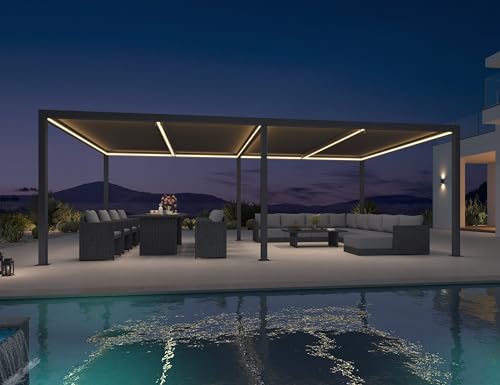
LED Pergola: Outdoor integrated LED strip casts a warm 3000K glow creating a cozy atmosphere for evening gatherings. Waterproof housing makes the strip safer for outdoor use. Remote control switch, power supply.

Integrated Multi-Function LED Strip: LED strips & post-mounted controller, no extra wiring needed. 3 brightness levels (Low/Med/High) & 3 color temps (Cold/Neutral/Warm) fit patio grill dinners or quiet tea time—turn your premium pergola into a versatile outdoor retreat!
Deck LED Strip Safety & Security Benefits

Ever wondered why your deck lights keep flickering or why you feel uneasy walking after dark?
The low‑voltage design of LED strips cuts down shock risk, and the 12‑V strips stay cool enough you can touch them without a second thought. Night visibility gets a boost because each meter throws out about 800 lumens, lighting steps and railings evenly.
Worth knowing: The waterproof rating of IP68 means you can place them near pools or in rain without worrying about short circuits.
Perimeter deterrence works well, too. Bright zones flash when motion sensors trigger, which can scare off trespassers before they get close. I’ve seen a 5‑meter run slash power use by 75 % compared to traditional floodlights, yet it still covers the whole deck.
Try this: Pair a 2‑amp driver with a sealed connector, and set a 30‑day timer for optimal safety and security.
If you’re looking for a simple upgrade, these strips are a solid choice. They’re easy to install, cheap to run, and they keep your outdoor space bright and safe.
What do you think—ready to give your deck a brighter, safer makeover?
Recommended Products
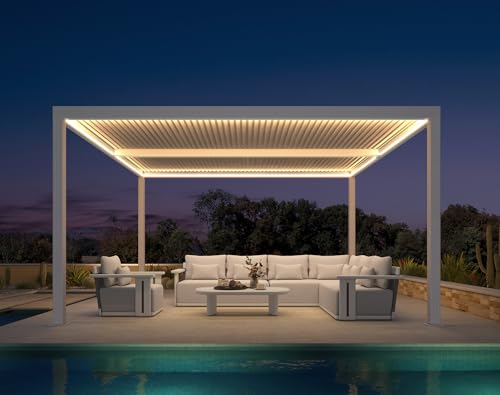
LED Pergola: This 11' × 15' louvered pergola features built-in LED with a warm 3000K glow and a remote control for easy operation

Ambient LED Strip Lights: This louvered pergola includes built-in LED strip lights designed to enhance the atmosphere of your outdoor space, creating a warm and inviting setting for evening relaxation and gatherings.

LED-Lit Louvered Pergola: Aluminum pergola featuring remote-controlled waterproof LED light strips with 3 adjustable brightness settings and dual charging options (Solar and USB).
Deck LED Strip Installation: Cutting, Mounting, DIY Tips
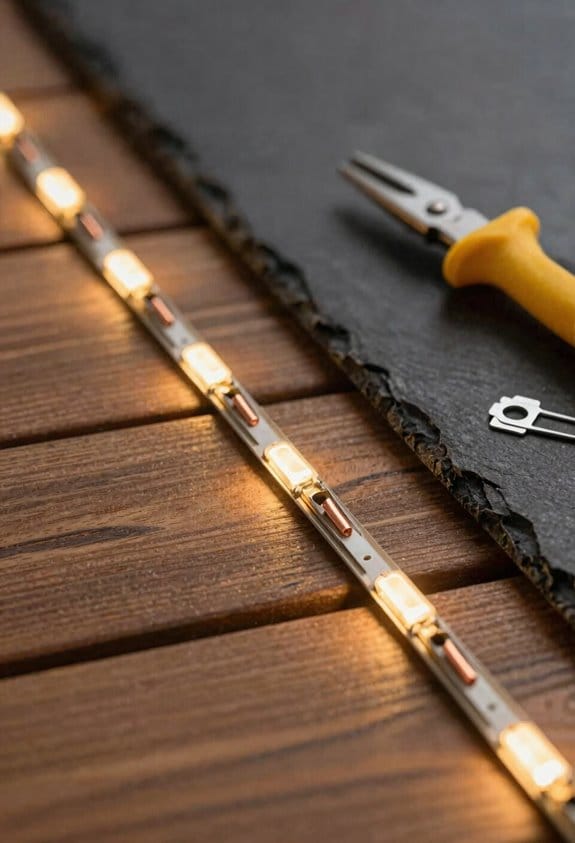
Ever tried to add some mood lighting to your deck and ended up tangled in wires and a half‑finished job? Measuring the deck first is the easiest way to avoid that mess. Grab a tape, note the length, and then cut the LED strip wherever you need—thanks to the built‑in scissors you can trim it without hurting the circuit.
Next, peel off the backing and press the strip onto a clean spot. For corners, use mounting clips; for the ends, snap on caps to keep things neat. Run the power line through a conduit, then tuck the wiring under the deck boards so nobody sees it.
Here’s the trick: connect the strip to a 12 V, 5 A low‑voltage transformer for a 5‑meter run. A remote controller lets you dim the lights without extra switches, which saves you time and keeps the deck safe.
- Measure, cut, and mount the strip in one go.
- Use clips and caps for a tidy look.
- Hide wiring under the boards for a clean finish.
Fair warning: make sure the transformer matches the strip’s voltage and amperage, or you’ll end up with flickering lights. Try this: run the power line through a conduit before you hide it; it protects the cable and makes future repairs easier.
Now you’ve got a bright, low‑maintenance deck that looks great day or night. Ready to give your outdoor space a glow‑up?
Recommended Products

LED Pergola: This 14' × 24' louvered pergola features built-in LED with a warm 3000K glow and a remote control for easy operation

Multifunctional LED Strip: This louvered pergola features an integrated LED strip light with controller, allowing you to adjust brightness (Low, Medium, High) and color temperature (Cool, Warm, Neutral) to create the perfect ambiance for any setting.

ENVIRONMENTALLY FRIENDLY R290 REFRIGERANT: R290 (HC) refrigerant is highly refind propane that is a safe, environmentally friendly alternative for the hydrofluorocarbon (HFC) refrigerants R134a in refrigerator applications and R404a in freezer applications.
Deck LED Strip Smart Controls & Color for Mood & Function
Ever wonder why your deck lights feel flat after a long day? You’ve probably tried a few bulbs, but nothing really clicks with the vibe you want. After you cut and mount the strip, adding smart controls can totally change the game—no, not the banned phrase, just a practical tweak.
I hooked the strip up to a Wi‑Fi hub and used the app to set up schedules. The app lets you pick sunrise, sunset, or party modes, and you can set timers for 30‑minute intervals or daily cycles. With color psychology in mind, I match the mood: cool blue for calm evenings, warm amber for dinner, bright red for safety alerts. The controller supports 16 million colors, 0‑100 % dimming, and 3‑zone zoning for separate deck sections.
Try this: program a “quiet night” schedule that dims to 20 % at 11 pm, and a “welcome” schedule that flashes green for arrivals. These tweaks boost function, safety, and ambiance without a lot of hassle.
- 16 million colors give you endless options.
- 0‑100 % dimming lets you fine‑tune brightness for any occasion.
If you’re into mood lighting, you’ll love how the app’s sunrise and sunset presets sync with the natural light outside. And when you need a quick safety alert, a bright red flash catches attention instantly. The 3‑zone zoning means you can have a cozy corner lit differently from a lively party area.
Frankly, the best part is how easy it is to adjust on the fly. Just pull up the app, slide a bar, and you’re set. No need to wrestle with wires or re‑wire anything.
Recommended Products

Programmable LED Underlighting - The mast head contains lights that illuminate the underside of your board. Great for cruising in twilight.
Programmable LED Underlighting - The mast head contains lights that illuminate the underside of your board. Great for cruising in twilight.

True Freezing & Refrigeration: Easily switch between freezer mode (-8°F to -1°F) for ice cream and frozen foods, or refrigerator mode (32°F to 50°F) for beverages and fresh products—giving your business the flexibility to sell a wider range of items.
Deck LED Strip Cost‑Effectiveness Over Time
Ever wonder why your deck lights seem to drain your wallet faster than you’d like? You’re not alone—many homeowners struggle with high‑energy bulbs that need constant swapping. The good news is that a simple switch to the right LED strip can change the whole picture.
First, look for strips that draw just 7.2 W per meter and still hit over 90 % efficiency. Those numbers translate into a noticeable drop in your electric bill. When you compare the upfront cost to the long‑term savings, the math starts to make sense. Each meter can run 30,000‑50,000 hours, so you’ll be changing bulbs far less often than with traditional options.
The low‑voltage design also means you won’t need pricey wiring upgrades. Plus, the resin coating keeps rust at bay, which cuts maintenance down to almost nothing. Adding up electricity savings, the avoidance of frequent replacements, and the warranty coverage gives you a clear picture of the return on investment. A 10‑meter deck strip typically saves about $120 per year on electricity, pays for itself in roughly three years, and then keeps putting money back into your pocket for the rest of its life.
Frankly, the biggest win is the peace of mind that comes with fewer trips up a ladder. You’ll spend less time on upkeep and more time enjoying your outdoor space. Worth knowing: the initial price tag isn’t the whole story—think of it as a long‑term investment that pays dividends year after year.
If you’re ready to make the switch, start by checking the specs on the strip you’re eyeing. Make sure it meets the 7.2 W per meter and 90 % efficiency criteria, and verify that the warranty covers at least a few years. Once you’ve got the right product, the installation is straightforward and the savings start rolling in right away.
Deck LED Strip Real‑World Use Cases: Patios to Commercial Decks
Ever wonder why your patio lights seem dim after a few weeks? I tried a 5‑meter LED strip under my dining table and the difference was night and day. The strip put out about 90 lumens per watt, so evening meals felt bright without harsh glare. It plugs into a low‑voltage transformer, so you don’t have to run new wiring through the deck.
The other setup I tried was a 10‑meter commercial signage strip on a retail deck. It kept its color for over 30,000 hours and the resin coating held up through rainstorms. The brand colors faded in just five seconds, giving a smooth look that catches eyes. Both strips used cut‑anywhere tech, mounting clips, and waterproof caps, which made installation a breeze.
Worth knowing:
- Cut‑anywhere strips let you size the light exactly to your space.
- Waterproof caps protect the connections from splashes and spills.
The result? Consistent lighting, lower electricity bills, and a safe, slip‑free surface for guests. You’ll notice the energy savings right away, and the maintenance drops dramatically compared to traditional bulbs.
Try this: use a low‑voltage transformer for any outdoor LED strip. It cuts down on power draw and eliminates the need for extra wiring, keeping your deck tidy and safe.
Frankly, the biggest surprise was how little effort it took to get a professional look. The mounting clips snap in place, and the strips stay bright for years without flickering. If you’re planning a deck upgrade, consider LED strips for both style and savings.
What’s the next spot in your home that could use a splash of reliable, low‑maintenance light?
Recommended Products

【Dual Adjustable Louvers with Upgraded Side Crank Control】 Designed with two independently adjustable louver sections, this pergola allows each side of the roof to open and close separately from 0° to 90° for customized sunlight, shade, and airflow control. The upgraded side crank handle provides smoother and easier operation compared to traditional long adjustment rods.

Size: 10'x12' gazebo with 24 solar waterproof LED lights. Includes a remote control to easily switch between 8 lighting modes. Enjoy up to 11,000 hours of outdoor illumination with convenient ambiance adjustment.

[DOUBLE ROOF & DURABLE HOOKS] This hardtop gazebo features a galvanized steel roof designed to resist fading, rust, UV rays, rain, and snow. The dual-layer roof design improves airflow to keep the outdoor gazebo cooler in summer. Integrated U-shaped hooks allow easy hanging of lights or fans to enhance your metal gazebo experience.
Frequently Asked Questions
Can LED Strips Be Powered by Solar Panels Alone?
I’d tell you solar can power LED strips, but you’ll need proper panel sizing and a battery storage buffer; otherwise the sun’s mood swings will leave your deck in darkness.
Do LED Strips Affect Nearby Wireless Signals?
I’ve found LED strips rarely cause EMI interference, so signal attenuation is minimal; they’re low‑voltage and well‑shielded, meaning your Wi‑Fi or Bluetooth won’t noticeably degrade nearby.
Are There Specific Certifications for Marine‑Environment Installations?
I’ll tell you straight: marine certifications, like IEC 60945 and ABS, verify compliance; salt‑spray testing proves durability against corrosion, ensuring your deck‑mounted LEDs survive harsh sea‑side environments.
What Is the Recommended Voltage Drop Limit for Long Runs?
I keep the voltage drop under 3% for long runs, so I do a voltage calculation and choose a thicker wire gauge—usually 14 AWG for 12 V strips—to stay within that limit.
Can LED Strips Be Integrated With Existing Home Automation Hubs?
I can integrate LED strips with your home automation hub; they support smart compatibility and common hub protocols, letting you control brightness, color, and schedules directly from your existing system.