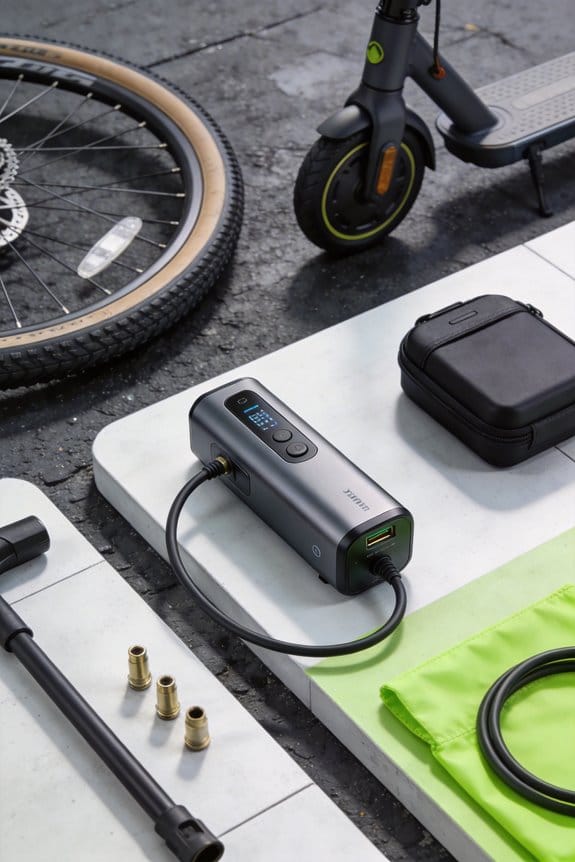

I use a portable electric bike pump because it cuts my commute inflation time to under a minute per tire, reaching 85‑90 PSI quickly. It runs on a 2000 mAh battery, giving about five full inflations before a 30‑minute recharge, and a built‑in fan with heat‑sink keeps the motor under 45 °C even after back‑to‑back uses. The pump fits in a jersey pocket, weighs under 100 g, and eliminates the $2 disposable CO₂ cartridge cost, saving cash and waste. It also seats tubeless beads by ramping to 80 PSI without pressure drop, so if you keep going you’ll discover more benefits.
Key Takeaways
- Inflate a 30 cm tire to 50 PSI in under a minute, keeping you on the road without long stops.
- A 2000 mAh battery delivers about five full inflations per charge, lasting a week of regular commuting.
- Built‑in fan and heat‑sink maintain motor temperature below 45 °C, preserving pressure and efficiency during repeated use.
- Reaches 85–90 PSI, enabling tubeless bead seating and rapid pressure adjustments for both road and mountain bikes.
- At roughly $50, it eliminates recurring $2 CO₂ cartridges, reducing waste and saving money for commuters.
Why Portable Electric Bike Pumps Cut Commute Inflation Time
Ever gotten stuck with a flat on the way to work and felt the minutes slip away? A portable electric bike pump can shave that hassle right off your commute. I’ve been using a pump that blows up a 30‑cm tire to 50 PSI in roughly 50 seconds. It runs off a 2000 mAh battery, gives you about five full inflations before you need to charge, and a quick recharge takes under 30 minutes. I slip it into my jersey pocket; it’s only 93 g and slides into a saddle bag without a fuss.
Frankly, the pump keeps a steady 85‑90 PSI without getting hot, which is a real plus on busy city streets. You won’t have to buy or toss out CO2 cartridges, so you save cash and cut down on waste. When a flat hits, just plug the pump into your bike’s USB port, press start, and you’re back on the road in a few minutes.
Worth knowing:
- One charge handles five inflations, each under a minute.
- Full recharge in under half an hour.
- Weighs less than a soda can and fits a small bag.
Here’s the trick: keep the pump in a jersey pocket so it’s always within reach. That way, you never have to dig through a toolbox or wait for a shop. The lightweight design means it won’t weigh you down, and the battery life is enough for a whole week of rides.
If you’re tired of waiting for a repair shop or borrowing a pump from a friend, this little gadget can keep you moving. Have you tried a portable pump before, or are you still stuck with the old manual ones?
Why Battery Life & Thermal Stability Matter for Road Use
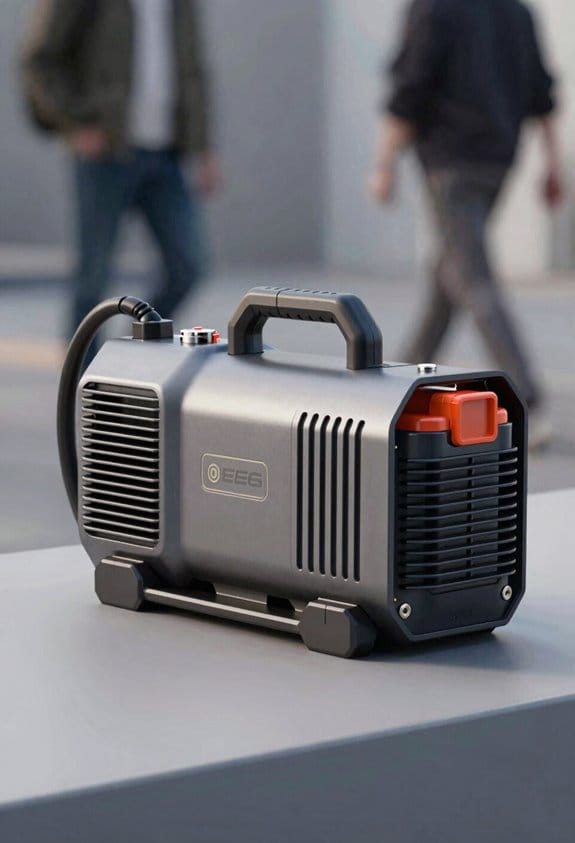
Ever had a flat tire ruin a long ride because your pump died halfway?
A portable electric pump that lasts a full day of rides can save you from hunting for a shop, and its battery life and thermal stability matter a lot on the road.
I always check battery longevity before buying. A 2000 mAh cell gives about five inflations on one charge, and a 30‑minute quick‑charge lets you keep moving. The built‑in fan and heat‑sink keep the motor cool, preventing power loss.
Worth knowing:
- The pump stays under 45 °C after three back‑to‑back inflations, so pressure stays steady at 85 PSI.
- A clear battery indicator and temperature sensor help you avoid surprises.
On a 30‑km commute I can fix a flat, re‑inflate a tubeless tire, and top off a spare wheel without overheating. The motor stays cool even after several uses, so you don’t lose power when you need it most.
Frankly, choose a model with a solid heat‑sink and a reliable fan. That way, you won’t have to stop for a break just because the pump gets hot.
Try this: before you buy, look for a pump that lists its charge cycles and heat‑management specs. It’ll pay off when you’re out on the road.
Why Compact Portable Electric Bike Pumps Still Reach 85‑90 PSI
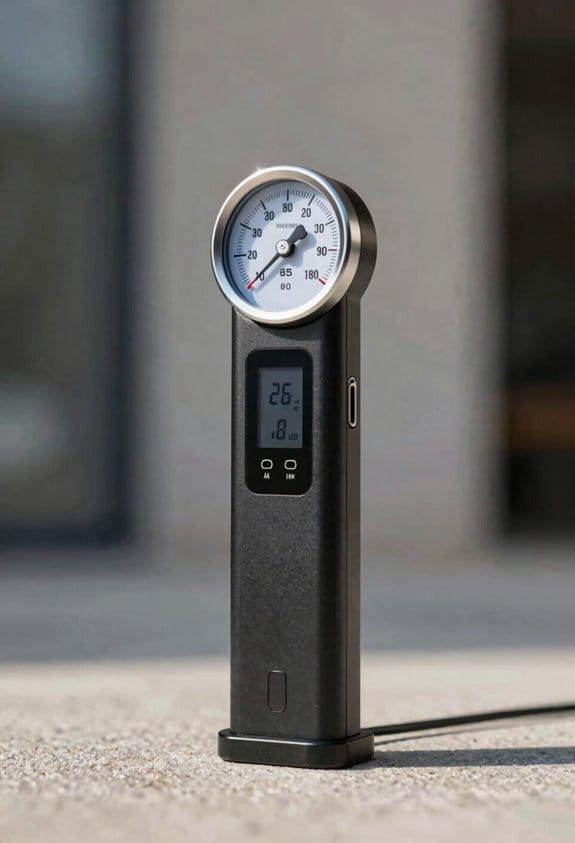
Ever found yourself stuck on a commute with a flat tire and no time to walk to a shop?
You can keep rolling with a pocket‑size electric pump that still hits 85‑90 PSI.
The secret lies in the motor. A high‑efficiency motor (90 % plus) pulls less power while still delivering strong pressure spikes. Pair that with a well‑designed airflow chamber and low‑resistance valves, and the pump reaches the target PSI in about 45‑60 seconds per tire.
Worth knowing:
- AeroFlow Pro – 88 PSI at a 2 A draw, no overheating.
- Cycplus Pro – holds 90 PSI, stays cool, fits in a jersey pocket, weighs under 100 g, and charges in 20‑30 minutes.
I usually pick models that meet those specs because they give you quick fixes for flat tubes and steady pressure for tubeless setups. Your daily ride stays smooth, and you won’t be stuck waiting for a pump to catch up.
Frankly, the valve engineering matters just as much as the motor. Smooth, leak‑free flow means the pump doesn’t waste energy, so you get a solid PSI boost without a long wait.
If you’re a road cyclist, these pumps are a real time‑saver. They let you handle flats on the fly, keep your tires at the right pressure, and stay reliable throughout the day.
Try this: keep a spare pump in your bag and charge it whenever you have a few minutes at home. You’ll never wonder how to get back on the road again.
Got a favorite portable pump you swear by? Let me know what works for you.
Why Eco‑Friendly Savings Beat Disposable CO₂ Cartridges
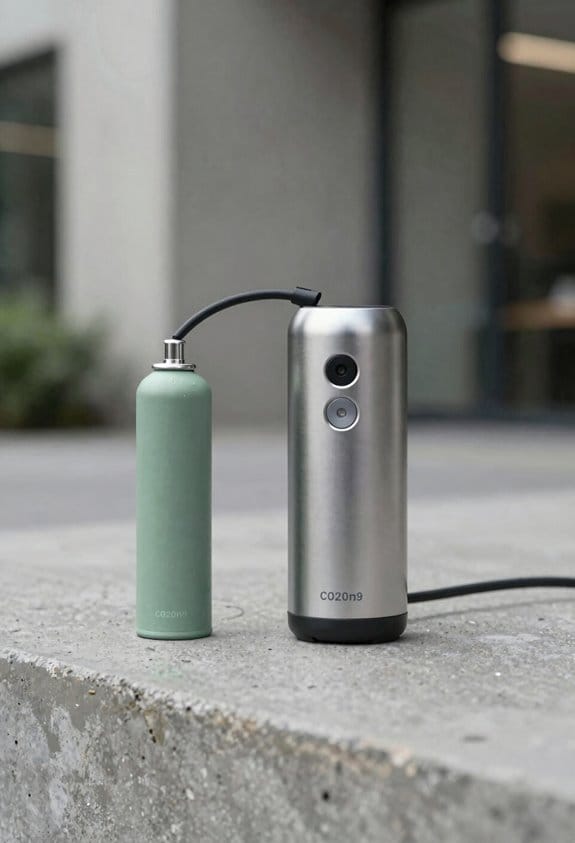
Ever found yourself hunting for a fresh CO₂ cartridge after every ride, only to realize the cost adds up fast? Switching to a rechargeable pump can cut that hassle and save you money. A battery‑powered pump costs about $50 once and then lasts for years, while a disposable cartridge is roughly $2 and needs replacing after each ride. Over a year you might spend $24 on cartridges but $0 on new pumps. The pump’s carbon footprint stays low because you avoid single‑use plastic and aluminum production, and the long‑term savings stack up as you skip recurring purchases.
Worth knowing:
- A single charge lets the AeroFlow Pro inflate a 700 c tire to 90 psi in about 45 seconds.
- You can get roughly 15 rides before recharging, and a full charge takes only 30 minutes.
I keep the pump on my bike rack, so I never have to buy another cartridge again. It’s a simple swap that keeps your wallet and the planet a little happier.
Try this: next time you’re at the store, skip the cartridge aisle and grab a rechargeable pump instead. Your future self will thank you.
What will you choose for your next ride?
Why Tubeless Tire Setup Is Easy With a Pocket‑Size Pump
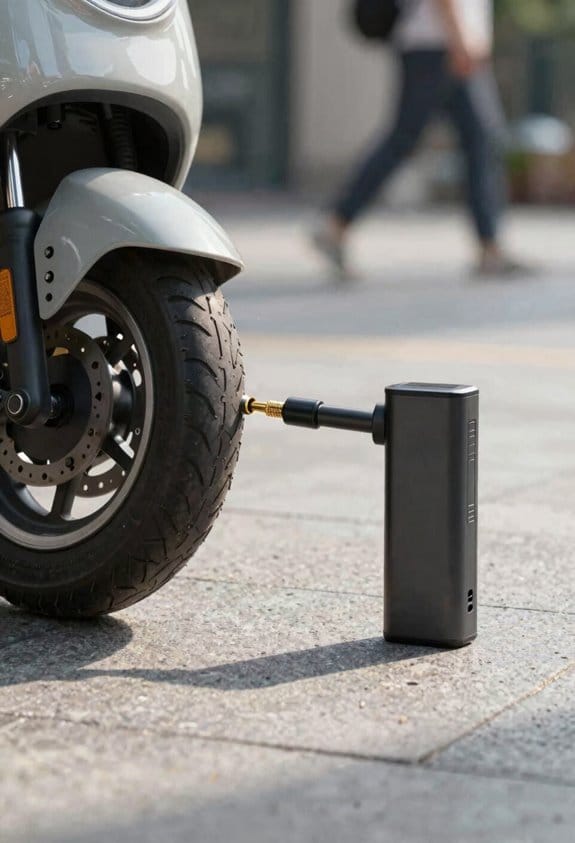
Ever tried to set up a tubeless tire and felt stuck waiting for the bead to seat? A pocket‑size electric pump can cut that wait down to seconds.
First, attach the pump head and crank the pressure up to about 80 PSI. The motor pumps a steady stream of air that forces the bead onto the rim without dropping pressure, even if the tire feels stiff.
Worth knowing: the pump’s nozzle fits standard sealant bottles, so you can add sealant without spilling. The airflow is gentle enough not to disturb the liquid, letting the sealant settle where it’s needed.
The AirBank Mini Pocket SE inflates a 30 mm tire to 50 PSI in roughly 45 seconds. At 93 grams it slips easily into a jersey pocket, and the battery handles about five inflations before needing a charge.
You’ll appreciate that the pump’s quick pressure rise means you can seat the bead in just a few seconds—no need for a floor pump or a compressor. It’s especially handy on long rides when a flat pops up and you’re far from a shop.
Try this: keep a spare sealant bottle in your pack, attach the pump, and give the tire a burst of air. The bead should snap into place, and you’ll be back on the road in under a minute.
Fair warning: don’t over‑inflate. Stay near the tire’s recommended pressure range to avoid stressing the sidewall.
With a pocket pump in your kit, you’ll spend less time fiddling and more time riding. Ready to give it a go on your next ride?
Frequently Asked Questions
Can I Use the Pump on Both Road and Mountain Bike Tires?
I can use it on both road and mountain bike tires; it offers Presta compatibility and a wide pressure range, so you’ll get the right PSI for skinny road rims and bulkier mountain tires.
Do I Need a Separate Sealant for Tubeless Setups?
I’d say you’ll need a sealant for tubeless setups; the pump’s tubeless compatibility relies on proper sealant chemistry to keep the tire airtight, so bring the right formula and you’ll be fine.
How Does Altitude Affect Pump Performance?
I see the mountain as a thin veil, air density thins, so pressure loss climbs; my pump works harder, delivering less PSI per stroke, and I’ll notice slower inflation higher up.
Are There Safety Features to Prevent Over‑Inflation?
I assure you they include pressure sensors and automatic shutoff, so when the set PSI is reached the pump stops instantly, preventing over‑inflation and protecting both tire and rim.
What Warranty Coverage Is Typical for These Pumps?
I’ve seen most manufacturers offer a one‑year limited replacement warranty, covering defects and faulty batteries, and some extend to two years with a limited replacement clause if the pump fails under normal use.