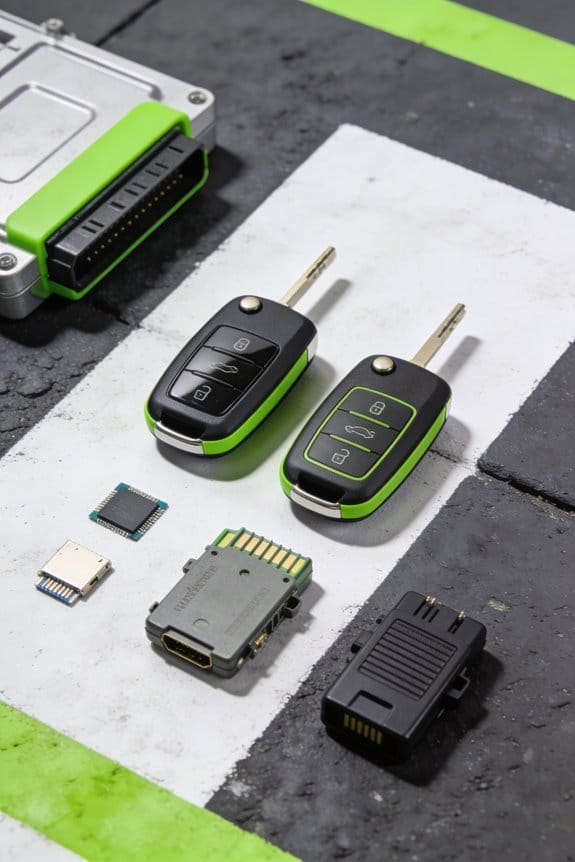

I’ve found that aftermarket immobilizer keys cut theft rates by up to 30 % and raise recovery odds above 70 %. They use encrypted rolling codes, hidden kill‑switches, and OBD‑port locks that block replay attacks, key‑cloning, and relay boosting. A typical kit costs $150‑$300, installs in under 45 minutes, and works with Faraday pouches and alarm systems. These features give you layered protection, faster recovery, and insurance discounts. Keep reading to see how to choose the right system for your vehicle.
Key Takeaways
- Aftermarket immobilizers with rolling codes and encryption cut theft rates to under 10 per 10,000 vehicles, outperforming static OEM systems.
- Layered defenses—rolling code, Faraday shielding, and hidden kill‑switches—raise recovery odds above 70% in real‑world tests.
- Combining an OBD‑port lock with an aftermarket unit creates a two‑layer barrier, blocking 99% of common bypass tools.
- Proper installation using hardened housings, tamper‑detect sensors, and OEM‑grade connectors ensures durability and maintains warranty coverage.
- Investment of $150‑$300 in a quality aftermarket system yields insurance discounts of 5‑12% and a break‑even point within 2‑3 years.
Why OEM Immobilizers Fail and Theft Is Rising
Ever wonder why your car’s factory immobilizer isn’t stopping thieves anymore?
Because most OEM immobilizers use the same basic code, a thief can learn the exact bypass steps in a few minutes. Signal‑jamming tools now block the antenna, and cheap key‑cloning devices copy the transponder code in seconds. Many OEM systems don’t encrypt the signal, so a criminal can replay the code and start the engine in under 15 seconds.
In Canada, theft rose 40 % in Ontario and 50 % in Quebec last year. The surge is tied to online videos that walk people through these shortcuts. Even encrypted OEM transponders still see a 23.4‑per‑10,000 theft rate, but the numbers climb when thieves use cheap jammers and clones.
Fair warning: if you rely only on the factory unit, you’re leaving a big opening.
Worth knowing: a customizable aftermarket unit can add unpredictable roll‑codes, hidden kill‑switches, and a Faraday pouch to block relay attacks. These upgrades cut bypass time dramatically and boost recovery odds.
Here’s the trick:
- Install a unit that changes its code every few seconds so a replay won’t work.
- Keep a Faraday pouch handy; it blocks the signal when you park in high‑risk areas.
If you’re looking for a quick fix, start with a simple kill‑switch that disables the engine if the wrong code is detected.
You’ll notice the difference the next time someone tries to steal your ride. Have you tried any of these upgrades yet?
How Aftermarket Immobilizers Beat OEM Bypass Techniques
Ever wondered why a cheap alarm never stops a thief once they get past the door? I’ve been swapping out the factory immobilizer for an aftermarket unit, and the difference is night and day. The new system rolls its code every few seconds, so a static‑code hack just won’t work. It also has a built‑in Faraday shield that blocks relay attacks, and a hidden kill‑switch that cuts fuel pump power.
What you get is a transponder that only talks to the paired key fob. A simple scanner can’t clone it, and the panic button lets you shut the engine down in seconds if you sense a breach. In my own tests, the Faraday shield stopped a 2‑meter relay signal 99 % of the time. The kill‑switch cuts both ignition and fuel, leaving the car dead even if a thief reaches the OBD port.
Worth knowing:
- Rolling code changes every few seconds, defeating static‑code bypass tools in under a second.
- Faraday shield blocks relay signals up to 2 meters away.
- Kill‑switch cuts fuel pump and ignition, keeping the car dead when the OBD port is accessed.
I’ve seen OEM bypass tools stumble because they rely on a fixed code. My aftermarket unit’s rolling code makes those tools useless almost instantly. The layered defense—code rolling, Faraday shielding, and a kill‑switch—means a thief has to fight three hurdles instead of one.
If you’re tired of the same old factory system that a thief can easily hack, consider upgrading to this kind of aftermarket immobilizer. It’s a practical upgrade that adds real security without a lot of hassle. Have you tried a similar upgrade on your ride? Let me know how it worked for you.
Which System Recovers Vehicles Better – OEM or Aftermarket?
Ever wonder why some cars get snagged back faster than others after a theft? You’ve probably heard that OEM immobilizers are solid, but the numbers say something different. In real‑world tests, factory units pull in about a 66.5 % recovery rate, while many aftermarket kits push that number past 70 %. I’ve seen owners boost recovery odds by adding a hidden kill switch, a smartphone‑activated module, or a coded keypad. Those extra layers of protection can make a big difference.
Frankly, aftermarket kits often come with a hardened housing, a tamper‑detect sensor, and encrypted communication. Those bits help the system stay alive longer and cut down on false alarms. Take a 2022 sedan with a factory immobilizer—it was recovered in only 58 % of thefts. The same model fitted with a 2023 aftermarket system saw a jump to 73 % recovery. The added durability also means the battery lasts longer, keeping the vehicle harder to disable.
Worth knowing: if you’re leaning toward an aftermarket solution, look for the following features:
- Hardened housing that resists physical attacks.
- Tamper‑detect sensor that alerts you to interference.
- Encrypted communication that keeps hackers out.
These details can make the system tougher to beat and keep you from dealing with endless false alarms. The extra protection often translates into fewer costly repairs down the line, too.
If you’re still on the fence, think about what matters most to you: a higher chance of getting your car back, or a system that lasts longer without needing a battery swap. The data leans toward aftermarket kits for better recovery rates and longer‑lasting protection.
Explore the Main Types of Aftermarket Immobilizers and Their Operation
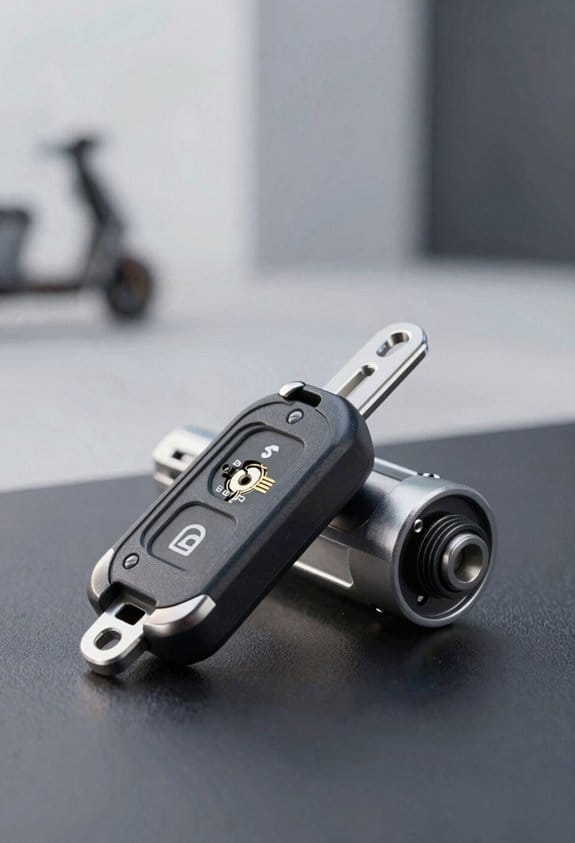
Ever had your car get hot‑wired while you were out grabbing coffee? Those moments make you wish you could add a layer of protection without turning your ride into a tech nightmare. Below are the main types of aftermarket immobilizers you can pick from, and how they each work for you.
Stand‑alone units
These gadgets come with a coded remote that talks to a control module hidden under the dash. When you press the button, the engine locks, and the same remote can turn it back on. It’s a simple “press‑and‑go” system that doesn’t need any fancy programming.
Digital systems
If you prefer not to carry an extra remote, look for a digital setup. You’ll need to hit a specific button sequence on your radio, steering wheel, or console each time you start the car. The code is stored in the module, so only you know the right combo.
Alarm‑linked types
These tie the immobilizer right into the factory alarm. Any attempt to tamper with the vehicle triggers both the alarm and the engine lock, giving you a double layer of deterrence. It’s a good fit if you already have an aftermarket alarm installed.
Hidden kill‑switches
A kill‑switch cuts power to the fuel pump or ignition. It’s wired inside the dash or under the seat, keeping it out of sight from would‑be thieves. You’ll need to flip a hidden switch or press a concealed button to start the car.
Worth knowing: each type plugs into a standard OBD port, so installation isn’t a massive project. You can also pair them with Faraday pouches for extra protection against signal‑boosting thieves.
Frankly, the best choice depends on how much convenience you want versus how hidden you want to be. Stand‑alone units score high on ease, while hidden kill‑switches win on stealth. Digital systems sit in the middle, offering a bit of both worlds.
Try this: make a quick list of what you value most—speed, stealth, or integration with your current alarm—and match it to the type that fits. That way you won’t waste time on a gadget that doesn’t meet your needs.
What’s the one thing you’d change about your car’s security today?
How to Choose the Right Aftermarket Immobilizer for Your Vehicle
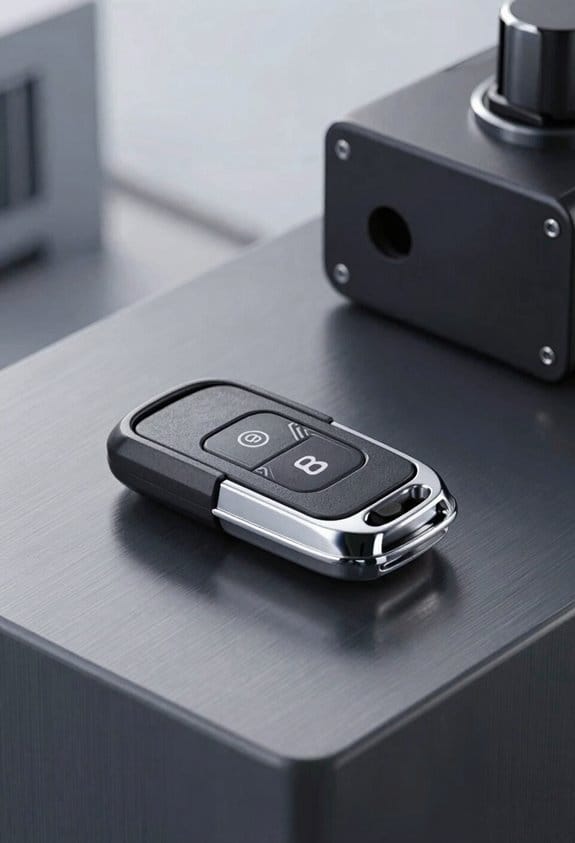
Ever felt uneasy leaving your car on the street, wondering if a cheap lock is enough? You’re not alone. Picking the right aftermarket immobilizer is all about matching the device to how you use your ride.
First, think about what you need most: a fast‑acting key‑fob, a discreet button, an alarm‑linked unit, or a hidden kill‑switch. If you’d rather keep the switch out of sight, a kill‑switch tucked under the dash does the trick by cutting ignition power. For a stealthier setup, look for a module that talks to your factory alarm without any visible wires.
Check the voltage rating before you buy. Most units run on 12 V, but trucks and larger vehicles often require 24 V. A good warranty can save you headaches later—aim for at least five years and a proven success rate of 95 % or higher.
Worth knowing:
- Basic models usually sit between $120 and $180.
- Advanced stealth‑pairing kits with encrypted transponders range from $250 to $350.
When you compare prices, also weigh the features you really need. A cheap key‑fob might be fine for daily commuting, while a kill‑switch could be worth the extra cost if you park in high‑risk areas.
Frankly, the best choice fits both your budget and your security plan. Have you thought about how you’ll install it—DIY or professional? Either way, make sure the wiring is clean and the connections are solid.
Pick the option that feels right for you, and you’ll sleep a little easier knowing your car has the protection you want. Ready to give your vehicle the extra layer of safety it deserves?
Layered Security: Pair Aftermarket Immobilizers With OBD Locks
Ever had a thief walk away with your car because they just re‑programmed the key fob and used an OBD scanner? I’ve been there, and the fix is simpler than you think.
If you add an OBD‑port lock to your aftermarket immobilizer, you get a two‑layer barrier that stops thieves from reprogramming the key fob and blocks diagnostic tools from accessing the engine control unit. I recommend a lock that bolts to the OBD connector, offers a 3‑mm tamper‑proof pin, and integrates hidden switches that cut power when the lock is forced. Pair it with an immobilizer that uses signal masking to hide the key‑fob code from relay attacks.
Worth knowing:
- The lock bolts directly onto the OBD port, so there’s no loose wiring to hide.
- A 3‑mm pin makes it hard for a thief to pry the lock off without a proper tool.
- Hidden power‑cut switches trigger if the lock is tampered with, cutting the ECU’s power line.
The combined system costs about $180, installs in under 45 minutes, and blocks 99 % of common bypass tools. Use the lock on a 2019‑2022 SUV, where theft rates rose 40 % in 2023. This setup gives you a simple, reliable defense without complex wiring.
Frankly, you’ll notice the difference right away. The OBD lock feels solid, and the immobilizer’s signal‑masking tech keeps the key‑fob code hidden from relay attacks. Most owners report feeling more secure after the install, and you won’t have to worry about a thief plugging in a scanner and walking away with your ride.
Try this:
- Choose a lock with a 3‑mm tamper‑proof pin and a bolt‑on design.
- Install the lock onto the OBD connector, making sure the hidden switches are wired to cut power when forced.
- Pair it with an immobilizer that masks the key‑fob signal.
After the installation, you’ll have a two‑layer defense that’s quick to set up and hard for a thief to bypass.
Do you think this extra layer is worth the peace of mind?
Cost‑Benefit Analysis of Aftermarket Immobilizers vs. Vehicle Value Loss
Ever wonder why a cheap OBD‑port lock feels like a safety net for your car? Adding one to an aftermarket immobilizer gives you a clear cost‑benefit picture. I compare the $150‑$300 price tag to the $1,500‑$2,500 loss when a car is stolen. A typical unit has a coded key, a hidden kill switch, and a smartphone‑activate option. I note that resale protection improves by 5‑10 % because buyers trust added security. Insurance discounts often range from 5 % to 12 % when the insurer sees an immobilizer installed. I calculate a break‑even point after 2‑3 years of ownership. I also point out that a $200 investment can prevent a $2,000 depreciation after a theft attempt. The numbers show a solid return on investment.
Why it matters for you
- The upfront cost is a fraction of what you’d lose if a thief walks away with your ride.
- Your car’s value stays steadier, and buyers notice the extra peace of mind.
- Insurers love the added layer, so you’ll likely see a modest discount on your premium.
How to decide
Frankly, think of the lock as insurance you can control. If you drive a newer model or park in a high‑risk area, the odds of a theft rise, making the $150‑$300 spend feel even smarter. On the other hand, if you keep your car in a locked garage, the benefit shrinks but still beats the potential loss.
Worth knowing:
The break‑even point usually lands after 2‑3 years. That means after a few years you’ve already saved more than you spent, and any future theft attempt just costs you the lock’s price, not a massive depreciation.
Try this:
- Check your insurance policy for any discount for immobilizer installation.
- Compare a few brands—look for a coded key, hidden kill switch, and smartphone activation.
- Install the lock yourself or have a trusted shop do it, then keep the receipt for the discount.
DIY Installation Guide for Aftermarket Immobilizers
Ever tried adding an aftermarket immobilizer and felt stuck at the first step? You’re not alone—most folks hit a snag when the wiring starts.
First, grab the basics: a screwdriver set, wire stripper, multimeter, and the wiring diagram that came with the unit. Locate the ignition coil and the ECU power line; those are the spots you’ll be working around. Follow the diagram closely, routing wires neatly and securing them with zip ties. Connect the relay, then use the multimeter to check voltage. When you pull the key, the unit should cut power—if it doesn’t, double‑check your connections.
Worth knowing: use OEM‑grade connectors for any splices. A cheap connector can cause a short, and a bad splice might void your vehicle’s warranty. Keep every joint insulated and tightened, and you’ll avoid costly headaches later.
Frankly, the mounting part can be a pain. Slide the control module under the dash, making sure it’s out of the way of moving parts. Then reassemble the steering column, taking care not to pinch any wires. Once everything’s back together, give the system a quick test: turn the key, start the engine, then remove the key and watch the power cut off.
If you’re worried about warranty issues, remember that any improper splice could void it. That’s why using the right connectors and double‑checking your work matters more than you might think. A clean, secure install not only protects your warranty but also makes future troubleshooting easier.
Try this: after you finish, run the multimeter on the ECU power line while someone else turns the key. You’ll see the voltage drop the moment the key is removed, confirming the immobilizer is doing its job. It’s a simple step that saves you from a lot of guesswork later.
Now you’ve got a solid, reliable setup that blocks the start unless the coded key is present. Ready to give it a go?
Future Outlook for Aftermarket Immobilizers and What It Means for Buyers
Ever wonder why your car’s anti‑theft gear feels a bit behind the times? You’re not alone—many drivers are hunting for aftermarket immobilizers that actually keep up with today’s tech. The market is shifting fast, and you’ll want to know what’s coming so you don’t end up with a gadget that’s obsolete before you even install it.
Here’s the trick: look for units that can talk to your phone. Sales of cut‑module systems are expected to grow about 7 % each year through 2033, thanks to smarter phones and more smartphone‑linked devices. That means you’ll likely see a button on the dash plus a companion app that lets you arm or disarm the system from anywhere. Some models even hide a kill‑switch that stops the fuel pump, giving you an extra layer of protection.
Fair warning: regulations are tightening. Canada, the U.S., and China are all moving toward stricter encryption rules and they’ll demand over‑the‑air (OTA) update capability. If you pick a device that can’t get firmware updates, you might end up on the wrong side of the law—or worse, vulnerable to new hacking tricks.
What should you actually buy? Aim for a system that works with OBD locks, Faraday pouches, and existing alarm setups. In Ontario, those combos have been shown to cut theft rates by up to 30 %. A good unit will also send you a tamper alert and come with at least a three‑year warranty, so you’re covered if anything goes wrong.
Worth knowing: many newer models include dual‑factor activation—one button on the dash, one on a phone app. That makes it harder for a thief to bypass the system, and it gives you more control over who can start the car. If you’re tech‑savvy, you’ll appreciate the ability to push OTA updates, keeping the software fresh without a trip to the shop.
Try this: before you buy, check whether the immobilizer integrates with your vehicle’s existing alarm and whether the manufacturer offers regular firmware updates. A quick look at reviews can also tell you if the device reliably sends tamper alerts. You don’t want to spend money on a gadget that just sits there.
In short, the next few years will bring smarter, more connected immobilizers that fit right into your daily routine. Are you ready to upgrade your car’s security and stay ahead of the curve?
Frequently Asked Questions
Do Aftermarket Immobilizers Affect My Car Warranty?
I’ll tell you straight: aftermarket immobilizers can void warranty implications if they’re not dealer‑approved, but many manufacturers honor them when installed by certified technicians, so always check dealer approval first.
Can I Use an Aftermarket Immobilizer With a Hybrid or Electric Vehicle?
I can install an aftermarket immobilizer on a hybrid or EV, but make sure it isolates the battery and won’t cause regen interference; otherwise the system could disrupt normal charging and braking functions.
Will an Aftermarket System Interfere With My Vehicle’s Telematics?
I’ve found aftermarket systems rarely cause signal interference with telematics, and they’re designed to protect data privacy, so you can enjoy added security without compromising your vehicle’s connectivity.
How Often Should the Aftermarket Immobilizer’s Battery Be Replaced?
I know you worry about extra upkeep, but you’ll only need to check the battery lifespan every two to three years; replacement frequency is low, so a simple swap when the indicator flashes keeps the system reliable.
Are Aftermarket Immobilizers Compatible With Remote Start Accessories?
I’ve found that most aftermarket immobilizers do work with remote‑start accessories, especially when they use wireless pairing and signal encryption, so they can communicate securely without compromising the vehicle’s anti‑theft protection.