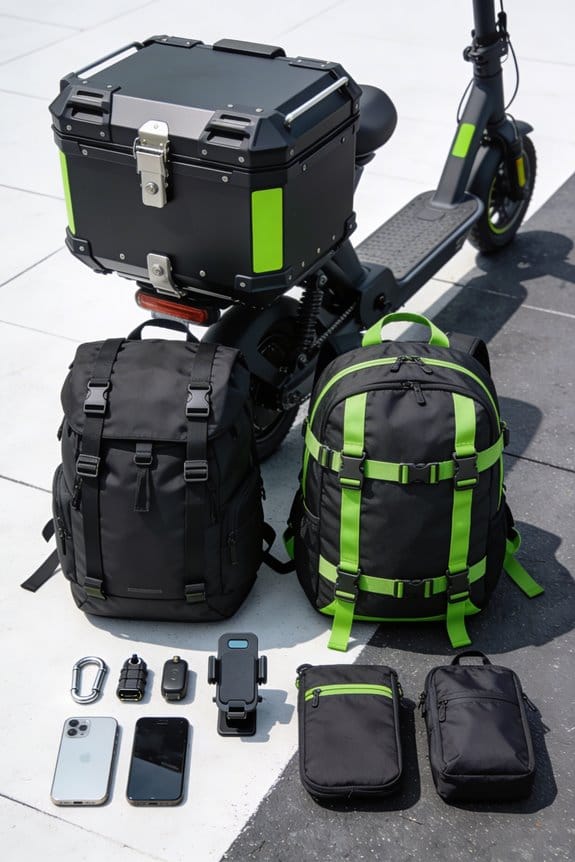

I recommend a low‑mounted rear cargo box because it holds up to 10 kg within 2–3 inches of the deck, lowers the center of gravity by about 8 cm versus a backpack, and keeps the scooter steadier when braking or turning. The box’s rigid walls spread weight across the rear axle, reducing wobble and pitch, while a backpack lifts the CG, lengthens stopping distance, and makes steering feel floppy. Both options fit city commuting and light‑trail use, but the box offers tighter turns and less shoulder strain. Continue for more details.
Key Takeaways
- A low‑mounted rear cargo box keeps the scooter’s center of gravity near the ground, improving braking stability and reducing tip risk.
- A backpack sits higher on the rider, raising the center of gravity by several centimeters and lengthening braking distances.
- Fixed box weight is centered and low, delivering crisp steering and predictable handling on uneven pavement.
- Backpack weight shifts with the rider’s shoulders, causing wobble, “floppy” feel, and reduced throttle response.
- Staying within each option’s load limits (box ≈10 kg, backpack ≈15 kg) preserves balance and prevents excessive wear.
Cargo Box vs. Backpack: Which Keeps Your Scooter More Stable?
Ever tried to zip around town with a backpack full of groceries and felt the scooter wobble?
A rear cargo box keeps the scooter steadier than a backpack. The lower center of gravity it creates makes braking and turning feel smoother. Because the box mounts right to the frame, the weight stays low and centered—so wobble and tip risk drop off. It also gives you a spot for your helmet, keeping gear safe and out of the way. The lockable latch deters theft, letting you leave the scooter unattended without worry. I use the box for grocery runs, delivering parcels, and commuting with a 5‑kg load. The design holds up to 10 kg, fits 0.2 ft³, and stays secure on rough roads.
Worth knowing:
- The box is a solid, low‑profile solution that won’t shift with your shoulders.
- It adds storage without raising the bike’s profile, so you stay balanced on turns.
In contrast, a backpack lifts weight high, shifts with your shoulders, and can make steering feel sloppy.
Frankly, if you want a steadier ride while carrying a few kilos, the cargo box is the way to go.
Capacity: Box vs. Backpack Carry Limits
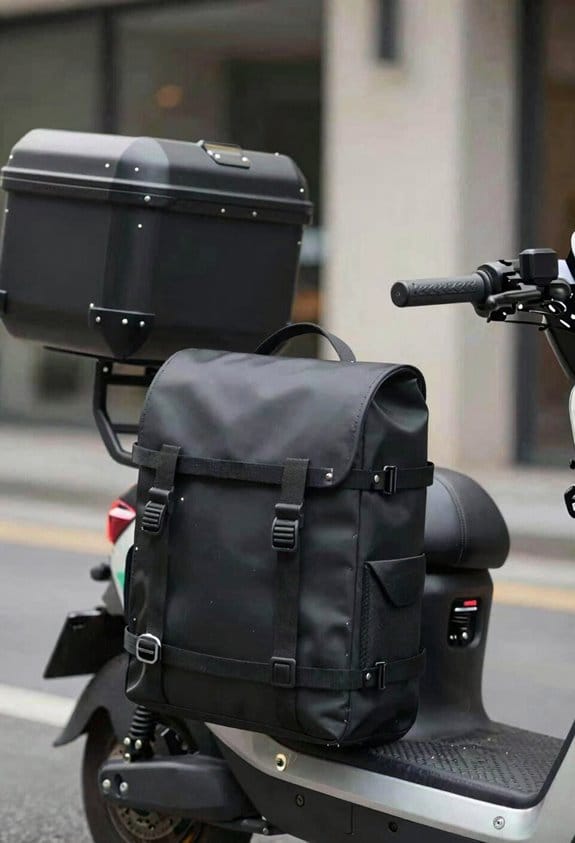
Ever tried to haul groceries, tools, or a small parcel on your scooter and found the load shifting around? You’ve got two main options: a cargo box or a backpack. The box sits low on the frame, locks in place, and holds up to 10 kg in about 0.2 ft³. Its rigid walls keep the weight centered, so the scooter stays stable on bumpy streets. The backpack can take a bit more—up to 15 kg—but it sits higher on your shoulders and takes up roughly 0.3 ft³. The soft sides can squish and move, especially when you turn a corner.
Fair warning: Overloading any scooter can make steering tricky and wear out parts faster. That’s why knowing the exact limits matters.
Worth knowing: The box’s shape fills space efficiently, so you won’t waste room on empty gaps. A backpack’s flexible walls often leave dead space, meaning you might need a bigger bag for the same stuff.
- Cargo box: 10 kg max, 0.2 ft³, low‑profile, locked to frame.
- Backpack: 15 kg max, 0.3 ft³, higher center of gravity, soft walls.
If you’re commuting daily, the box’s fixed position and clear limits help you stay within safe load ranges. You’ll feel more confident navigating hills and potholes when the weight stays low and centered. On the other hand, a backpack can be handy for quick trips where you need a bit extra capacity and don’t mind the extra sway.
Frankly, the box wins for stability, while the backpack wins for raw capacity. Which one fits your ride better? Give it a try on your next trip and see how it feels.
How a Scooter Cargo Box Lowers the Center of Gravity
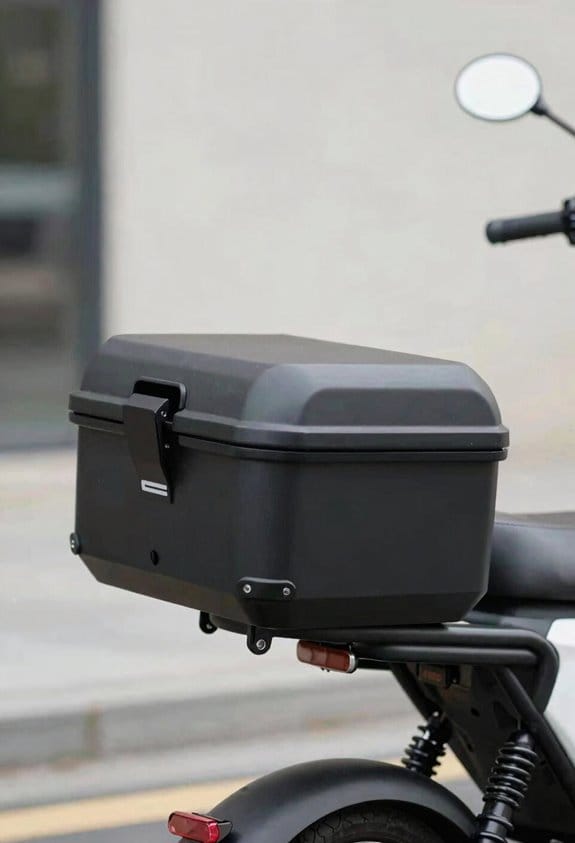
Ever tried to haul groceries on a scooter and felt it wobble like a loose bike? That shaky feeling comes from the load being too high and too far from the wheels. A low‑profile cargo box can fix that, and it’s easier than you think.
Two‑inch‑wide boxes sit snug against the frame, keeping the weight near the ground and close to the rear axle. The design spreads the load across the axle, so when you turn the scooter stays steadier. A typical box holds about 8 L—roughly 15 lb—and bolts on with just two fasteners. When you’re carrying tools, a small parcel, or a grocery bag, the weight stays low and the wheels stay planted, which cuts out the backpack‑like wobble.
Frankly, the low placement also helps your brakes and acceleration feel smoother, especially on city streets where you’re constantly stopping and starting. The box’s solid mount means you won’t hear rattling as you ride, and the extra stability makes cornering feel natural.
Worth knowing: the box’s simple bolt‑on system lets you install it in minutes, and you can remove it just as fast when you need the extra space on the frame. The low center of gravity means you’ll notice less sway when you hit a pothole or a sudden turn.
Try this: when you load the box, keep the heaviest items at the bottom and nearer the center. That way you maximize the stability benefit without sacrificing cargo space. You’ll find the scooter feels more like a solid platform and less like a wobbling cart.
If you’ve ever felt uneasy riding with a backpack full of stuff, give the low cargo box a shot. You might be surprised how much steadier your ride becomes. Ready to make your scooter feel more grounded?
Why a Backpack Raises Your Scooter’s Center of Gravity
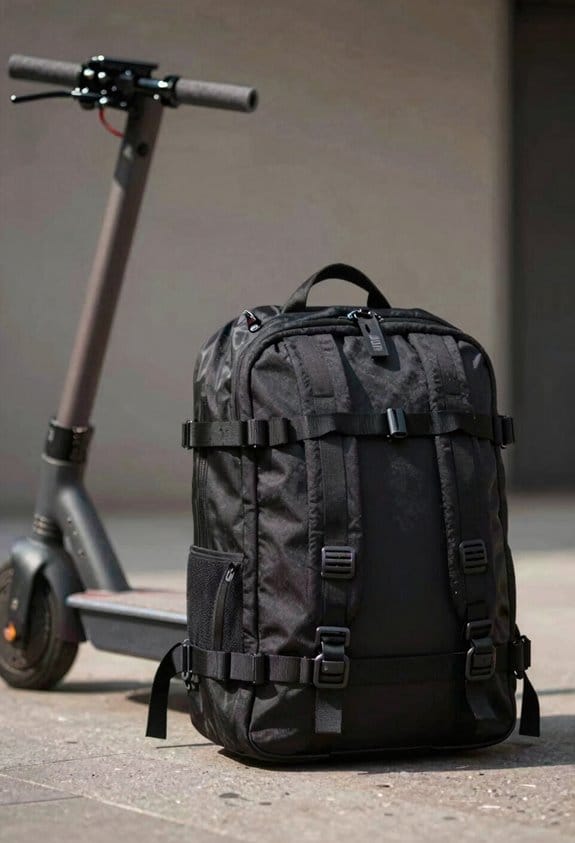
Ever tried to zip around town on your scooter while lugging a big backpack? You’ll notice the ride gets a little wobblier, especially when you hit a turn. That’s because the weight sits high on your shoulders and behind the wheels, lifting the scooter’s center of gravity.
When the mass is up there, the balance point moves higher, so the scooter feels “tippier.” Modern scooters have motion sensors that pick up this shift and may dial back acceleration to stay stable. The backpack also catches more wind, especially if it’s bulky, which can shave a few percent off your top speed and make steering feel sluggish.
A 12‑kg pack pushes the gravity center up about 8 cm compared with a 4‑kg rear cargo box. For city commuters, that means tighter turns feel less safe and braking distances grow by roughly 0.3 m on average.
Worth knowing:
- Keep your load low and close to the scooter’s frame.
- Choose a slim, low‑profile cargo box instead of a big backpack.
- Distribute weight evenly between both sides.
Fair warning: if you ignore these tweaks, you’ll keep feeling the wobble and slower stops. Try this: swap the backpack for a compact cargo box and notice how the ride steadies up.
You’ll find your scooter handles better, brakes faster, and you’ll feel more confident on those city streets. Ready to give it a shot?
Steering Precision With a Scooter Cargo Box vs. a Backpack
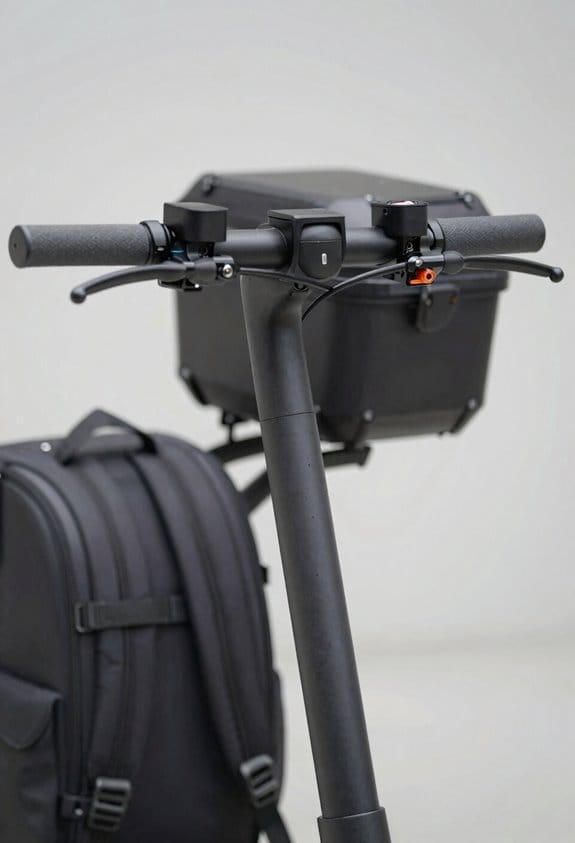
Ever feel like your scooter handles like a wobbling bike when you load up a backpack? I’ve tried both a rear cargo box and a backpack, and the difference in steering is pretty clear.
A cargo box mounted on the rear frame sits low and close to the scooter. That low center of gravity keeps the steering crisp during turns, and the fixed box means there’s barely any sway. When you’re cruising through city traffic or hauling groceries, the handlebars feel steady and the bike stays on track.
A backpack, on the other hand, adds weight high on your shoulders. As you lean, the load shifts, making the handlebars feel loose and the bike twitch a bit. On uneven pavement you’ll notice a slight delay in response and a wobble that can be annoying.
Frankly, the low‑sitting box gives you tighter turn radii. With a 5‑kg cargo box, the scooter feels balanced and the steering stays tight. A 4‑kg backpack makes the bike feel a bit sluggish, especially when you need quick, precise moves.
Worth knowing:
- The cargo box keeps the center of gravity low, so you get consistent steering precision.
- The backpack raises the load, which can cause the bike to feel loose and less responsive.
If you mostly ride in busy streets or need to carry groceries, a rear box is the better choice for steady handling. Have you tried swapping your backpack for a cargo box yet? Give it a try and feel the difference.
Braking Stability Using a Scooter Cargo Box
Ever had your scooter feel like it’s about to tip forward the you slam the brakes?
Because the cargo box sits low on the frame, the center of gravity stays close to the ground. That means the bike won’t pitch forward when you hit the brakes hard. I’ve noticed that during an emergency stop the box keeps the longitudinal load steady, so the front wheel stays planted and the scooter doesn’t lurch.
Frankly, the box’s lock‑in brackets hold everything in place even with a 12‑lb load.
Try this: pick a model with a 150‑mm rear mounting plate, reinforced ribs, and a 25‑lb capacity.
- Good for grocery runs, parcel drops, or daily commutes.
- Low profile cuts pitch, improves rear‑wheel traction, and gives a predictable feel on wet or uneven pavement.
The low profile reduces pitch, improves rear‑wheel traction, and gives a predictable brake feel on wet or uneven pavement.
What do you think—ready to give your scooter a steadier ride?
Why Low‑Mounted Cargo Makes Acceleration Feel Smoother
Ever notice how a scooter feels like it’s about to tip when you hit the throttle? That jitter can be a real buzzkill, especially when you’re trying to zip around town with a cargo box.
Low‑mounted cargo keeps the scooter’s center of gravity low, so the bike stays stable as the motor pushes forward. I notice that the lower weight reduces pitch when I twist the throttle. The motor torque reaches the wheels without a sudden lift, so the scooter accelerates smoothly. This placement also improves throttle response because the frame doesn’t wobble under load. I choose a rear cargo box that mounts 2‑3 inches below the deck, holds up to 15 lb, and includes lockable brackets. The box’s steel frame spreads weight evenly, preventing the scooter from feeling “floppy.” For daily errands, a low‑mounted box lets me start quickly, keep balance, and enjoy a steady surge of power.
Frankly, you want the box to sit close to the deck, not hanging high. The lower the mass, the less the scooter will pitch forward when you give it gas. That means you can keep your hands steady and your eyes on the road.
Worth knowing: a rear cargo box that hangs 2‑3 inches below the deck works well for most scooters. It can hold up to 15 lb, which is enough for groceries, a small backpack, or a few tools. The steel frame and lockable brackets keep the load secure and spread the weight evenly across the scooter’s chassis.
Try this: when you’re shopping for a cargo box, check the mounting height. Make sure the brackets let you lower the box at least a couple of inches. A lower mount means a lower center of gravity, and that translates to smoother acceleration and steadier handling.
If you’re already using a high‑mounted box, you might feel a little “floppy” when you accelerate. The scooter’s frame can wobble, and the throttle feels less responsive. Swapping to a low‑mounted option can change that feel without any fancy tech.
Bottom line: a low‑mounted cargo box gives you a smoother ride and better control. Ready to give it a try?
Off‑Road Performance: Scooter Cargo Box vs. Backpack Rattle
Ever tried taking your scooter off the pavement and felt the ride change in an instant? When you swap smooth streets for rough trails, the way your cargo behaves can make a big difference.
A rear cargo box stays low on the bike, keeping the center of gravity steady. The sealed lid keeps dust out, so your suspension stays tuned and you don’t add extra wear. Because the box is bolted to the frame, the weight doesn’t mess with your steering.
A backpack, on the other hand, rides high and shifts with your shoulders. Grit can sneak into the bag, and loose items rattle, making the scooter feel “floppy” over bumps. Since the pack moves with your body, turns feel slower and less precise.
Frankly, the box is best for tools, a spare tire, or a water bottle—things you want to keep safe and stable. A backpack works for personal gear you need quick access to, like a phone or a jacket.
Worth knowing:
- Box: low, sealed, stable, no steering impact.
- Backpack: high, loose, rattles, can slow turns.
Try this: when you’re heading into a trail, load the heavy, hard‑case items in the cargo box and keep the softer, easy‑reach stuff in a backpack. That way you keep the bike balanced and still have what you need at hand.
Do you feel the difference in handling when you switch between the two? Let me know what works best for you.
Rider Comfort: Eliminating Shoulder Strain With Rear Cargo
Ever feel your shoulders ache after a quick scooter ride to the store? I was in the same boat until I tried a rear cargo box. It sits low on the frame, keeping the weight near the scooter’s center of gravity, so your posture stays upright and your shoulders stay free.
The box holds up to 22 lb (10 kg) and locks with a quick‑release latch. You can toss in groceries, a laptop, or a small cooler without any hassle. Because the load stays fixed, it doesn’t shift when you turn, which means your upper body stays stable even on busy streets.
Worth knowing:
- Low‑mount design keeps the center of gravity low.
- Quick‑release latch makes loading and unloading fast.
When you ride longer trips or stop at traffic lights, you’ll notice the difference right away. No more sore shoulders after a few blocks, and you can carry errands without extra effort. The fixed position also helps you stay balanced on turns, so you feel more secure on busy roads.
Try this: mount the box low, load it evenly, and make sure the latch clicks shut before you head out. You’ll find your posture stays straight and your shoulders stay relaxed, even on the longest commutes.
Do you think a simple change like this could make your daily rides more comfortable? Give it a go and see how much easier your trips become.
Side‑by‑Side Comparison: Cargo Box vs. Backpack
Ever tried to haul groceries on your scooter and felt your shoulders scream? I’ve been there, and the rear cargo box can really take the edge off that strain. The box sits low, keeping the center of gravity close to the frame, and it comes with a sealed lid that shields your stuff from rain. It can hold up to 22 lb and fits about 0.14 ft³, and you can snap it on or off with a quick‑detach latch in seconds.
Frankly, a backpack does things a bit differently. It puts the weight high on your shoulders, which pushes your balance rearward, and you’ll usually get 10–30 L of space—roughly 15 lb. Unless you add a rain cover, there’s no weather protection, and you have to lift it each ride. The backpack keeps your hands free, but it can make turns feel a little floppy.
Worth knowing: the cargo box stays fixed, which cuts down on pitch when you brake and stays stable on uneven roads. The backpack, on the other hand, is great for quick swaps and light loads, but you’ll notice the extra sway on bumpy streets.
If you’re after steady rides, rain‑proof trips, or need to haul groceries, the box is the clear winner. If you prefer a light load, want to keep your scooter unchanged, and don’t mind adding a rain cover, the backpack works fine.
Which setup fits your daily commute best?
Frequently Asked Questions
Can a Rear Cargo Box Be Used on a Folding Scooter?
I know you worry about hinge clearance, but yes, a rear cargo box works on most folding scooters if you check folding compatibility first; just make sure the frame’s folding joint isn’t obstructed.
Do Cargo Boxes Affect Battery Cooling on Electric Scooters?
I’ve found that cargo boxes can add thermal insulation and cause airflow obstruction, so they may raise battery temperature a bit, especially if the box sits close to the motor or vents. Use with caution.
Is There a Recommended Maximum Weight for Combined Rider and Cargo?
I recommend keeping total weight under the manufacturer’s limits, typically around 250 lb, and ensuring even load distribution; this protects stability, preserves handling, and prevents excessive strain on the scooter’s frame.
Can a Cargo Box Be Locked to Prevent Theft?
I can lock a cargo box using built‑in locking mechanisms, which provide solid theft deterrence; the latch secures the compartment, and many models let you add a padlock for extra peace of mind.
Do Rear Cargo Boxes Interfere With Scooter Lights or Signals?
I’ve found that rear cargo boxes rarely cause visibility obstruction or wiring interference, as long as you mount them low and keep the wiring neatly routed away from the lights and signal modules.