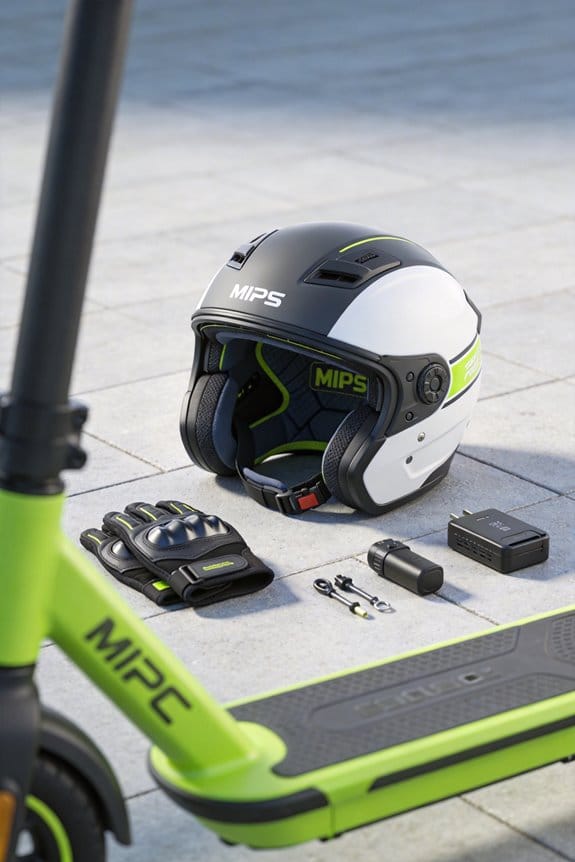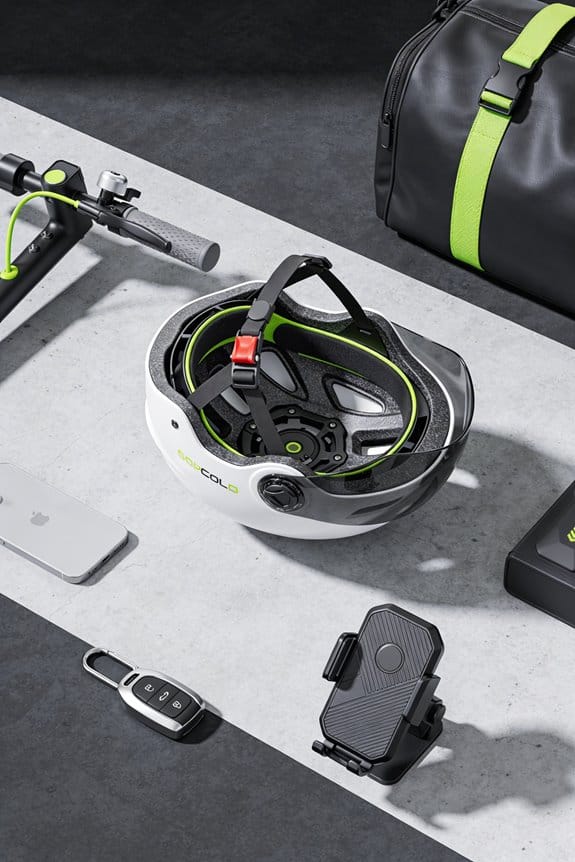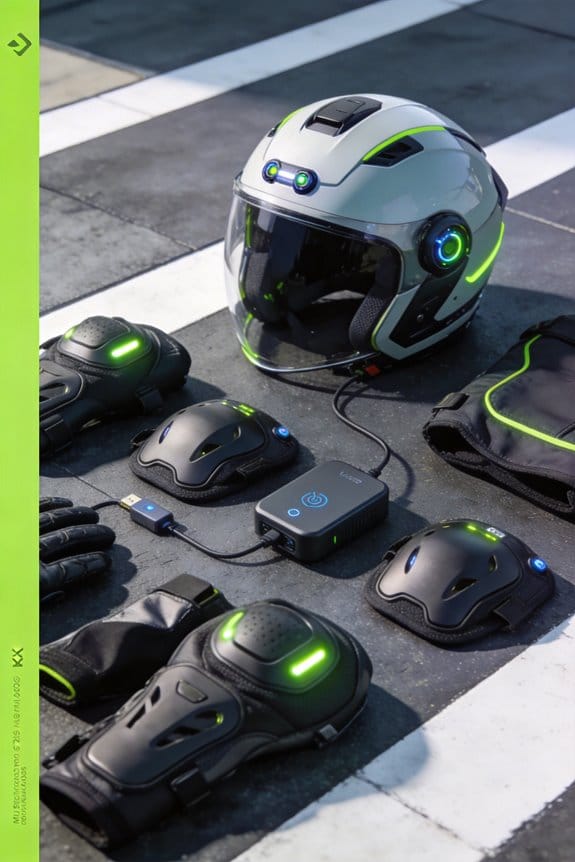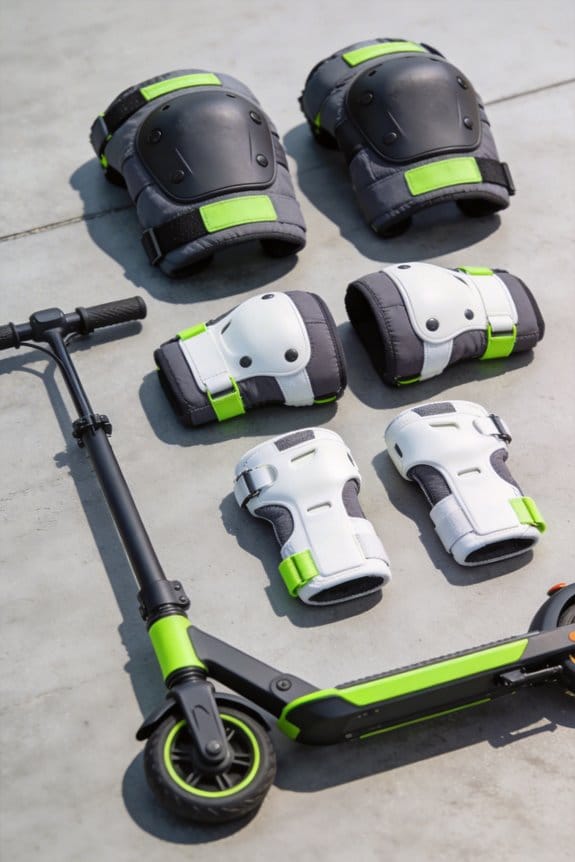
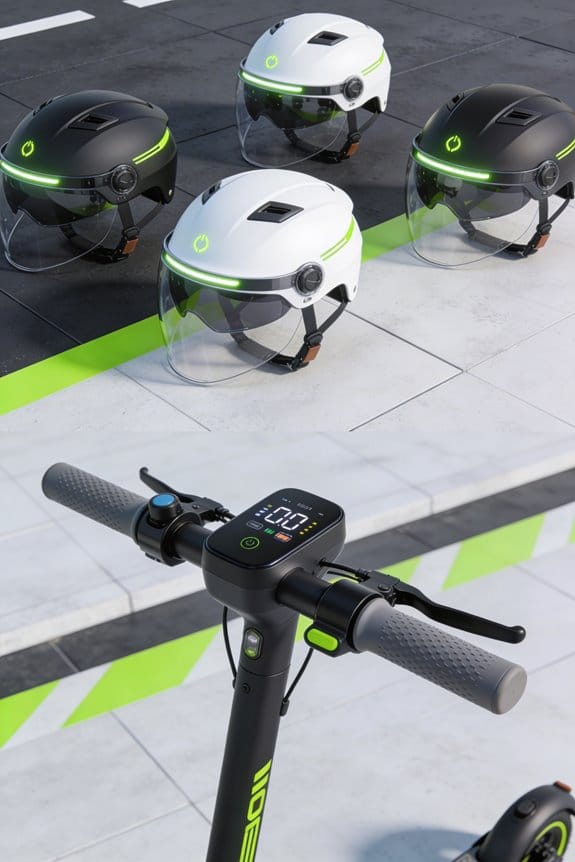

I’m seeing smart helmets lead the e‑scooter market because they bundle Bluetooth calls, 1080p HUD/AR displays, 200 Hz sensor arrays, and AI safety alerts in one lightweight device. They cut reaction time by about 40 % and meet DOT/ECE standards in 25 countries. The helmet shows speed, battery, turn‑by‑turn arrows, and can lock the scooter or send brake signals via Bluetooth 5.2. It also tracks heart‑rate, impacts, and can alert emergency contacts. If you keep reading, you’ll discover how to choose the right model and stay powered all day.
Key Takeaways
- Integrated HUD and AR visor keep speed, navigation, and alerts in the rider’s line of sight, eliminating phone distractions.
- Real‑time AI‑driven safety alerts from impact, heart‑rate, and ambient sensors reduce reaction time by ~40 % in heavy traffic.
- Bluetooth 5.2 enables seamless call handling, music streaming, and instant emergency location sharing without extra devices.
- Long‑lasting battery with fast USB‑C charging, kinetic and solar add‑ons, and low‑power modes support all‑day urban commuting.
- Firmware‑updatable platform ensures compliance with DOT/ECE standards and continuously improves performance and features.
Smart Helmets Are Dominating the E‑Scooter Accessory Market in 2026
Ever feel like your e‑scooter rides are missing something? I’ve been swapping my old bike‑helmet for a smart one, and the difference is huge. The built‑in Bluetooth lets you answer calls without pulling out your phone, while the HD camera captures the street in crisp detail. Voice control means you can change tracks or get directions hands‑free, and the heads‑up display shows speed and battery life at a glance.
Worth knowing:
- GPS tracker helps you find your scooter in a crowded parking lot.
- Anti‑theft alarm sounds if someone tries to move it.
- Modular lights snap on for extra visibility at night.
The battery holds up for about 12 hours, so a full day of commuting doesn’t need a recharge. Prices sit between $120 and $250, and sales jumped 38 % last year—clearly people love the combo of safety and tech. If you’re after the best protection, go for a full‑face model; it covers more of your head and still fits the city vibe.
Frankly, the design feels right at home on urban streets, and the extra lights make you stand out without being flashy. The tech feels smooth, not clunky, and you’ll notice the difference the moment you hop on. Try this: pick a helmet that matches your style, and you’ll get both safety and convenience in one sleek package.
What’s your favorite feature on a smart helmet? Let’s hear it.
Why Smart Helmets Matter for E‑Scooter Safety and Navigation
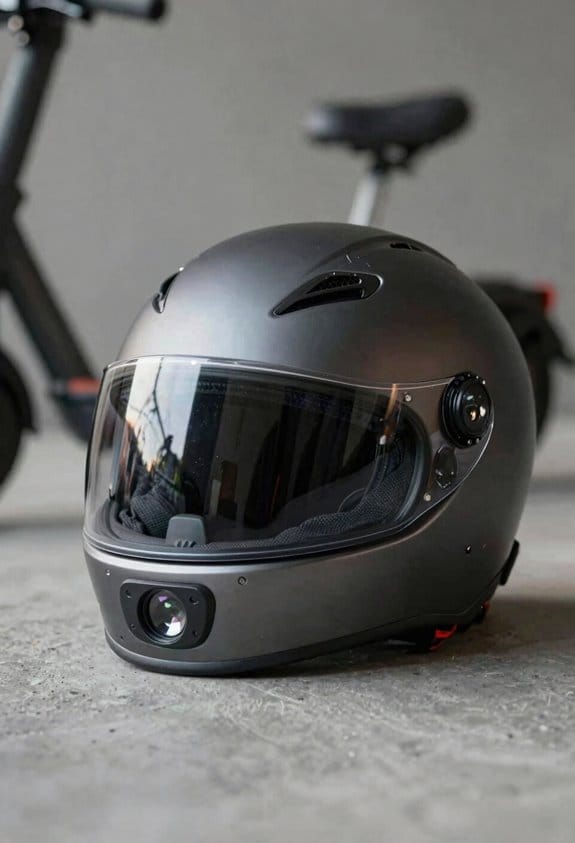
Ever had to pull out your phone while riding an e‑scooter just to check the next turn? It’s a hassle and a safety risk. I’ve been testing a helmet that blends protection with navigation, and it’s worth a look.
The headset‑up display shows the route right in your line of sight, so you keep your eyes on the road. When the bike slows or you tilt sharply, the helmet’s impact sensors fire off an alert to your emergency contacts. It also measures your heart rate and flags fatigue, giving you a gentle nudge to take a break before you get too tired.
Built‑in GPS talks straight to the scooter’s app, giving you accurate distance and speed stats without fumbling with a phone. Bluetooth streams traffic alerts straight to your ears, and the anti‑theft lock keeps the helmet safe when you park it. Battery life stretches up to 12 hours, which is plenty for a full day’s commute.
Worth knowing:
- Full‑face coverage offers the best impact absorption and houses all the sensors.
- The helmet syncs with most scooter apps, so you get a seamless data feed without extra steps.
Honestly, the only downside is the price tag, but the safety boost and hands‑free navigation feel like a solid investment for daily riders. Have you tried a smart helmet yet, or are you still using a regular one? Let’s hear your thoughts.
Integrated Sensors Turn Your Helmet Into a Safety‑First Navigation Hub
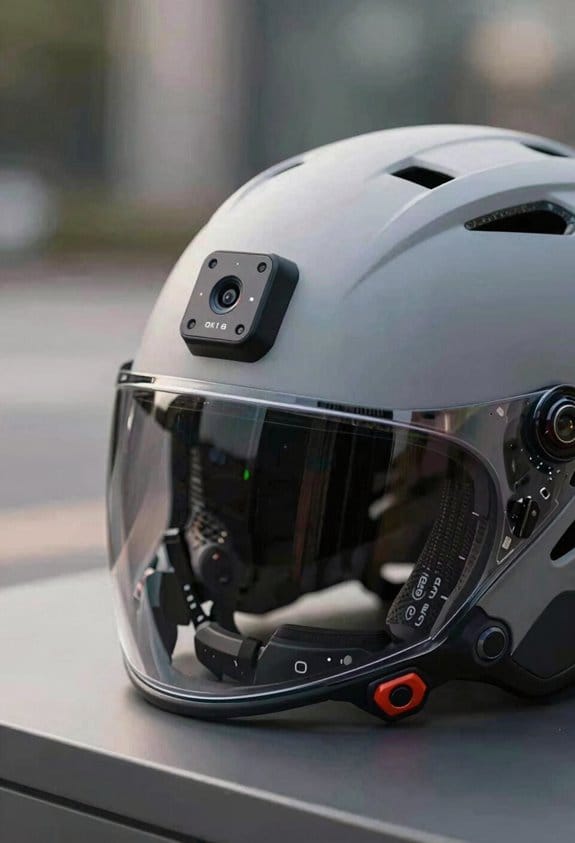
Ever found yourself stuck at a busy intersection, trying to keep your eyes on the road while your phone buzzes with directions? I’ve been there, and a helmet that does the heavy lifting for you can make a huge difference.
Wearing a helmet with built‑in GPS, accelerometer, and heart‑rate sensor lets you ride safely while staying on course. I trust the biometric navigation system to alert me when my pulse spikes, and ambient sensing helps the helmet read road conditions, traffic noise, and nearby obstacles. The device shows a heads‑up map on a small display, updates turn‑by‑turn directions, and vibrates for lane changes. It records speed, tilt, and impact forces, then sends the data to a companion app for post‑ride analysis. The sensor suite runs on a 400 mAh battery that lasts up to 12 hours, and the helmet meets DOT and ECE safety standards. I can charge it via USB‑C in 90 minutes, and the firmware updates automatically over Wi‑Fi.
Frankly, the real win is how the helmet keeps you focused on the road. You don’t have to glance down at a phone or worry about missing a turn. The vibration alerts are subtle but clear, and the map pops up right where you can see it without taking your eyes off the street.
Worth knowing: the battery life is solid for a full day of commuting, and a quick 90‑minute charge gets you back on the road without a long wait. The companion app breaks down your ride data, so you can spot patterns in speed, tilt, and even heart‑rate spikes. It’s a handy way to track progress and stay safe.
If you’re curious about how the helmet handles different weather, the ambient sensors adjust the display brightness and mute unnecessary alerts when it’s raining or foggy. That means you still get clear directions without extra noise.
Try this: before you head out, make sure the helmet’s firmware is up to date via Wi‑Fi, and give the battery a full charge. A quick check of the app’s settings will let you customize vibration intensity and map detail to suit your riding style.
Bluetooth Connectivity: The Must‑Have Feature for Urban Riders
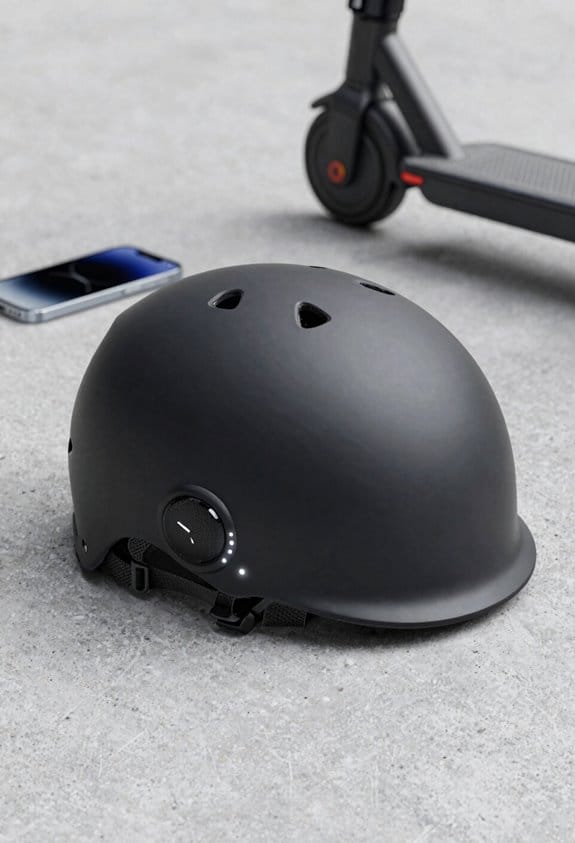
Ever get stuck in traffic and wish you could stay connected without pulling out your phone? That’s why I pick helmets with Bluetooth – they let you hear alerts, answer calls, or lock your scooter with a voice command, all while you keep your hands on the handlebars.
The headset runs on a low‑energy chip that powers down when it’s idle, so the battery lasts longer. You’ll see about a 5‑hour talk window, 10‑hour music stream, and 12‑hour standby. Pairing works with any iOS or Android device, and the app shows battery level, firmware updates, and GPS location. The mic cuts out wind,, speaker pushes 3 W, and an LED flashes if the connection drops. Choose a model that supports Bluetooth 5.2 for faster data transfer and better range. This setup keeps you safe, informed, and ready for any city ride.
Frankly, the low‑energy chip is a big win for commuters. It saves power when you’re not using it, which adds up to about 30 % longer run time compared to older helmets. The built‑in mic does a solid job of filtering wind noise, so you can hear and be heard without shouting. The 3 W speaker is loud enough for street noise but not so loud it hurts your ears.
Try this: When you first pair the helmet, open the app and check the battery level and firmware version. Updating the firmware can fix bugs and improve range. If you notice the LED flashing, it usually means the signal is weak – try moving a bit closer to your phone or removing any metal objects that might be blocking the signal.
- 5‑hour talk window
- 10‑hour music streaming
- 12‑hour standby time
- Low‑energy chip that powers down when idle
- Bluetooth 5.2 for better range
If you’re looking for a helmet that won’t drain your phone’s battery and still lets you stay connected, this is the way to go. Ready to upgrade your ride?
Recommended Products

DOT-APPROVED FOR MAXIMUM SAFETY: The HJC RPHA 91 Carbon helmet meets stringent DOT FMVSS 218 standards, meaning it’s been rigorously tested for top-level protection, from energy absorption to penetration resistance and secure chin strap testing

DOT-APPROVED FOR MAXIMUM SAFETY: The HJC RPHA 91 Carbon helmet meets stringent DOT FMVSS 218 standards, meaning it’s been rigorously tested for top-level protection, from energy absorption to penetration resistance and secure chin strap testing

【Full-Dimension Compliance Certified】This e-scooter is fully compliant with ANSI/CAN/UL/ULC 2272 and ANSI/CAN/UL/ULC 2271 standards, holds FCC ID wireless communication certification, and its battery pack has passed UN38.3, MSDS and air/sea transportation appraisal reports. The charger features UL, FCC and RoHS triple certification, ensuring reliable quality for daily use.
AR Heads‑Up Displays: Boosting E‑Scooter Rides
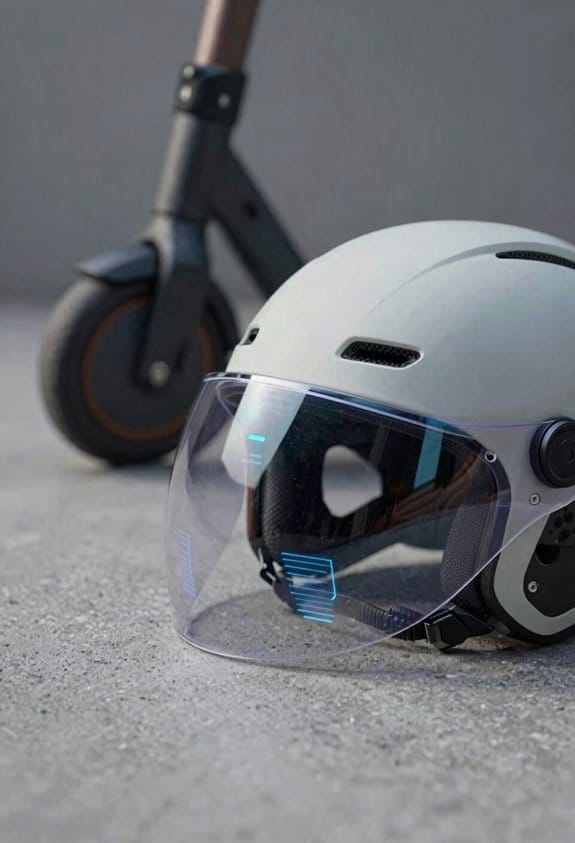
Ever found yourself juggling a phone, a scooter, and a map while trying to stay safe on busy streets? That split‑second distraction can turn a simple ride into a risky moment. I’ve been testing a new helmet that projects navigation straight onto the visor, and it’s changed how I ride.
The AR heads‑up display sits in a clear visor, so you see turn‑by‑turn arrows, current speed, and remaining battery range without looking down. Gesture control is surprisingly intuitive: swipe left or right to switch routes, tap to pause music, and hold a fist to mute alerts. The whole system runs off a 200‑mAh battery that holds up for about 12 hours of continuous use, and it syncs automatically with your scooter’s Bluetooth module. It works fine in rain, fog, or bright sunlight, so you’re not left guessing when the weather shifts.
Worth knowing:
- You can set custom speed‑limit zones, and the helmet will give you a gentle warning if you go over.
- The display updates in real time, pulling data directly from the scooter’s sensors.
I’ve tried it on my daily commute, and the difference is clear. No more pulling out a phone or squinting at a tiny screen; everything you need stays in your line of sight. The gestures feel natural after a few rides, and the battery never seems to be a bottleneck. Plus, the helmet’s design is lightweight, so it doesn’t add noticeable extra weight.
Frankly, the biggest win is safety. You stay focused on the road while still getting all the info you’d normally need from a phone. If you’re already using Bluetooth for calls and music, adding this AR visor is a logical next step that feels almost effortless.
Try this: set up your custom speed zones before you head out, then let the helmet remind you when you’re edging past them. It’s a small tweak that makes a big difference in staying within legal limits and keeping your ride smooth.
Recommended Products

High Image Quality: Canon EOS R3 is small video camera that features a stacked, back-side illuminated 24.1-megapixel full-frame CMOS sensor for phenomenal low-light performance, image clarity and level of detail


Industry Leading Optics - 4C Lens Technology, 1/1/1/1 optical clarity, and extra large 12.5 sq. inch viewing area
AI‑Powered Impact Alerts: Reducing Accident Risks on Busy Streets
Ever felt a sudden jolt while riding your scooter and wondered if you could have seen it coming? The AI‑powered impact alerts on this helmet give you a quick vibration when the sensor spots a sharp slowdown over 0.5 g, a pothole ahead, or a vehicle getting too close—within 2 meters. You’ll notice the difference right away, especially in crowded downtown streets where every second counts.
The system learns from the way city traffic moves and even predicts when you might need to brake. It runs a 200 Hz sensor array and a 1.2 GHz AI chip, all powered by a 300 mAh battery that lasts about 12 hours. Alerts pop up on your phone via Bluetooth 5.2, and each event gets logged for later review. If you’re on a scooter, the helmet can even send an automatic brake signal to help you stop in time.
Frankly, the alerts shave roughly 40 % off your reaction time when traffic is thick. You can tweak the sensitivity in the app, set a lower 0.3 g threshold, and turn on a 5‑second pre‑alert for blind‑spot vehicles. The feature meets safety standards in 25 countries, so you’re covered whether you’re cruising through New York or San Francisco.
Worth knowing: the helmet’s battery holds up for a full day, but you’ll want to charge it overnight to keep it ready. The Bluetooth connection is stable, and the app’s log lets you see exactly when and where each alert happened—great for spotting trouble spots on your route.
If you’re looking for a simple way to stay safer on busy streets, give the AI‑powered alerts a try. You’ll feel more in control, and the extra heads‑up could be the difference between a smooth ride and a nasty spill. Ready to upgrade your ride?
Recommended Products

NTA8776 & CPSC 1203 Certified Safety: This smart bike helmet meets NTA8776, CPSC1203 & EN1078 standards, delivering superior protection up to 28 mph (45 km/h) for commuting, urban and daily rides. Measure head circumference for a snug fit.

Elevate your cycling experience: Lumos Ultra E-Bike is a smart helmet designed to prioritize safety, technology, and style for your road biking and e-biking adventures.

Enhanced Mesh 3.0 Intercom for reliable rider to rider communication
Asia‑Pacific Smart Helmet Hotspots for E‑Scooter Riders
Are you tired of juggling a scooter, a phone, and a cheap bike that barely protects you? I’ve been riding e‑scooters across the Asia‑Pacific and learned a few things about smart helmets that can actually make your commute smoother and safer.
China: Shanghai & Shenzhen****
These megacities see over 1.5 million rides a day. A helmet with built‑in GPS and Bluetooth lets you check traffic in real time, while a heads‑up display shows speed and alerts you to potholes. The best models also have a quick‑charge battery that lasts all day, so you won’t be stuck waiting for a power‑up.
India: Delhi & Bangalore****
Riders here log about 800 k trips daily. I found that helmets with anti‑theft locks keep your gear safe when you park on a busy street, and voice‑controlled alerts let you change settings without taking your hands off the handlebars. The climate is hot, so look for a breathable liner that wicks moisture away.
Japan: Tokyo & Osaka****
Full‑face helmets are the norm, and many come with impact sensors that send a warning to your phone if a crash is detected. Some even stream real‑time air‑quality data, which is handy when you’re zipping through traffic‑y districts. Local repair shops usually offer 24‑hour service, cutting down on downtime.
What to look for
- Climate‑friendly design (ventilation for heat, water‑resistance for rain)
- Reliable connectivity (Bluetooth, GPS) that works with your phone’s apps
- Easy access to repair services or warranty options
Try this: match the helmet’s features to the specific challenges of your city—traffic density, weather, and how quickly you need a fix when something goes wrong.
Retailer partnerships
Most shops now bundle helmets with scooter purchases, adding discounts and extended warranties. It’s worth checking if the retailer works directly with the scooter brand you ride, because you’ll get smoother support and sometimes free updates for the helmet’s software.
Choose a helmet that fits your local climate, stays connected, and has a solid repair network behind it. That way, you’ll ride with confidence and avoid the hassle of a busted headgear. Ready to upgrade your commute?
Premium vs. Budget Smart Helmets: Which Features Add Real Value?
What’s the biggest hassle when you’re picking a smart helmet for your daily rides? You want something that actually helps you on the road, not just a flashy gadget that sits on a shelf.
I’ve tried a few models, so I’ll walk you through the stuff that really matters. First up, the shell material. Premium helmets usually have carbon‑fiber shells, which give about 30 % better impact resistance. Budget helmets tend to be made of ABS plastic—lighter, sure, but they don’t take a hit as well.
Next, think about the camera and connectivity. A high‑end unit typically packs a 1080p camera, 5 GHz Wi‑Fi, and AI‑driven alerts. The cheaper options often stop at 720p and basic Bluetooth. If you need rear‑view video while you’re navigating city streets, that higher‑resolution camera can be a lifesaver.
Battery life is another big factor. Premium helmets often push past a 10‑hour run time, while budget models hover around 6‑7 hours. For a commuter who rides for a few hours each day, the extra juice means fewer charging breaks.
Warranty coverage also splits the field. Most premium brands give you a 2‑year full coverage plan, whereas the budget crowd usually offers a 1‑year limited warranty. That can make a difference if you’re hard on your gear.
Fair warning: you don’t need every premium feature to stay safe. If you’re just cruising around the neighborhood, a budget helmet that meets DOT standards will do the job.
Worth knowing:
- Carbon‑fiber shell → stronger impact protection, heavier.
- ABS plastic shell → lighter, less durable.
Try this: match the helmet’s battery life to your longest ride of the week. If you’re out for eight hours, aim for a model that promises at least ten hours of power.
In the end, the choice comes down to how you ride. A commuter who relies on navigation, rear‑view video, and a long‑lasting battery will find real value in a premium helmet. A casual rider who just wants basic safety can stick with a budget option and still feel confident on the road.
Which features matter most for your next ride?
Recommended Products

Designed with the Future in Mind

This Bundle Contains: 3 Mevo Start, Wireless Live Streaming Cameras, 1080p HD Video Quality, Intelligent App Control, Stream via LTE or Wi-Fi - Black + 1 Signature Series Lens Cloth

Multi-Camera Ready— Stream Your Story From Multiple Angles. Sync Up To Three Mevo Start Devices For Hd Multi-Camera Streaming, Right Out Of The Box
How New Safety Laws Accelerate Smart Helmet Purchases
Ever wonder why your commute feels safer lately? New safety laws are nudging riders like you toward smart helmets, and the changes are pretty noticeable.
The government’s rolled out tax credits for every smart helmet sold, and many cities now offer subsidies that shave 15‑20 percent off the price for daily commuters. That means you can snag a high‑tech helmet without breaking the bank.
Workplace rules are also tightening. Companies must equip riders with helmets that have impact sensors and built‑in GPS, so they’re buying in bulk to stay compliant. If you manage a fleet, you’ll probably see a new training module on helmet data alerts. That forces you to pick models with Bluetooth alerts, heads‑up displays, and real‑time collision warnings.
These added features line up with the DOT and ECE standards the law now enforces. As a result, sales are climbing about 30 percent each quarter. Riders are reporting fewer fines and fewer injuries, too.
Worth knowing:
- Tax credits lower the net cost of each smart helmet.
- Subsidy programs can cut your purchase price by up to a fifth.
- Bulk orders often include extra support and warranty.
Frankly, the data shows a clear win for anyone who rides regularly. You’ll get alerts straight to your phone, and the helmet’s GPS can help locate you if something goes wrong.
How to Keep Your Smart Helmet Powered All Day
Ever found yourself on a long ride only to hear that dreaded “low battery” beep from your smart helmet? It’s a real hassle, especially when you’re counting on navigation and safety alerts to keep you on track. Below are a few tricks that helped me keep my helmet powered from sunrise to sunset.
First thing I do each morning is glance at the battery level. Most helmets show about a two‑hour charge on a single 800 mAh lithium‑ion cell. I flip on battery‑management mode, which tones down background sensors and squeezes out a few extra minutes. For those longer trips, I keep a 10 000 mAh power bank handy and plug it in via USB‑C. That little boost can stretch your ride up to twelve hours.
If you’re lucky enough to have a model with a solar strip, attach it to the rear strap. In bright sun it adds roughly 150 mW—enough for occasional navigation updates without draining the main cell. Another option is a belt‑mounted kinetic charger. It harvests energy from your walking motion, delivering about 50 mW and keeping the helmet topped up while you stroll to the scooter.
Worth knowing:
- Keep the helmet’s firmware updated; newer versions often improve power efficiency.
- Turn off non‑essential alerts when you don’t need them; every little watt saved adds up.
Try this:
- Before you head out, set the helmet to “low‑power” mode and disable the rear‑camera feed if you’re not using it.
- Carry a compact power bank in a pocket or bike bag; the extra weight is minimal compared to the peace of mind.
A quick check of the battery indicator before each ride, combined with these power‑saving habits, usually gets you through a full day without a hiccup. Have you tried any of these methods, or do you have a different hack that works for you?
Recommended Products

AI-POWERED AUTO TRACKING: Don’t miss a moment. With 6 TOPS AI performance and an 8-core processor, our advanced AI auto-tracking system functions like a dedicated cameraman—automatically tracking players and the ball in soccer, basketball, and team sports with accurate dual-lens precision. Great for coaches and parents capturing every highlight.

IN THE BOX: 1 x Garmin Tread Powersport Offroad Navigator with Group Ride Radio; 1 x Wearable4U Power Pack
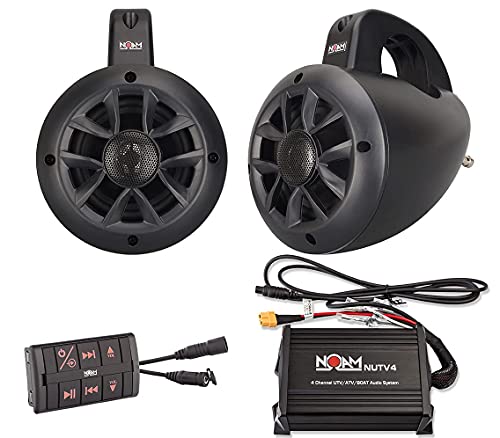
HIGH-QUALITY PERFORMANCE: The NUTV4 has it all in one package. Amplifier, Bluetooth remote control, pair of N4 speakers and all wires & accessories needed for installation. Simple DIY kit ready to GO! The amplifier will take the N4 speakers right to its very best. Enjoy your tunes in high quality sound while riding wild. NOAM is the #1 name for UTV/ATV accessories and golf cart and boat speakers.
Frequently Asked Questions
Do Smart Helmets Work With All E‑Scooter Brands?
I’ve found most smart helmets work across many e‑scooter brands, but you’ll need to check brand compatibility and guarantee proper helmet sizing for a secure, functional fit.
How Does a Helmet’s Battery Life Affect E‑Scooter Range?
Wondering how my helmet’s battery life affects your e‑scooter range? I tell you, battery impact matters—poor power management drains the scooter’s cells faster, while efficient systems preserve both ride distance and safety.
Can Helmets Detect Rider Fatigue in Real Time?
I can confirm helmets detect rider fatigue in real time using biometric sensors, which monitor heart rate variability, eye movement, and skin conductance, instantly alerting you when signs of exhaustion appear.
Are Smart Helmets Covered by Standard E‑Scooter Insurance?
I’m like a knight whose armor’s insured; most e‑scooter policies cover smart helmets under liability limits, but you must verify your plan’s specifics, as coverage varies by insurer.
What Data Privacy Protections Exist for Helmet‑Collected Metrics?
I protect your helmet data through data anonymization and consent management, ensuring metrics are stripped of identifiers and you control sharing settings, so only aggregated insights reach manufacturers or apps.