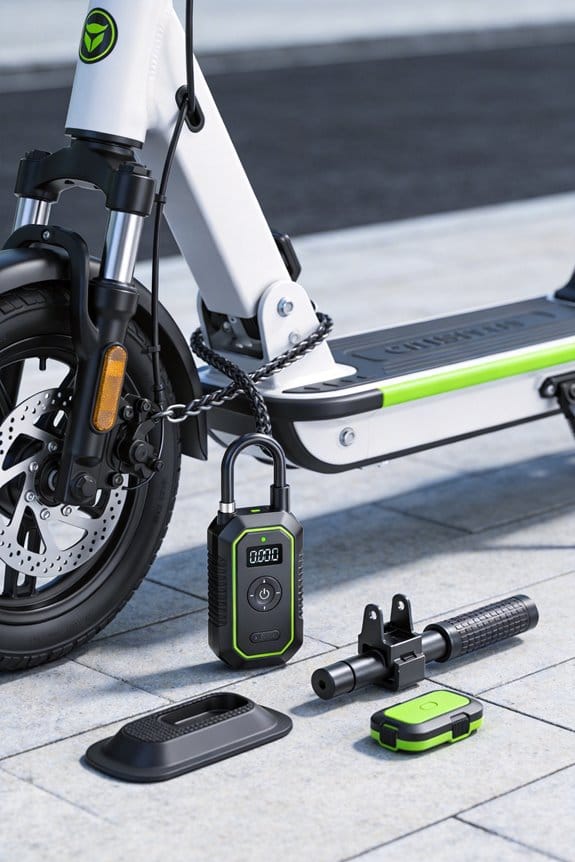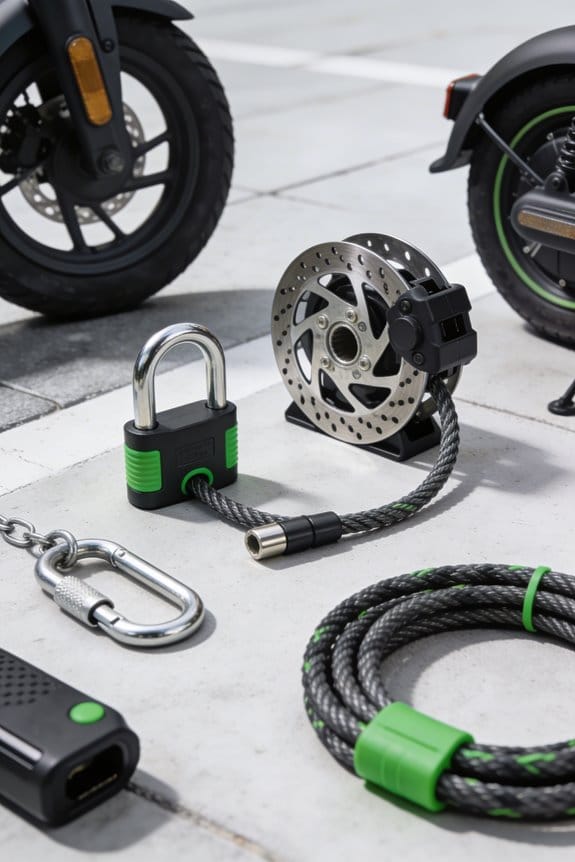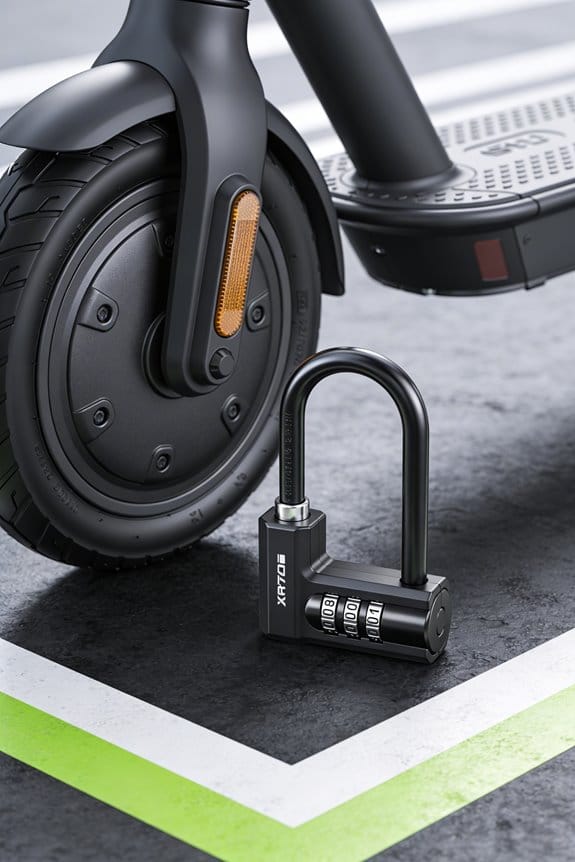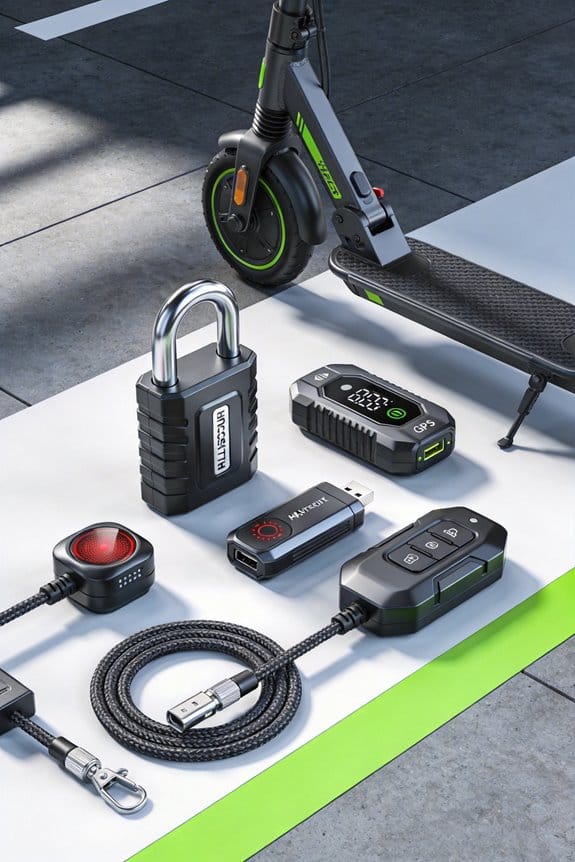
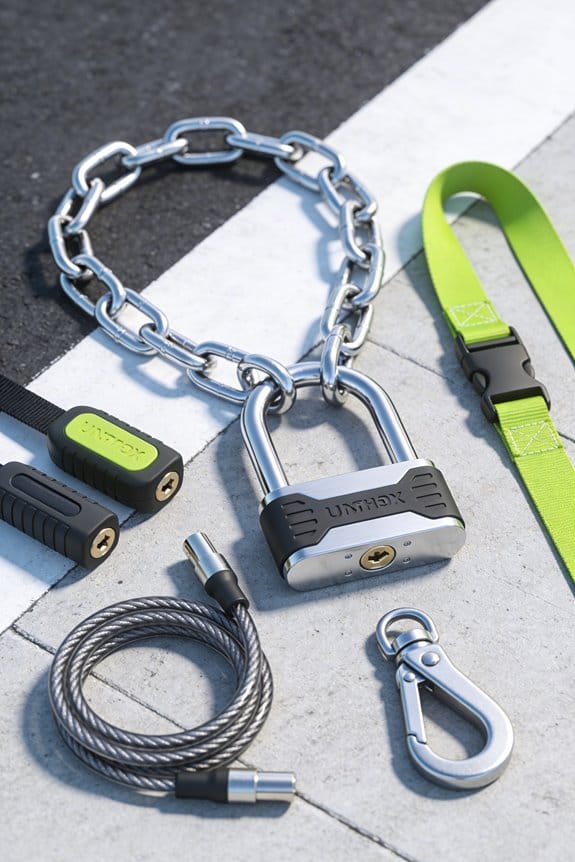

I recommend a 2000 mm waterproof, UV‑resistant polyester cover with double‑stitched seams, a 12 mm hardened‑shackle U‑lock with a 4‑digit code, a 2 m heavy‑duty chain, a steel wall‑mount anchor bolted 1.2 m high, a 6‑inch plywood pallet with rubber feet for elevation, a magnetic portable rack for temporary use, and a motion‑sensor light (300 lumens, 5 m range, IP66) to deter thieves while keeping the scooter dry and secure; continue for more details.
Key Takeaways
- Choose a sheltered spot (porch, awning, or garage) with a roof and wall, then place a weather‑proof cover that allows airflow to prevent moisture buildup.
- Elevate the scooter on a lightweight plywood pallet with rubber feet, creating a 6‑inch gap for air circulation and protection from puddles.
- Secure the scooter using a hardened‑shackle U‑lock and a 10 mm heavy‑duty chain wrapped around a fixed pole or fence, threading the lock through the frame and front wheel.
- Attach tamper‑evident stickers with reflective QR codes to the frame and battery case, providing visible deterrence and a quick reporting method.
- Install a motion‑sensor light with a low‑power standby mode and a 90 dB tamper alarm near the scooter to deter thieves and alert you of any movement.
Choose the Right Weather‑Proof Cover for E‑Scooter Storage
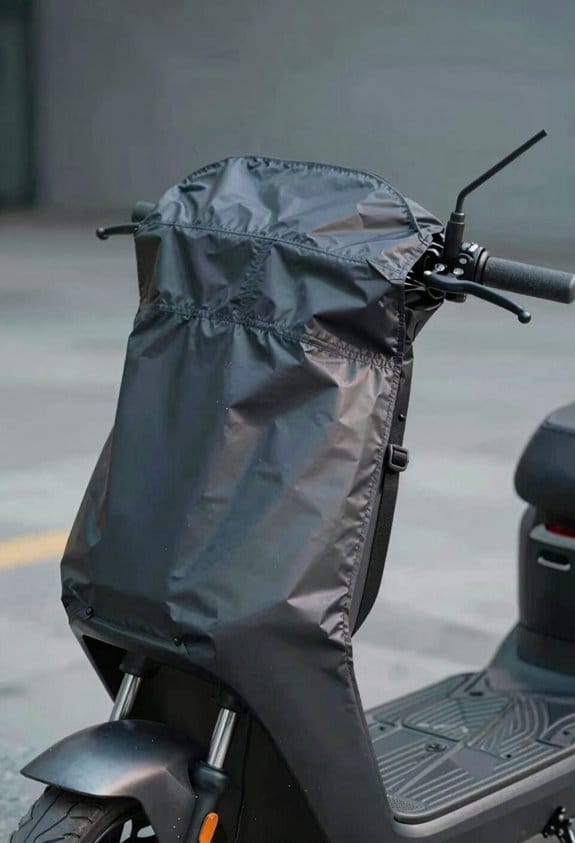
Ever had a sudden downpour ruin your e‑scooter right after a ride? I’ve learned a few tricks to keep it dry, and they’re easier than you think.
First, check the waterproof rating. A 2000 mm column‑water test means the cover can handle heavy rain without soaking through. Next, think about breathability—if the material lets moisture escape, you’ll avoid mold and rust. Double‑stitched seams are a must; they stop water from leaking at stress points.
Try this: a good cover should weigh around 1.2 kg, fold down to a 30 × 30 cm bag, and fit a scooter up to 120 cm long. UV‑resistant polyester with a 150 g/m² coating protects the paint from sun damage. I also look for a 10‑year warranty, a built‑in tie‑down loop, and a zippered pocket for keys.
Fair warning: not every cheap cover will hold up. If you notice the fabric feels stiff or the seams look flimsy, it’s probably a budget option that won’t last. A solid cover will stay flexible, even after many washes, and the seams will stay tight.
Here’s the trick: use the cover on a porch, under an awning, or in a garage—anywhere it can stay out of direct rain but still get some air flow. That way you keep your scooter dry and safe without trapping humidity.
- Waterproof rating: 2000 mm column‑water test
- Material: UV‑resistant polyester, 150 g/m² coating
- Weight: ~1.2 kg, folds to 30 × 30 cm bag
- Fit: up to 120 cm scooter length
Give these tips a try and see how much easier it is to protect your ride. Ready to keep your scooter safe rain or shine?
Pick an E‑Scooter Lock and Chain to Deter Theft
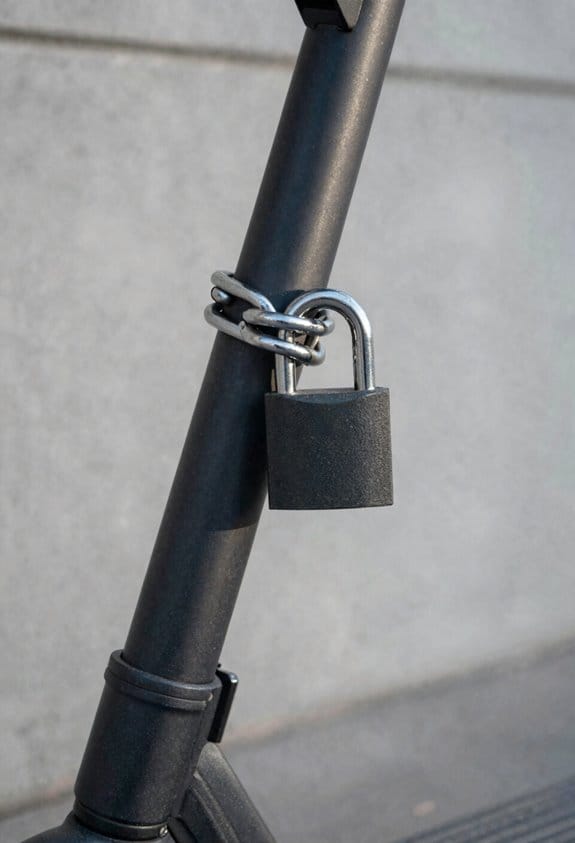
Ever left your e‑scooter out on the street and worried about it getting nicked? I’ve been there, and a solid lock and chain combo can give you peace of mind without breaking the bank.
A U‑lock with a hardened shackle around 12 mm thick works great. Pick one that uses a keyless cylinder with a 4‑digit code so you don’t have to juggle keys. The lock stands up to bolt cutters and picks, and the cylinder stays functional even when it’s raining. Pair it with a heavy‑duty chain—10 mm link size and about two meters long. Wrap the chain around a fixed pole or fence, then thread the lock’s shackle through the chain for that extra layer of security.
Try this:
- Secure the scooter frame with the chain, making sure the lock holds the front wheel in place.
- Mount the whole setup on a sturdy post, bike rack, or building column.
The combo handles cold, heat, and wet conditions without rusting or jamming. You’ll find it’s a simple, reliable way to keep casual thieves at bay.
Give it a shot and see how much easier it is to leave your scooter outside without constantly looking over your shoulder. How will you protect your ride?
Install a Permanent Anchor Point for E‑Scooter Locking
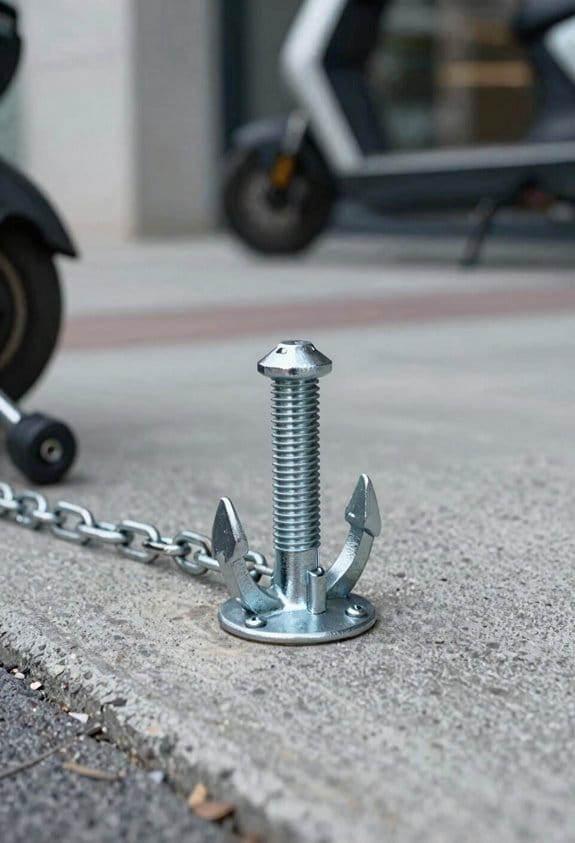
Ever found yourself hunting for a safe spot to lock your e‑scooter, only to realize the only thing holding it up is a flimsy bike rack? I’ve been there, and after a few trial‑and‑error attempts, I settled on a permanent anchor point that’s both sturdy and easy to use.
A steel wall‑mount bracket or a reinforced concrete post works great. I usually drill into concrete footings and pick a 3‑inch anchor bolt pattern that matches most U‑locks. The bracket I favor has a 5‑mm thick steel plate, a 10‑mm hardened bolt, and a powder‑coat finish that stands up to rust. Install it about 1.2 m off the ground so the lock sits comfortably, then double‑check that the bolt pattern lines up with your lock shackle before tightening to roughly 80 Nm torque.
Here’s the trick:
- Use a concrete drill bit that’s at least 1 inch wide for the anchor holes.
- Insert a sleeve to keep the bolt from cracking the concrete.
- Apply a rust‑inhibiting grease to the bolt threads before tightening.
This setup works on building exteriors, parking lot walls, and even garden fences. It can hold up to 250 kg, so wind and tampering aren’t much of a concern. I test the lock daily, and if I spot any corrosion, I replace the bolts right away.
Frankly, the key is to keep the anchor at a height that’s convenient for you and to make sure the bolt pattern matches your lock. A little extra torque goes a long way in keeping everything tight and secure.
Worth knowing: you don’t need a professional installer for this—just a drill, a few tools, and a bit of patience. Have you tried a permanent anchor for your scooter yet?
Find a Sheltered Spot to Shield From Rain, Sun, and Snow
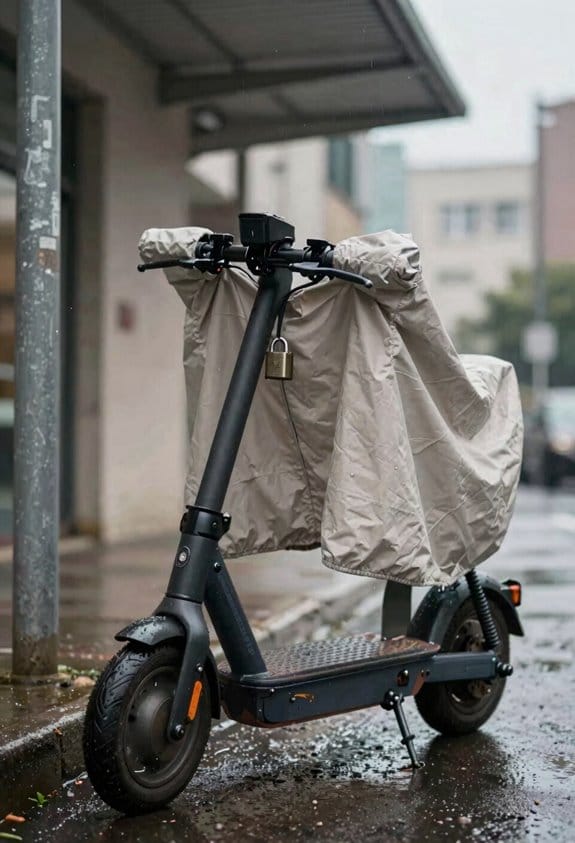
Ever had your scooter drenched after a sudden storm, then baked in the summer sun? Finding a spot that keeps it dry, cool, and out of the wind is easier than you think.
First, pick a porch or a covered area that has both a roof and a wall. The wall is handy for attaching a lock, and the roof blocks rain and snow. If you have a dense leafy canopy, that can work too—just make sure the leaves are thick enough to keep drops off the scooter. I usually look for a place that stays dry, lets air flow, and stays out of direct UV rays.
Try this:
- A simple tarp on a pole costs about $15 and shields against snow and wind.
- A dedicated scooter cover, rated 300 g/m², repels water and blocks UV for roughly $12.
Secure the scooter to the porch rail, then drape the cover over it. This set‑up keeps the scooter safe, dry, and cool without a lot of hassle.
Frankly, the key is to combine a solid anchor with a shelter that lets the air move. That way you avoid mold and keep the battery from overheating. It’s a small investment that pays off every season.
Deploy a Portable Rack When a Fixed One Isn’t Available
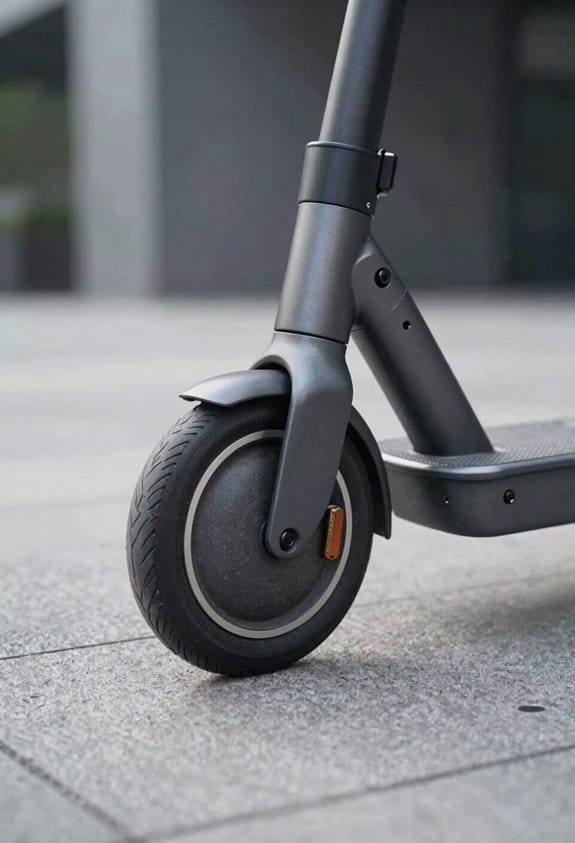
Ever found yourself at a park or loading dock with no permanent scooter stand in sight? You’ve probably tried to lean your e‑scooter against a railing, only to watch it wobble and worry about a fall. A portable rack can solve that problem in seconds, and it’s easier to carry than you might think.
I’ve been using a foldable stand that collapses down to 12 inches wide and weighs just 3 lb. It clicks shut with a tight‑lever lock, so you don’t have to fuss with screws or tools. The base is magnetic and can hold up to 150 lb, which means it sticks solidly to metal railings, fire‑escapes, or bike‑rack frames. When you set it up, the 4‑inch‑high platform spreads the scooter’s weight evenly, cutting down on wobble and keeping the bike stable.
Try this:
- Unfold the rack, lock the lever, and press the magnetic base onto a metal surface.
- Slide the scooter onto the platform and make sure it’s centered.
- When you’re done, just click the lever again and fold it flat for storage.
The rack folds flat, so you can slip it under a bench or toss it into a backpack. It’s perfect for quick stops at a building’s side door, a park entrance, or any spot where a permanent rack isn’t available. Because it’s lightweight, you can carry it around without feeling weighed down, and the magnetic base means you won’t need to drill holes or install anything permanent.
Honestly, the biggest win is how fast you can set it up—just a few seconds, and you’ve got a sturdy spot for your scooter. The weight distribution keeps the bike from tipping, and the magnetic hold gives you peace of mind that it won’t slide off. Plus, when you’re ready to go, you can fold it up and stash it away without taking up much space.
If you’re looking for a simple, reliable way to keep your e‑scooter safe when there’s no fixed rack, this portable stand is worth a try. Have you ever tried a magnetic base for your gear before?
Apply Anti‑Theft Stickers to Deter Thieves
Ever wonder why your e‑scooter disappears overnight? A simple sticker can make a big difference. I’ve been using anti‑theft stickers on my own rides for a while now, and they’re cheap, easy to slap on, and hard to miss.
First, pick a bold design that screams “don’t touch.” A QR code that points to a theft‑report page works well—anyone who tries to peel it off will break the seal, and the broken sticker is a clear sign something’s wrong. Stick it on the frame where it’s visible, then add a few more on the handlebar, deck, and battery case. A 3‑inch by 5‑inch size keeps the text legible, and a reflective finish helps at night.
Frankly, the adhesive is strong enough that a thief can’t just peel it off without leaving a mess. When you see a broken seal, you know something’s been tampered with right away. Share a photo of the sticker on community reporting apps; they’ll ping the neighborhood watch and local police, giving you a faster response.
Worth knowing: the stickers are cheap, but they add a deterrent layer that costs nothing extra. They’re also a conversation starter—neighbors often ask about the QR code, and you can spread the word about reporting thefts.
Try this: place a tamper‑evident sticker on every major part of your scooter. The more places you cover, the harder it is for a thief to hide any damage. The QR code links directly to a simple form where you can report a theft, making it easier for authorities to track stolen bikes.
If you’re looking for a quick win, go for a reflective finish. It catches headlights and makes the warning stand out after dark. That extra visibility can be the difference between a thief walking away and thinking twice.
In the end, a sticker isn’t a guarantee, but it’s a low‑cost step that adds a layer of protection. Have you tried a similar trick on your scooter? Let’s hear how it worked for you.
Store the Removable Battery Indoors at Optimal Temperature
Ever wonder why your e‑bike’s removable battery seems to lose power faster than before?
Keeping it at the right temperature inside your home can make a big difference. I store mine in a climate‑controlled closet that stays between 15 °C and 25 °C (59 °F‑77 °F). A lightweight, breathable cover stops moisture from building up, and I put the battery on a shelf away from direct sunlight and drafts.
Try this:
- Keep the battery away from metal objects to cut static risk.
- Charge after each ride, but don’t let it sit fully discharged for more than a week.
- Avoid overnight charging when the room is warm.
I check the voltage once a week and jot it down in a simple log. That habit helps me spot any drop early, so I can adjust the storage spot before anything goes wrong.
Frankly, a stable temperature and a regular charge schedule extend the battery’s life, keep performance steady, and lower the fire risk.
If you’re looking for a quick way to protect your battery, just follow the routine above and you’ll notice the difference in a few weeks.
What’s the one change you’ll try first?
Elevate the Scooter to Prevent Moisture and Ground‑Level Damage
Ever notice how a puddle can ruin your scooter’s ride? When the bike sits flat on the floor, water seeps into the wheels and battery, and rust starts to creep in. I solved that by lifting the scooter a few inches off the ground.
First, I set a sturdy pallet under the scooter. A 0.5‑inch thick plywood board holds about 150 lb, so it’s more than enough for most e‑scooters. Then I attached four rubber feet to each corner of the pallet. Those feet keep the whole thing from sliding, protect your floor, and soak up the vibrations from traffic.
Frankly, the setup works on concrete sidewalks, stone patios, and garage floors alike. The pallet raises the scooter roughly six inches, so water can’t pool around the wheels or the battery compartment. The rubber feet also let air flow underneath, which cuts down on condensation and rust.
Worth knowing:
- 0.5‑inch plywood pallet (≈$30)
- Four 2‑inch rubber feet (≈$15 total)
The total cost is about $45, and you don’t need any tools to put it together. Just place the pallet, screw in the rubber feet, and roll your scooter onto it. You’ll notice the ride feels steadier, and the scooter stays dry even after a rainstorm.
If you’re worried about the pallet slipping, the rubber feet grip the floor nicely, so you won’t have to worry about it moving around. And because the pallet is lightweight, you can lift it out when you need to store the scooter elsewhere.
Give it a try and see how much longer your scooter lasts. Ready to keep your ride dry and safe?
Add E‑Scooter‑Specific Motion‑Sensor Lighting for Deterrence
Ever had your e‑scooter stolen right from your driveway? I’ve been there, and a simple motion‑sensor light can make a big difference. I installed a unit that flashes bright when someone gets close, then fades after a few seconds. The light ramps up to about 300 lumens on motion, dropping to just 20 lumens after 30 seconds, so it’s noticeable without draining power.
The model I chose comes with a built‑in tamper alarm that blares at 90 dB if anyone tries to move or cover it. Its sensor reaches about 5 meters, catching passers‑by before they get a chance to mess with the scooter. The housing is IP66 weather‑proof, so rain or dust won’t be a problem. A 12 V rechargeable battery powers it for up to 90 days on a single charge, which means you won’t be swapping batteries every week.
Worth knowing:
- Mount the light on a nearby pole or wall using the brackets and screws that come with it.
- Aim the sensor toward the most common approach path for the best coverage.
I’ve found that the visual cue alone makes most people think twice, and the loud alarm adds an extra layer of protection. The setup is cheap, easy to install, and doesn’t require any wiring. Your scooter stays visible, and you get a heads‑up if someone’s trying anything shady.
Try this: keep the battery fully charged and check the sensor’s angle every few months. A quick tweak can keep the range accurate as your yard changes.
Frankly, I’ve seen fewer break‑ins since adding the light, and the peace of mind is worth the modest cost. Have you tried a motion‑sensor deterrent for your ride? Let’s hear how it worked for you.
Run a Quick Pre‑Theft Checklist Before Leaving
Did you ever lock up your scooter and then wonder if you missed something? A quick pre‑theft check can give you peace of mind in under two minutes.
First, give the bike a once look. Spot any loose bolts, cracked covers, or exposed wires. Tighten any loose lock, make sure the U‑lock hugs a solid post, and verify the cover isn’t torn.
Next, snap a few photos of the scooter, the lock, and the area around it. Those pictures can be handy if you ever need to prove the condition.
- Check that the battery is either removed or locked in place.
- Confirm the cover is fastened properly.
Then, make sure the shelter is dry, well‑ventilated, and not sitting in a puddle.
Finally, glance at the weather sensor and motion‑light status to see they’re active.
Fair warning: skipping any of these steps can leave your ride vulnerable.
Try this: go through the list before you walk away, and you’ll feel a lot safer.
How often do you forget to double‑check these details? Give it a try next time and see the difference.
Frequently Asked Questions
Do I Need a Separate Lock for the Battery Compartment?
I’d recommend a dedicated lock for the battery security; it adds a solid compartment theft deterrent and prevents thieves from quickly swapping or stealing the battery, especially when the scooter’s left unattended.
Can I Use a Bike Lock on an E‑Scooter Frame?
I’d say yes—just as a knight’s shield guards his sword, a sturdy bike lock can protect your e‑scooter frame. Keep security considerations in mind, ensuring lock compatibility with the frame’s tubes.
What Is the Best Way to Protect the Charger Cable?
I’d wrap the charger cable in a sturdy cable sleeve, then attach a tamper alarm so any cut or movement triggers a warning, keeping it safe from theft or accidental damage.
Should I Apply a Uv‑Resistant Spray to the Scooter’s Paint?
I’d say yes—apply a UV‑protective coating for it helps preserve the paint, prevents fading, and keeps the finish resilient against sunlight, rain, and temperature swings.
How Often Should I Inspect the Anchor Point for Rust?
Think of your anchor like a ship’s hull—inspect it monthly, and do a deeper seasonal maintenance check before winter or heavy rain, to catch rust early and keep your scooter safe.