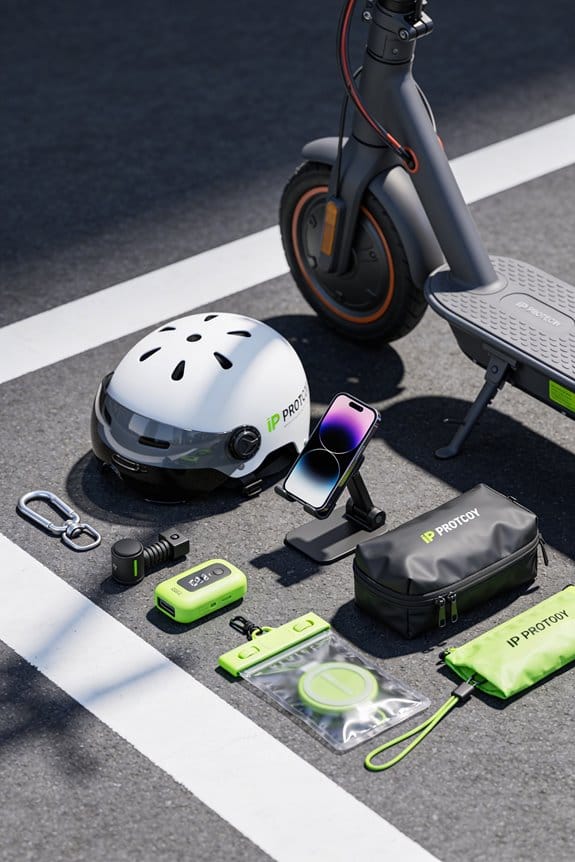

I explain IP ratings as two numbers: the first shows dust protection, the second shows water protection. A first digit of 5 blocks particles larger than 0.3 mm, while 6 means dust‑tight. The water digit 4 stops splashes, 5 handles low‑pressure jets, 6 resists high‑pressure jets, 7 survives immersion to 1 m for 30 minutes, and 8 allows continuous submersion as defined by the maker. For city scooters, IP54 or IP55 is enough; for off‑road trails or rainy commutes, choose IP65 or IP67; for accessories that may sit in water, IP68 is safest. Avoid vague “water‑resistant” labels—look for a specific IP code and check the manufacturer’s test report. If you follow these rules, you’ll know exactly which parts survive mud, rain, or puddles, and the next sections will show how to verify claims and test accessories yourself.
Key Takeaways
- IP codes consist of two digits: the first indicates dust protection, the second water protection.
- Higher first digits (5‑6) block finer particles; IP6 is dust‑tight, sealing out particles under 0.1 mm.
- Water protection scales from splash‑proof (4) to high‑pressure jets (6) and immersion (7‑8); IP7 survives 1 m submersion for 30 min.
- For scooter accessories, choose at least IP54 for city riding, IP65 for off‑road mud, and IP67 when occasional water submersion is expected.
- Verify claims with manufacturer test reports, sealed connectors, and simple home tests (hose spray, brief submersion) before purchase.
Define What an IP Rating Means for Scooters
Ever got caught in a sudden downpour while your scooter’s accessories started sputtering? That’s the moment you realize how important an IP rating really is. When you buy a scooter accessory, the IP rating tells you how well it keeps out dust and water. I look at the two‑digit code: the first digit shows solid protection, the second shows liquid protection. An IP65 rating means dust‑tight sealing and water jets from any direction; an IP67 rating adds protection for short submersion up to 1 m.
Worth knowing:
- Higher digits are worth it if you ride on muddy trails or through rainy streets.
- Water and dust can cause short circuits and faster wear, so the right rating can save you money.
I choose higher digits when I ride in muddy trails or rainy streets because the environmental impact of water and dust can cause short circuits and faster wear. I also check warranty implications—many manufacturers void warranties if the accessory is used below the stated IP level. I match the rating to my ride conditions, verify the manufacturer’s test data, and keep the warranty active by staying within the specified protection limits.
Frankly, the best way to avoid surprises is to read the fine print and test the gear yourself. If you’re unsure, start with a rating that exceeds the worst weather you expect. That way, you won’t be left stranded when the next storm hits.
Ready to protect your ride? Give the right IP rating a try and see how much smoother your rides become.
Understand the First Digit: Dust Protection
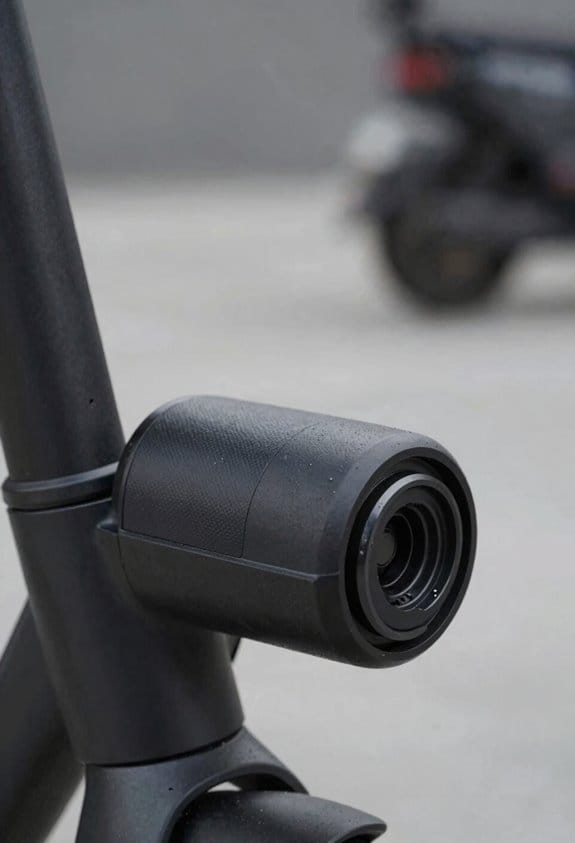
Ever tried riding on a dusty road and watched the sand creep into your gear? That first digit in an IP rating is the key to keeping the grit out. I aim for a 4, 5, or 6 rating because they each block dust at different sizes.
- IP4 stops anything bigger than about 1 mm – think screws, sand grains, and small pebbles.
- IP5 keeps out particles down to 0.3 mm, covering most road dust and fine sand.
- IP6 is dust‑tight, sealing even the tiniest bits under 0.1 mm.
When I’m picking a GPS unit for my scooter, I go with IP65. It handles the dust from unpaved paths while still letting water splash in when it rains. For a battery case, I prefer IP66 because fine dust can cause overheating if it gets inside.
Truth is, those numbers aren’t just random; they tell you exactly how much protection you get. If you’re often off‑road, a higher digit can save you from having to clean out clogged vents later.
Worth knowing: the higher the first digit, the tighter the seal, but it can also make the case a bit bulkier.
Understand the Second Digit: Water Protection
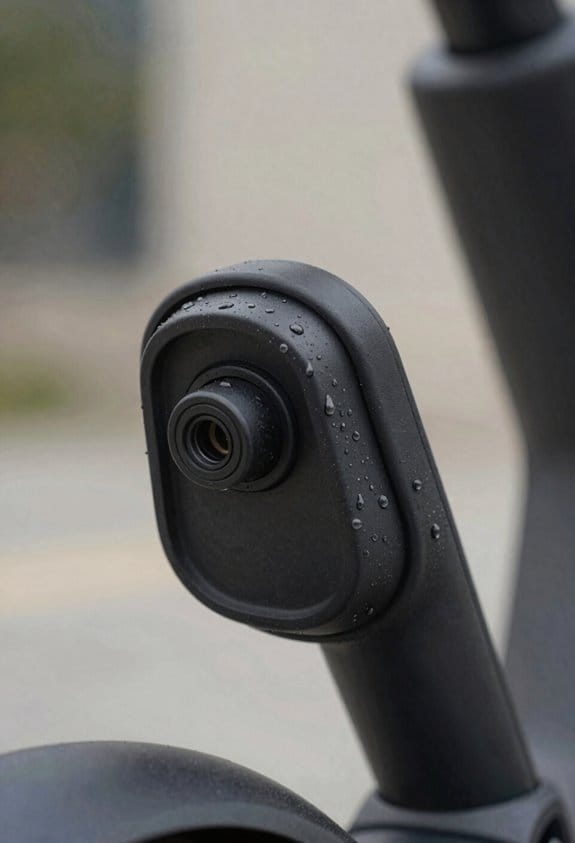
Ever gotten caught in a sudden downpour while riding your scooter and wondered if your accessories will survive? The second digit in an IP rating is what tells you how well a part can handle water, and it’s worth getting to know.
The scale runs from 0 to 8. A 4 means splash‑proof; water can hit from any direction but won’t seep in. A 5 adds protection against low‑pressure water jets. A 6 covers high‑pressure jets. A 7 guarantees safety when submerged up to 1 meter for 30 minutes. An 8 allows deeper submersion as defined by the maker.
Frankly, I always check for sealed valves and pressure‑testing reports before I buy. For city riding, you’ll want at least IP4 to survive rain. For off‑road mud runs, aim for IP6 or higher.
Worth knowing: the higher the number, the more confidence you can have that a splash won’t ruin your gear.
- Look for clear, with on the product page.
- Ask the seller for a copy of the pressure‑test results.
If you’re still unsure, think about the worst weather you’ve faced and match that to the rating. Does a sudden splash feel like a big deal, or do you need protection from a full‑on storm?
Choosing the right rating can save you from costly repairs later. Have you ever had a water‑damaged accessory that ruined your ride?
Pick a rating that fits your typical rides and you’ll ride with less worry. What rating will you go for next?
Decode Common Scooter Ratings: IP54, IP65, IP67, IP68
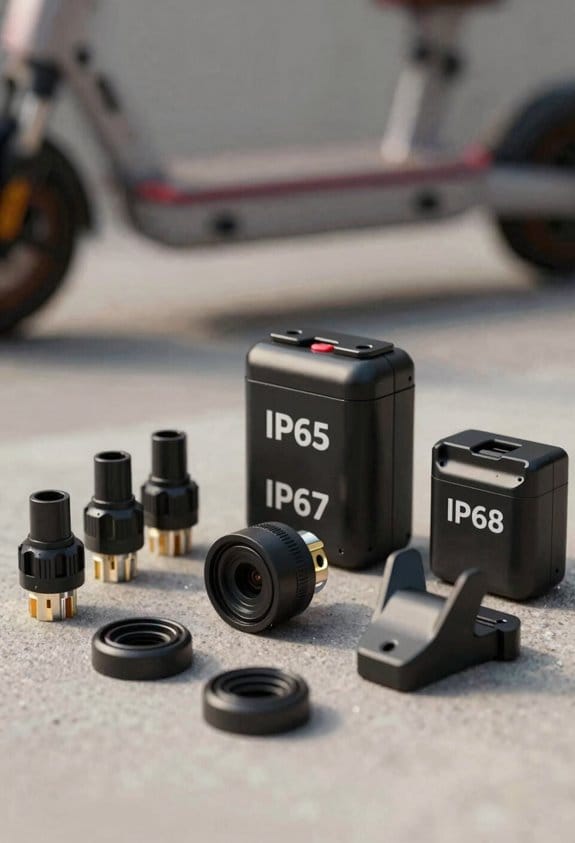
Ever gotten caught in a sudden downpour while cruising on your scooter and wondered if your gear can actually survive it? Those moments are the reason you need to know what those IP numbers really mean.
IP54 blocks dust particles larger than 1 mm and can handle low‑pressure water jets. It’s fine for city rides where you only meet a few puddles now the start.
IP65 steps up the game with full dust protection and can take strong water jets from any direction. If you love off‑road trails that splash up mud, this rating keeps your electronics safe.
IP67 is dust‑tight and survives immersion up to 1 m for 30 minutes. Think rainy commutes or accidental drops into a shallow ditch—your scooter’s heart stays dry.
IP68 goes even further: dust‑tight sealing plus continuous submersion at depths the maker specifies. It’s the go‑to for wet‑sport accessories that might sit under water for a while.
Worth knowing: check for sealed connectors and look for pressure‑testing results before you buy. Those details tell you if the claim holds up in real life.
Try this: when you shop, compare the rating to the conditions you face most often. If you ride mostly on paved streets with occasional rain, IP54 or IP65 might be enough. For those who tackle muddy paths or ride in heavy storms, aim for IP67 or IP68.
Choosing the right rating can save you from a costly replacement later. Got a favorite scooter accessory you’re unsure about? Let’s hear what you think.
Match IP Ratings to Real‑World Riding Conditions
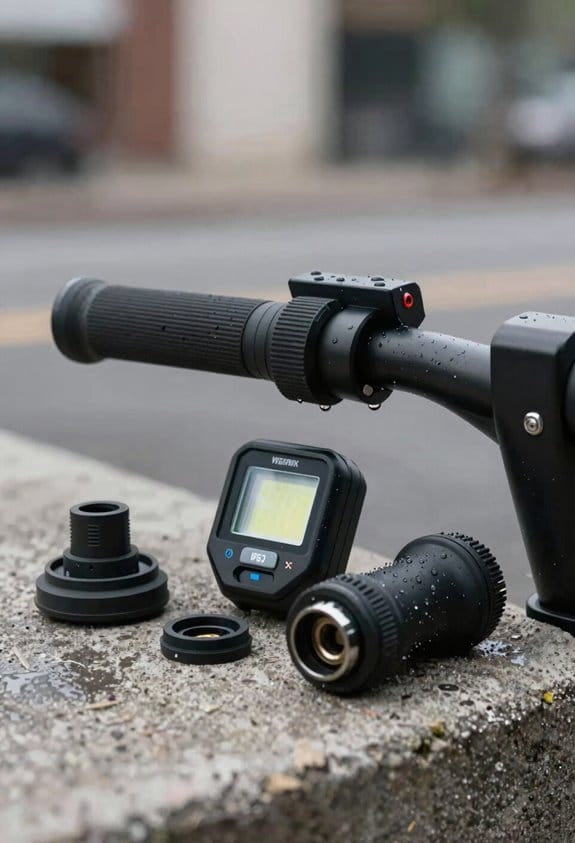
Ever gotten caught in a sudden rainstorm while cruising downtown and wished your scooter’s electronics could handle the mess?
When you’re zipping through dry city streets, dust and the odd drizzle are the main worries. Aim for accessories rated at least IP54 – that means dust up to 1 mm and low‑pressure water jets won’t get in. I match the rating to the ride temperature and expected moisture. For summer rides where heat climbs above 35 °C, go for IP65 to keep dust out and handle sudden spray from puddles. In early spring, when rain is light, IP55 works fine and lets you clean the unit without damage.
During winter, slush and salted roads can be brutal. Pick IP67 to survive brief submersion and protect the electronics from corrosion. I schedule seasonal maintenance each spring and fall, checking seals, cleaning filters, and confirming the rating still meets the current climate.
Worth knowing:
- IP54 – dust protection up to 1 mm, low‑pressure water jets.
- IP55 – light rain, easy cleaning.
- IP65 – high heat, sudden puddle spray.
- IP67 – brief submersion, salty slush.
Frankly, keeping your scooter reliable all year means less repair cost and safer rides.
Try this: after each season, give the seals a quick once, wipe away any grit, and give the filter a gentle blow‑out.
Your next ride will feel smoother, and you’ll avoid nasty surprises when the weather flips. Ready to give your scooter the protection it deserves?
Choose the Right Rating for City vs. Off‑Road Use
City riding throws dust, occasional rain, and light splashes at your gear. What do you do when a sudden puddle hits your phone mount?
Honestly, I stick with at least IP55 for anything that faces the city. That rating blocks dust down to 1 mm and handles low‑pressure water jets. For a phone mount, a GPS holder, and a battery case I go up to IP65—extra sealing keeps fine sand out and stops sudden puddles from getting in.
Frankly, a headlight only needs splash protection, so IP54 does the trick. It’s light enough not to add bulk but still keeps water from ruining the optics.
When you hit the trail, dust turns into mud and deeper water spray. That’s when I step up to IP67 for the controller box, a motor sensor, and a rear light. The tighter seal blocks out dust, mud, and water that can get pretty deep.
Worth knowing: choose accessories with silicone gaskets, rubber straps, and corrosion‑resistant connectors. Those details help you survive mud splatter and stone impact without a fuss.
Got a favorite gear setup for city or off‑road rides? Let me know!
Why ‘Water‑Resistant’ Isn’t Enough for an IP Rating?
Ever tried riding your scooter on a rainy morning and wondered why the accessory you bought kept fizzing out? You’re not alone—most people think “water‑resistant” means they’re safe from any splash, but that’s not the whole story. The label can hide a lot, and you end up with a busted part when you hit a puddle or a sudden downpour.
I’ve seen a few cases where a “water‑resistant” cover survived a couple of drops but fell apart when the bike hit standing water. The truth is, those terms are vague and don’t tell you how deep or how long the protection lasts. If you’re cruising through wet streets, splashing through puddles, or caught in a light rain, you need more than a vague claim.
Worth knowing: An IP rating breaks it down for you.
- IP4 blocks splashes from any direction.
- IP7 survives being submerged up to 1 m for 30 minutes.
- IP8 handles deeper, longer immersion.
When you see a specific code, you can match it to your riding environment. A scooter rider who often rides by the river will want at least IP7, while a city commuter can be fine with IP4.
Frankly, the best move is to skip the vague “water‑resistant” claim and hunt for a product that lists its IP rating. That way you know exactly what you’re getting and you won’t be caught off guard when a sudden splash hits.
Try this: Before you buy, check the product description for a clear IP number. If it’s missing, ask the seller or look for a different brand that’s upfront about its protection level. It’s a small step that can save you a lot of hassle later.
Choosing the right rating means you’ll ride confidently, rain or shine, without worrying about a busted accessory. Have you checked the IP rating on your current gear yet?
Detect Misleading IP Claims on Aftermarket Parts
Ever bought a scooter part that says “water‑proof” and then wondered why it soaked up rain after a short ride? You’re not alone. The labels can be vague, and the testing behind them often isn’t clear.
I start by tracing the supply chain for each part, hunting for documentation that lines up with the IP code. When the certification looks shady, the label might brag about IP67 while the test report only shows IP54. That mismatch is a big red flag.
Worth knowing:
- Look for a concrete test report that matches the IP rating.
- Check user reviews for any mention of water damage or dust getting inside.
- Compare the spec sheet to real‑world use: a battery case should hold up against a 30‑minute rain shower, and a headlight housing should keep dust out on a gravel path.
If a part claims “water‑resistant” without a specific number, take it with a grain of salt. Those vague terms often hide the fact that the part hasn’t been tested to any real standard.
I also skim through forums and ride‑group chats for patterns. When several riders report the same issue after rain rides or off‑road trips, it’s usually a sign the part can’t live up to its promise.
Try this:
- Grab the spec sheet and note the expected exposure time (like a 30‑minute rain shower).
- Then, see if any real‑world tests or user stories match that claim.
- If the data feels thin, it’s safer to skip the part and look for something with solid proof.
Quick Checklist: Verify IP Compliance Before Buying
Ever tried buying a scooter only to find out the connector fizzles out after a drizzle? That’s why you need to double‑check the IP rating before you hand over cash.
First, grab the spec sheet and look for the exact IP code. Dust‑filled streets usually call for at least IP5X, while rainy routes need IP4 or higher. If you’re planning on water‑sports, aim for IP67 or IP68. Next, skim the material certification – you want a housing that’s UV‑stable, rubber‑sealed, and corrosion‑resistant.
- Contact the supplier and ask for test reports.
- Verify the batch number against the documentation.
After that, schedule a quick field inspection. Check the connector gaskets, cable glands, and sealing rings for any signs of wear. Make sure the label shows the right regulatory markings—CE, UL, or FCC.
Frankly, it’s worth knowing that the IP rating must match your scooter’s battery voltage, motor power, and typical ride conditions. If any of those don’t line up, you could end up with a busted connection.
Try this: before you buy, compare the rating to the environment you’ll be riding in and the scooter’s specs. It’s a simple step that can save you a lot of hassle later.
Safely Test an Accessory’s IP Rating at Home
Ever wondered if you can check an accessory’s IP rating without a lab? You don’t need fancy gear—just a few household items and a bit of patience.
First, give the piece a good look over. Spot any cracks or loose parts? If it seems solid, grab a garden hose and set it to about 2 bar. Run water over the seams, connectors, and button caps for 30 seconds. Keep an eye out for any drips or seepage; that’s your first clue.
Worth knowing:
- Apply a thin layer of sealant on the gasket, let it cure for a full day, then see how it holds up.
- After the sealant dries, submerge the item in a bucket of water about 0.5 meters deep for ten minutes—this mimics an IPX‑4 test.
When the time’s up, dry the accessory thoroughly and pop it open. Look inside for any signs of rust, corrosion, or residue. If everything’s dry and clean, you’ve got a pass and your gear is ready for those rainy rides.
Frankly, this simple routine can save you a lot of guesswork. Just remember to be gentle when handling the device and to dry it completely before checking the interior.
Give it a try and see how your equipment holds up. Ready to put your gear through a quick home test?
Frequently Asked Questions
Can IP Ratings Be Upgraded After Installation?
I can’t magically boost an existing rating, but I can retrofit seals, apply coating upgrades, and replace vulnerable parts—each step adding layers of protection, though the original IP number stays unchanged.
Do Temperature Extremes Affect IP Protection Levels?
I’ve found that temperature extremes can make material brittleness increase, which shortens seal longevity, so your IP protection may degrade faster in very hot or cold conditions.
Are Ip‑Rated Connectors Compatible Across Different Scooter Brands?
I find that most IP‑rated connectors work across brands because they follow common sealing standards, but always double‑check the exact rating and mounting style to guarantee reliable cross‑brand compatibility.
What Testing Equipment Verifies an Accessory’s IP Claim?
I’ll tell you straight: you need environmental chambers and ingress probes to verify an accessory’s IP claim, because they simulate real‑world dust and water exposure, ensuring the rating really holds up.
Does Charging While Riding Impact an Accessory’s IP Rating?
I can tell you that charging while riding doesn’t change an accessory’s IP rating, but it adds charging hazards and can force water intrusion through seams if the seal isn’t perfect.