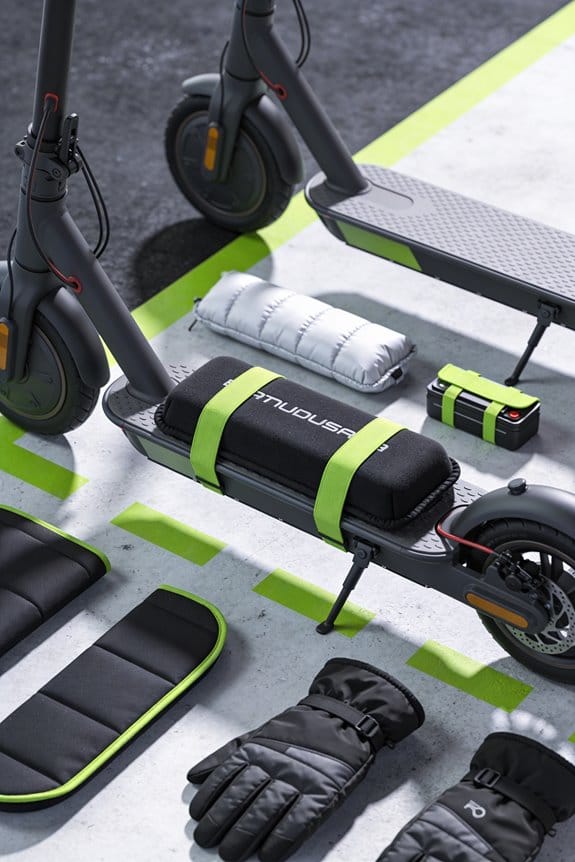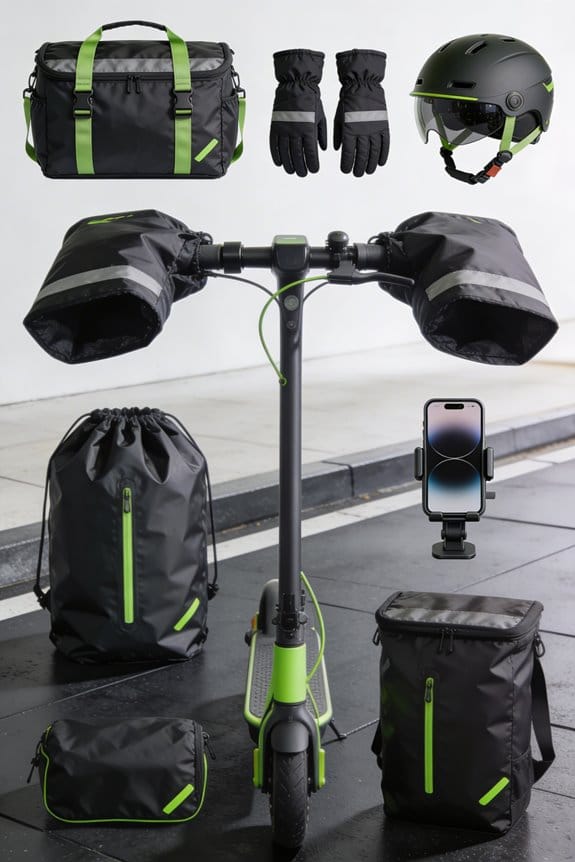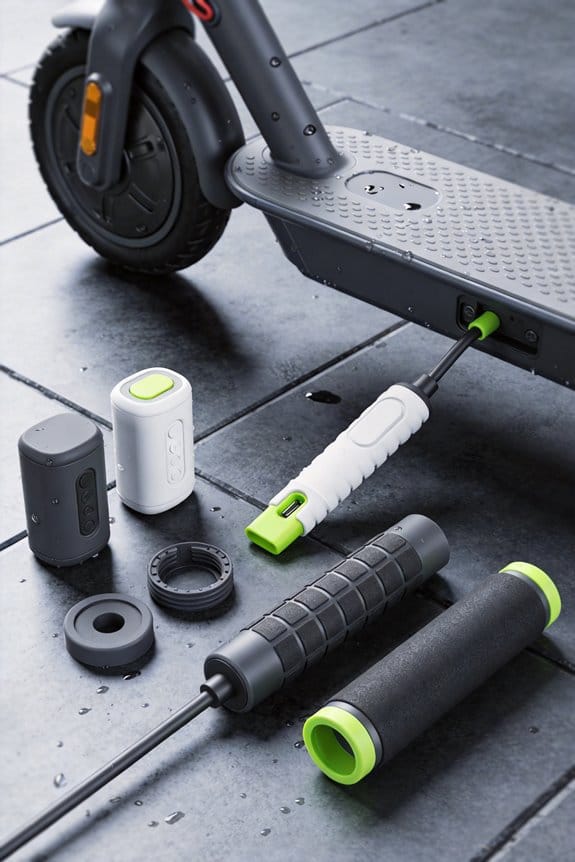
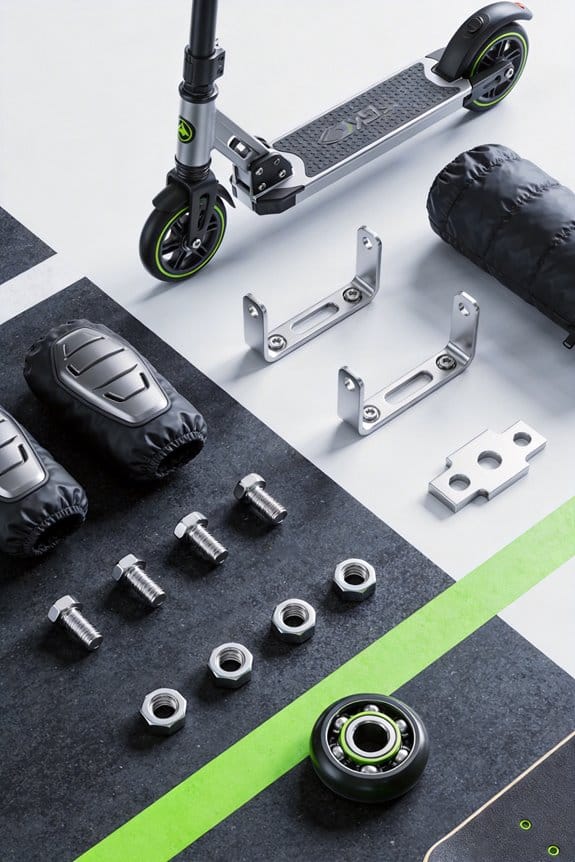

I recommend choosing a scooter with an IPX6 rating, sealed stainless‑steel bearings, silicone‑jacketed wiring, and a 5 % silicone rust‑resistant spray because these features cut corrosion risk by up to 80 % on salted roads and keep the bike safe for winter riding. The IPX6 seal blocks water and salt jets, the stainless bearings prevent rust on moving parts, the silicone jacket stops short‑circuits, and the spray creates a moisture‑repellent film on exposed metal. Use a low‑pressure hose rinse, microfiber wipe, and air blower after each ride to keep everything dry. Follow these steps and you’ll see longer battery life, smoother rides, and fewer repairs. The next sections will show how to store and maintain the scooter for year‑round performance.
Key Takeaways
- Rust‑resistant coatings and silicone sprays create a moisture‑repellent film, reducing corrosion risk by up to 80 % after each ride.
- Sealed bearings, stainless‑steel races, and IPX6‑rated components prevent salt‑induced wear and maintain smooth operation in cold, wet conditions.
- Silicone‑jacketed wiring and IPX4‑rated connectors protect electrical systems from short‑circuits caused by salt spray and moisture ingress.
- Regular post‑ride cleaning—low‑pressure hose rinse, microfiber wipe, and air‑blower drying—removes salt deposits before they can initiate rust.
- Proper gaskets and torque (≈45 Nm) on all metal flanges block water entry, preserving structural integrity and extending scooter lifespan.
What Happens When Road Salt Meets Your Scooter? – Winter Scooter Rust Prevention
Ever notice how a splash of road salt can turn your scooter into a rust magnet?
When that salty crust dries on the frame, it holds moisture and starts eating away at wiring, steel, and bearings. The thin film it leaves behind traps water, and that water drives electrochemical corrosion on any metal it touches.
Frankly, you’ll want a scooter that can keep the salt out. Look for an IPX6 rating – it blocks water and salt from getting in. The frame should be a 1.5‑mm aluminum alloy with a protective coating that stands up to salty road spray. Bearings that are sealed and come with a two‑year rust warranty add extra peace of mind. And the wiring? A silicone‑based jacket helps stop short‑circuits when the moisture tries to sneak in.
Here’s the trick: use the silicone spray that comes with the scooter on all folds and seals. It creates a barrier that keeps the water out and the metal dry. After each ride, give the bike a quick rinse with fresh water, then wipe it down with a microfiber cloth. This simple routine can slash your corrosion risk by about 80 %.
Worth knowing:
- Pick a model with a solid IPX6 rating.
- Keep the silicone spray handy for seals and folds.
If you follow these steps, you’ll notice far less rust and a longer‑lasting ride. Ready to give your scooter the protection it deserves?
Why Rust Shortens Scooter Lifespan and Undermines Safety
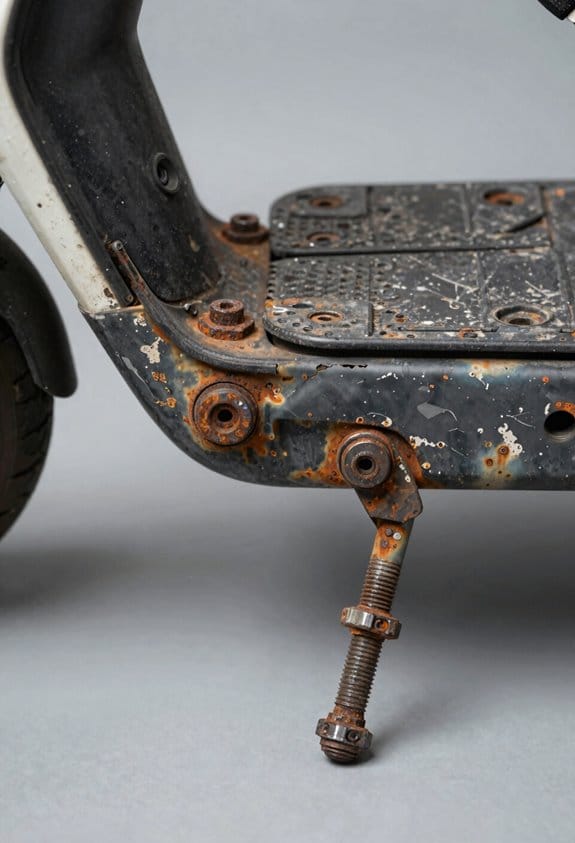
Ever noticed your scooter wobbling after a chilly ride? Rust can sneak in on the frame, eat away at the wiring, and mess up the bearings, so a sudden failure isn’t far off. It usually starts at the joints and spreads to the deck, making the whole thing feel shaky. On the electrical side, rust can short‑circuit the motor controller and dim the LED display, leaving you stranded in the dark.
Frankly, the best way to beat rust is to pick the right materials from the start. A frame made from aluminum alloy and covered with a 150‑micron powder coat will hold up against salty roads for about three years. For the wiring, go with a harness that has sealed connectors rated IPX4; that cuts the short‑circuit risk by roughly 60 %. And don’t forget the bearings—stainless steel races with a silicone seal will keep things smooth for at least a year, even in snow.
Try this:
- Choose an aluminum alloy frame with a thick powder coat.
- Pick a wiring harness with IPX4‑rated sealed connectors.
- Install stainless steel bearings with silicone seals.
These simple upgrades can make your scooter safer and more reliable all winter long. Have you tried any of these fixes on your own ride?
Use IPX6 Water‑Resistance for Winter Scooter Rust Prevention
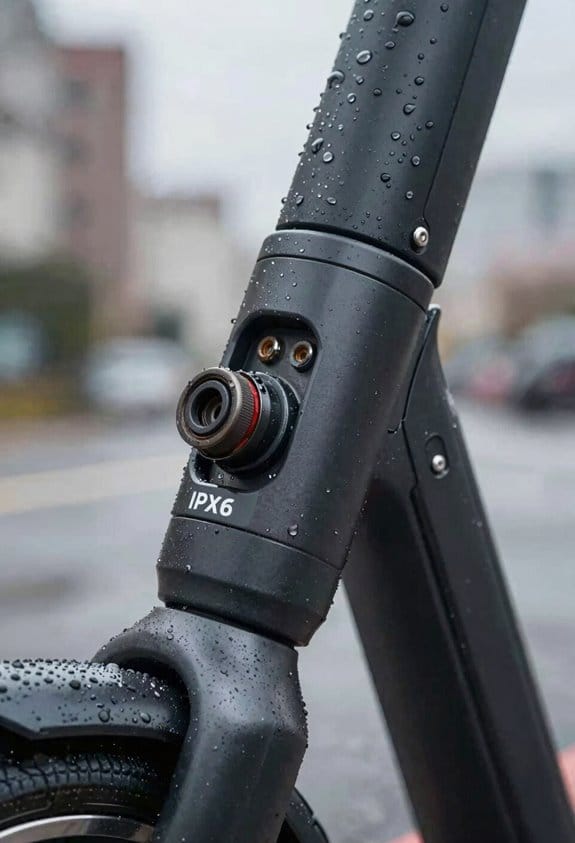
Do you ever worry that a sudden splash of slush could ruin your scooter’s electronics? I’ve been there, and the trick is to pick a model with an IPX6 rating.
IPX6 means water can hit the scooter at 30 psi, splash from slush, or spray from cleaning without getting inside the electronics. I choose frames with waterproof connectors sealed by silicone gaskets, and I verify them through pressure testing in the factory.
Worth knowing:
- The rating protects the motor controller, battery terminals, and sensor wires from road‑salt spray and melting snow.
- Look for product specs that list a 6‑hour immersion test, a 30 psi water jet, and an IPX6 label on the motor housing.
When the scooter passes pressure testing, you’ll know the hardware will stay rust‑free, even after daily rides in wet, salty conditions. This prevents corrosion, keeps the ride safe, and extends component life.
Frankly, I’ve seen cheap scooters rust out after a single winter ride, while the IPX6‑rated ones keep running smooth for months.
Try this: before you buy, ask the seller for proof of the pressure test or a certification sheet. If they can’t show it, walk away.
Your winter rides will be a lot less stressful when you know the electronics are sealed against the elements. Ready to ride without fear of rust?
Recommended Products

🚀【𝟖𝟎𝟎𝟎𝐖 𝐇𝐲𝐩𝐞𝐫𝐂𝐨𝐫𝐞 𝐃𝐮𝐚𝐥 𝐄𝐧𝐠𝐢𝐧𝐞𝐬】- This adult electric scooter equipped with 𝐝𝐮𝐚𝐥 𝟑𝟓𝟎𝟎𝐖 𝐡𝐲𝐩𝐞𝐫𝐜𝐨𝐫𝐞 𝐦𝐨𝐭𝐨𝐫𝐬,which can pump 𝟓𝟖 𝐦𝐩𝐡 fury speed and effortlessly tackle inclines of up to 45°. 𝐍𝐎𝐓𝐄: Better wear armor-grade riding gear while riding this steel beast!
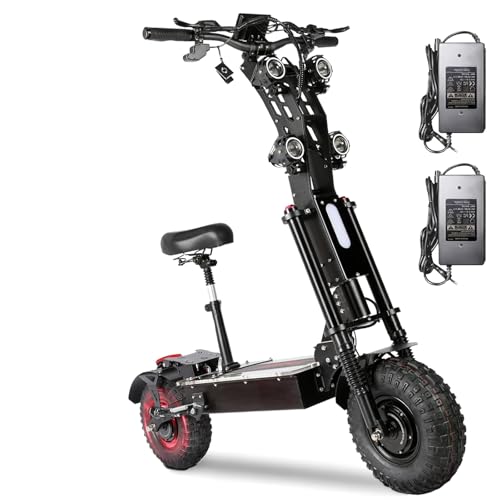
【10000W Dual Brushless Motor】Dominate the streets with a powerful 10000W dual brushless motor, delivering instant acceleration and a top speed of 60MPH. Whether you're commuting to work or exploring the city, this scooter provides smooth, high-performance rides with minimal noise and maximized efficiency. Perfect for adults seeking speed, power, and reliability in an electric scooter.

10000W Dual Motor & 60 MPH Top Speed Powerful dual motors deliver 10000W peak power, hitting a blistering top speed of 60 MPH. Engineered for speed enthusiasts to conquer 40° steep inclines with ease.
Seal Critical Junctions With Rust‑Resistant Gaskets
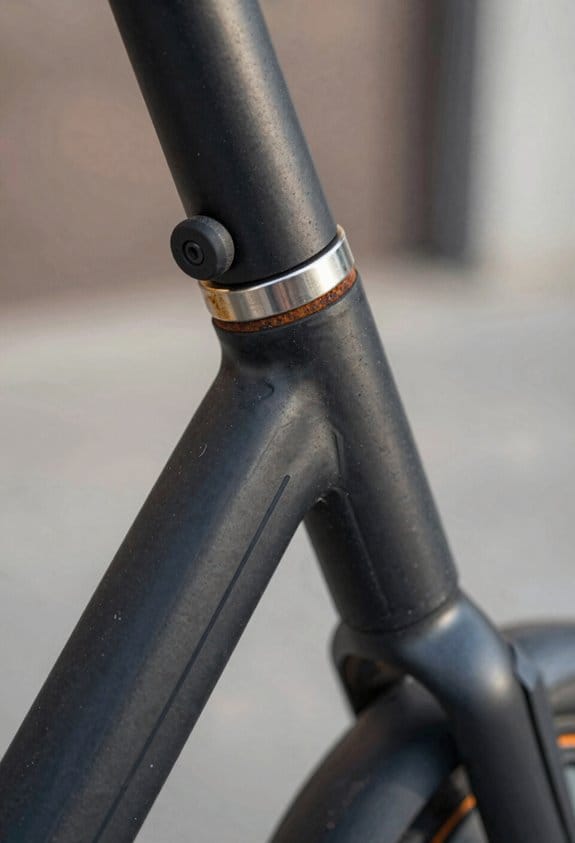
Ever notice how a little leak can ruin a whole ride? When water sneaks into the frame or motor housing, rust shows up fast, especially in winter. I’ve found a simple fix that keeps the scooter dry and running smooth.
Seal the critical junctions
Use a 3 mm thick rubber gasket on every metal flange. The material handles temperature swings and stays flexible down to –30 °C. Press the gasket onto the flange, then tighten the bolt to about 45 Nm. That pressure makes a tight seal that blocks water and salt.
Fit around the cables
The gaskets hug cables, connectors, and sensor ports without crimping them. When you need to replace one, just pull the old piece out and snap the new one in place. It’s a quick swap that takes less than a minute.
How many to stock?
A typical scooter needs six gaskets—three on each side. That covers the main flanges on the frame, motor housing, and battery case. Having spares on hand means you won’t be stuck waiting for a replacement.
Try this:
- Check each flange for debris before installing the gasket.
- Use a torque wrench to hit the 45 Nm mark; overtightening can damage the rubber.
Worth knowing:
A snug fit keeps rust at bay, which means fewer repairs and a longer lifespan for your scooter. You’ll notice the difference especially when the roads get salty.
Frankly, the extra step takes only a few minutes but pays off all season. Do you want to keep your scooter running without surprise rust patches? Give it a try and see how much easier winter rides become.
Recommended Products

【KEY UPGRADE】Compared to The Other White Motorcycle Spot Light Pods Comes With Plastic Clamp Mounting Brackets on The Market,Which is Easy to Damage,Crack,Slip,Loose,NO Sturdy!BWCarid Motorcycle LED Auxiliary Lights Upgrade With Metal Aluminum Clamp Brackets with Anti-slip Teeth Design,Fits for 0.75"~1" Outer Diameters Bull Bar Tubes;Also with Coupling Thread Connector(Male And Female) Horizontal Adjust Design to Accurately Adjust And to Fix The Irradiation Direction You Need.DURABLE & USABLE!

130 dB ALARM DEVICE: The Motorcycle lock has built-in high-sensitivity sensors that can detect vibration and movement, and the alarm system emits ultra-high volume to deter thieves and keep your vehicle safe!

Easily Track Your AirTag(1st&2nd generation) - This magnetic holder for AirTag (*AirTag not included) is compatible ONLY with Apple AirTag(1s generation )& 2026 Airtag(2nd generation) and won't interfere with the signal. Put your AirTag(1st&2nd gen) inside this case for airtag and attach the device to cars, trucks, motorbikes, bicycles, boats, trailers, containers, transformers, power tools, camping gear, construction and farm equipment, etc., can help track your valuable items.
Install Insulated Wiring & Sensors for Freezing Temperatures
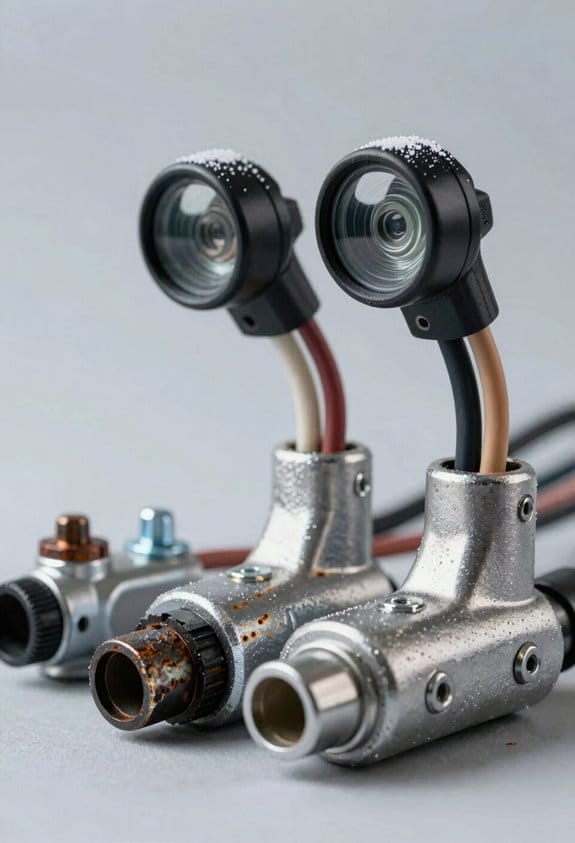
Winter riders know that exposed wires and sensors freeze up fast, so I recommend insulated wiring harnesses with a 0.8 mm silicone jacket and sensor modules rated to –40 °C. I add thermal shielding to each connector, because it stops heat loss and keeps signals stable. I choose cold‑proofing sensors that survive –40 °C, have IP66 sealing, and include built‑in heaters for critical zones. I route wires through the frame channels, secure them with zip ties, and test continuity after each install. I verify that the harness can carry up to 15 A without voltage drop, and that the sensor output stays within ±0.5 V at low temperature. I make sure the kit includes a 2‑meter spare length, a silicone spray, and a quick‑connect plug for easy replacement. This setup reduces freeze‑related failures and keeps the scooter reliable throughout winter rides.
Recommended Products

🌟【Premium Optics and Safety-Focused Design】: Future Eyes motorcycle driving lights feature high-transmittance optical lenses that ensure a concentrated and uniform beam pattern, significantly improving visibility for night riding. Designed with a 360° universal mounting bracket, these motorcycle fog lights are easy to adjust for optimal lighting on city roads or off-road trails. The automotive-grade cut-off line technology precisely controls light distribution to prevent glare for oncoming traffic, making them ideal LED fog lights for both urban commuting and remote adventure riding.

Versatile Wiring Solution: The A-Team Performance 12-Circuit Universal Wiring Harness Kit offers exceptional versatility for street rods and custom cars. Compatible with 1973-87 models, it simplifies installations with a pre-wired fuse block

【Newdeli Deutsch Connector Kit】: Deutsch connectors kit include 2, 3, 4, 6, 8 and 12-pin DT Series wire connectors , with deutsch crimper and pin remove tool. In-line, flange or PCB mounting options are available. DT connectors are by far the most popular connectors used in many automotive, industrial and racing applications.
Apply a Post‑Ride Cleaning Routine for Winter Scooter Rust Prevention
Ever notice how a single ride in the snow can leave a thin crust of salt on your scooter? That crust is the first step toward rust, and it dries fast if you don’t act right away. I’ve found that a quick rinse with a low‑pressure hose right after you park does the trick. Just a gentle spray, then a wipe‑down with a microfiber cloth on the deck, wheels, and motor housing. The cloth lifts off any grit, leaving the metal clean before any moisture can set.
Next, I grab a portable air blower and give the scooter a two‑minute blast. Aim the airflow at the joints, connectors, and battery compartment—those spots trap water the. The dryer air helps keep the metal dry, and it’s a habit that saves a lot of hassle later on.
Worth knowing: a rust‑resistant spray with about 5 % silicone works well on exposed metal after it’s dry. A light mist over the frame and any metal parts creates a thin barrier that repels moisture. For winter riders, a compact cleaning kit is a game‑changer: a 500 ml bottle of spray, a 30‑cm brush for stubborn spots, and a 12‑V battery‑powered blower that fits in your backpack.
- Low‑pressure hose rinse
- Microfiber cloth wipe
- Portable air blower dry
- Silicone‑based rust‑resist spray
Try this: keep the kit in a zip‑lock bag so you can pull it out at the end of each ride. The brush tackles the brake calipers and wheel hubs, while the spray gives the frame a protective coat. A quick routine like this takes less than ten minutes but can keep your scooter looking fresh all season.
If you’re wondering whether you really need the extra steps, think about it—how much would you mind spending on a new scooter because rust ate through the frame? A few minutes of care now can save you a lot of money and frustration later.
How to Lubricate Folding Mechanisms Before Storing Your Winter Scooter?
Got a winter scooter that’s been braving the snow? When the last ride ends, you’ll want to keep those folding hinges from freezing up and rusting.
I’m a fan of silicone‑based spray for hinge lubrication. It stays fluid down to –20 °C, repels water, and doesn’t pull in dust. Spray two short bursts on each pivot, wait five seconds, then wipe off the excess with a lint‑free cloth. The thin film protects the pivots from rust and freeze‑up.
Try this:
- Use a 10‑ml bottle; it’s good for about 30 applications.
- Store the scooter in a dry spot and check the hinges monthly for wear.
Frankly, repeat the process after every snow ride, especially if you’ve been on salted roads. The routine keeps the folding mechanism smooth and rust‑free, and you’ll notice the difference the next time you pull it out of the closet.
Got any other winter‑care tips for scooters? Share them below!
Recommended Products
![WD-40 Specialist Silicone Lubricant with Smart Straw Sprays 2 Ways, Twin-Pack, 11 OZ, [12-Pack]](https://m.media-amazon.com/images/I/41ZATKDNNqL._SL500_.jpg)
Lubricates, waterproofs and protects

Ultra high silicone content, non-chlorinated formula, low VOC formula

Store Scooters Indoors & Care for Batteries to Prevent Corrosion
Ever notice how a wet ride can leave your scooter feeling sluggish the next day? Storing it indoors right after you finish helps keep moisture off the frame and battery. I park mine in the garage where the temperature stays around 65 °F, which stops the battery from freezing and keeps rust away from the connectors.
A dry mat under the scooter does the trick, and I always close the cover to block dust. Plugging the charger into a smart outlet lets me watch the voltage, and the charger’s 12‑hour auto‑shutoff saves the battery from over‑charging.
Worth knowing: the built‑in temperature sensor will ping you if the air drops below 32 °F, so you can act before the battery suffers. I check the battery level once a week and charge it up to about 80 % if I’m not riding for a while.
Frankly, these simple steps keep the scooter ready for the next adventure without any hassle.
Do you ever wonder why a few small habits make such a big difference? Give it a try and see how smooth your rides stay.
What’s the one thing you’ll change about how you store your scooter?
Recommended Products
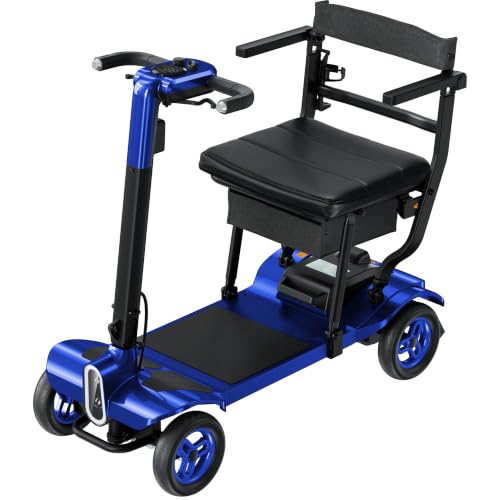
Lightweight Upgrade: This upgraded mobility scooter comes with a removable lithium battery weighing just 4.9 lbs – significantly lighter than traditional lead‑acid systems and compliant with airline travel standards. A single 4‑ to 6‑hour charge delivers up to 20 miles of range, giving you greater freedom for outdoor excursions. The newly designed aluminum alloy frame is lighter than steel models, with a total weight of only 38 lbs – offering both portability and rugged durability.

Handles 15° Slopes: Equipped with a powerful 500W (dual 250W motors) brushless motor, this motorized wheelchairs for seniors easily handles 15° gentle slopes with stable performance, making uphill smoother and more energy-efficient.

✔ Klano KL40 – World’s Lightest Foldable Power Wheelchair The Klano KL40 Super Lightweight Folding Electric Wheelchair weighs only 30 pounds, making it the lightest in its category. Designed for easy mobility, it ensures convenience indoors, outdoors, and on the go.
Enjoy Extended Range, Reliability, and Year‑Round Riding
Ever wonder why your scooter feels sluggish when the weather drops? I’ve been riding through snow and slush and found a few tricks that keep the range steady.
The body is IPX6‑rated and the traction control is automotive‑grade, so you don’t lose grip on icy roads. The battery‑management system watches voltage, temperature, and charge cycles, which helps stop capacity loss. Thermal insulation around the pack keeps heat in, letting the scooter run longer when the air is below freezing.
Worth knowing:
- 12‑inch tires give a stable grip.
- Sealed bearings cut down on rust.
- Anti‑corrosion coating protects the wiring.
A 500‑Wh battery can still hit about 45 km on a single charge, even at 5 °C. That means you can ride year‑round without worrying about sudden failures or a dip in range.
Frankly, the design feels like it was built for every season. You’ll notice the scooter holds its charge better than most when the temperature drops, and the tires stay firm on slick surfaces. The sealed bearings and coating keep the mechanical parts clean, so you don’t have to spend extra time on maintenance.
Try this: keep an eye on the battery’s temperature gauge and avoid deep discharges in the cold. A quick warm‑up in a garage before heading out can add a few extra kilometers to your ride.
Frequently Asked Questions
Does Using a Heated Garage Prevent Scooter Rust?
I’d say a heated garage keeps rust at bay, but it’s only half the story—paired with controlled humidity, it creates a dry haven that stops salt‑induced corrosion before it even starts.
Can I Ride a Scooter With a Cracked Gasket in Snow?
I wouldn’t recommend it—I’ve learned cracked gaskets become safety risk quickly, especially in snow, where water seeps in and accelerates gasket degradation, potentially causing leaks, loss of control, and costly repairs.
How Often Should I Replace Rust‑Resistant Seals?
I replace rust‑resistant seals during each annual inspection, but I do a seasonal replacement before winter to make sure they stay flexible and moisture‑proof, keeping the scooter safe and reliable.
Are All Winter Tires Compatible With IPX6 Scooters?
I’ve found that most winter tires fit IPX6 scooters, but you should verify tread width and rim size to avoid water ingress. I always double‑check the manufacturer’s spec sheet before mounting any tire.
Does a Silicone Spray Affect Battery Performance?
I’d say silicone spray’s like a gentle shield, leaving a thin protective residue that doesn’t interfere with battery interaction; it keeps connectors dry and safe, so performance stays steady even in winter’s chill.